Department of Biomedical Engineering, Oregon Health and Science University Portland, OR, USA.
Front Oncol. 2012 Sep 6;2:110. doi: 10.3389/fonc.2012.00110. eCollection 2012.
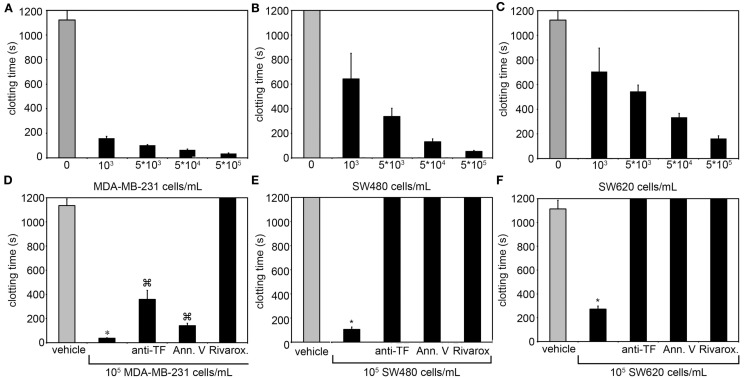
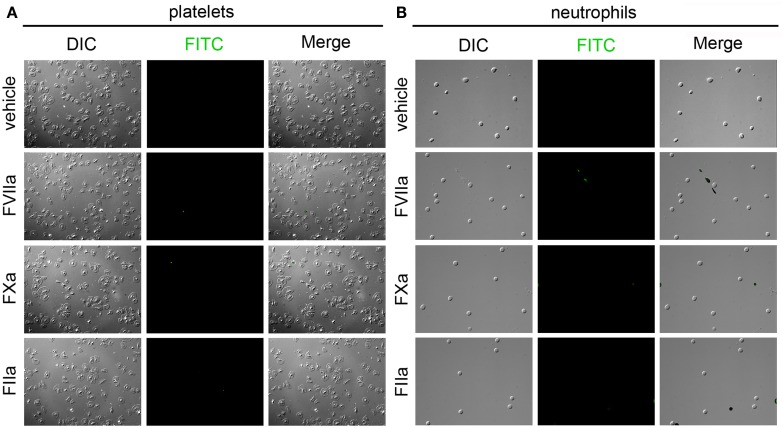
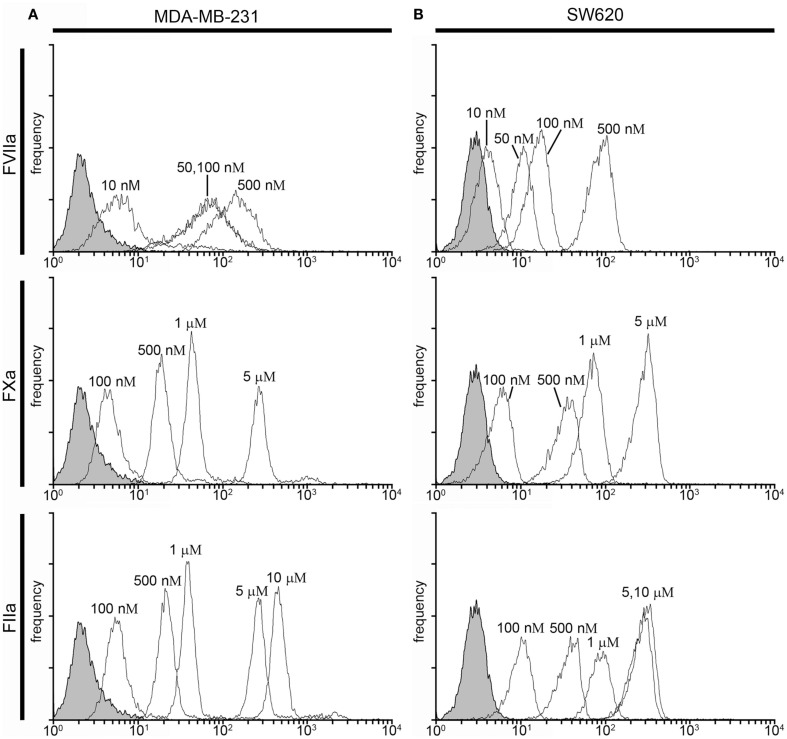
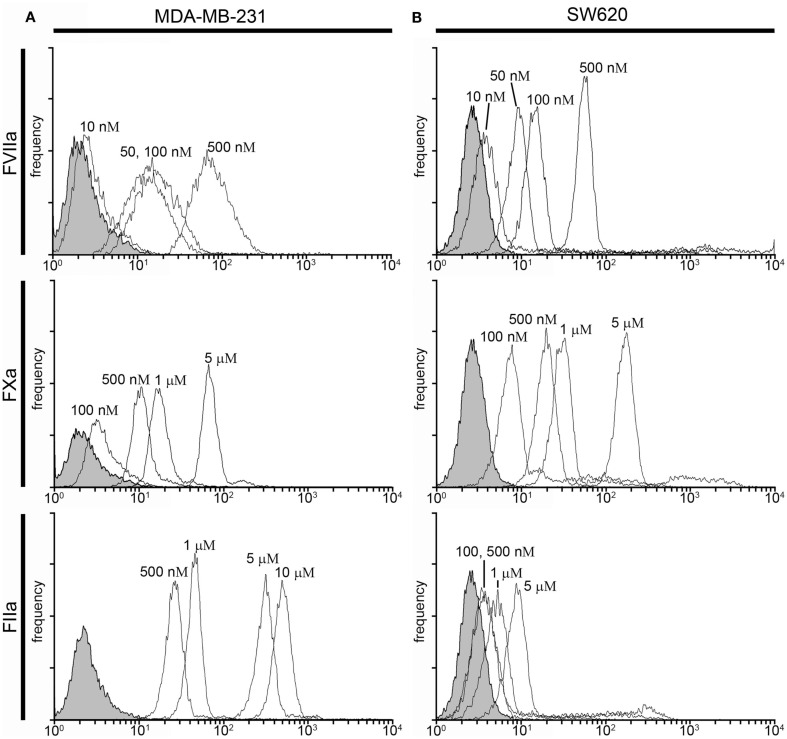
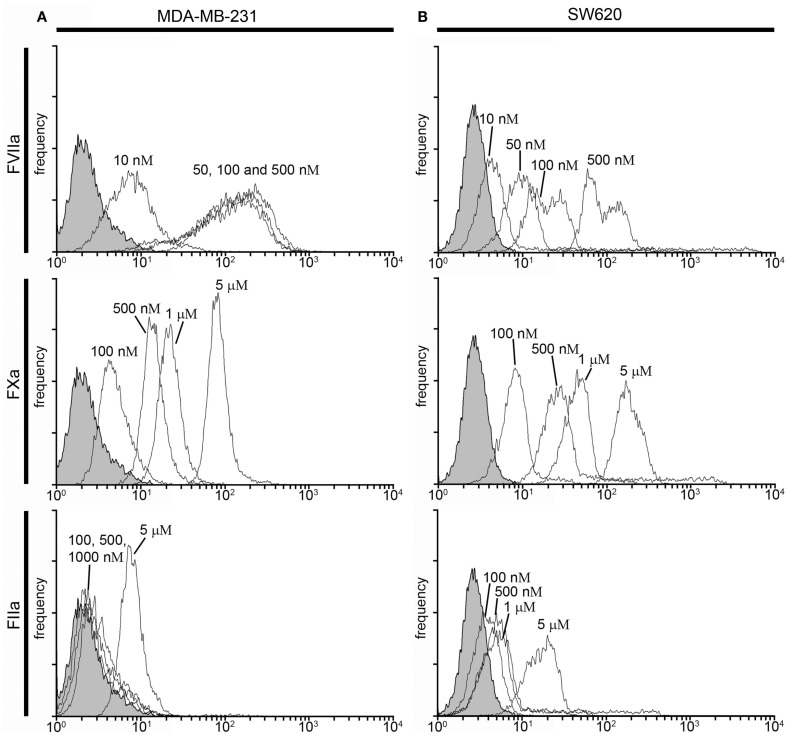
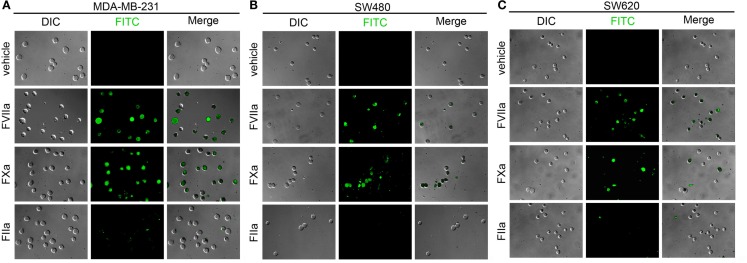
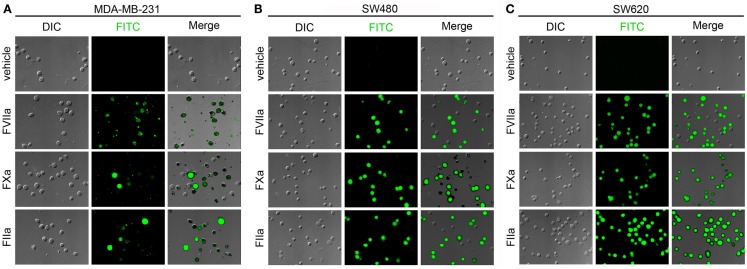
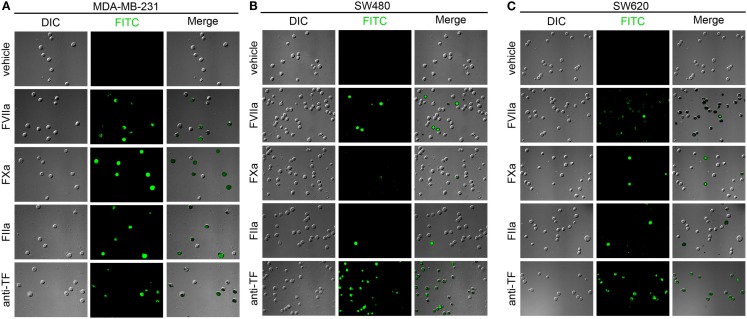
Metastatic cancer is associated with a hypercoagulable state, and pathological venous thromboembolic disease is a significant source of morbidity and the second leading cause of death in patients with cancer. Here we aimed to develop a novel labeling strategy to detect and quantify procoagulant circulating tumor cells (CTCs) from patients with metastatic cancer. We hypothesize that the enumeration of procoagulant CTCs may be prognostic for the development of venous thrombosis in patients with cancer. Our approach is based on the observation that cancer cells are capable of initiating and facilitating cell-mediated coagulation in vitro, whereby activated coagulation factor complexes assemble upon cancer cell membrane surfaces. Binding of fluorescently labeled, active site-inhibited coagulation factors VIIa, Xa, and IIa to the metastatic breast cancer cell line, MDA-MB-231, non-metastatic colorectal cell line, SW480, or metastatic colorectal cell line, SW620, was characterized in a purified system, in anticoagulated blood and plasma, and in plasma under conditions of coagulation. We conclude that a CTC labeling strategy that utilizes coagulation factor-based fluorescent probes may provide a functional assessment of the procoagulant potential of CTCs, and that this strategy is amenable to current CTC detection platforms.
转移性癌症与高凝状态有关,病理性静脉血栓栓塞疾病是癌症患者发病率的重要来源,也是导致癌症患者死亡的第二大主要原因。在这里,我们旨在开发一种新的标记策略,以检测和定量来自转移性癌症患者的促凝循环肿瘤细胞(CTC)。我们假设促凝 CTC 的计数可能对癌症患者发生静脉血栓形成的风险具有预后价值。我们的方法基于以下观察结果:癌细胞能够在体外启动和促进细胞介导的凝血,从而在癌细胞膜表面上组装激活的凝血因子复合物。在纯化系统、抗凝血液和血浆中以及在凝血条件下的血浆中,我们对荧光标记的、活性位点抑制的凝血因子 VIIa、Xa 和 IIa 与转移性乳腺癌细胞系 MDA-MB-231、非转移性结肠癌细胞系 SW480 或转移性结肠癌细胞系 SW620 的结合进行了表征。我们得出的结论是,一种利用凝血因子为基础的荧光探针的 CTC 标记策略可以提供对 CTC 促凝潜力的功能评估,并且该策略适用于当前的 CTC 检测平台。