Zoologische Staatssammlung München, Münchhausenstr, 21, 81247 München, Germany.
Front Zool. 2012 Sep 14;9(1):23. doi: 10.1186/1742-9994-9-23.
Two types of excretory systems, protonephridia and metanephridial systems are common among bilaterians. The homology of protonephridia of lophotrochozoan taxa has been widely accepted. In contrast, the homology of metanephridial systems - including coelomic cavities as functional units - among taxa as well as the homology between the two excretory systems is a matter of ongoing discussion. This particularly concerns the molluscan kidneys, which are mostly regarded as being derived convergently to the metanephridia of e.g. annelids because of different ontogenetic origin. A reinvestigation of nephrogenesis in polyplacophorans, which carry many primitive traits within molluscs, could shed light on these questions.
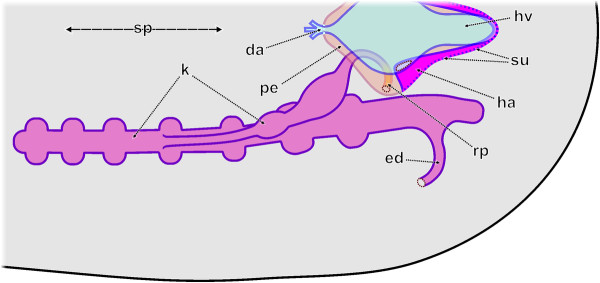
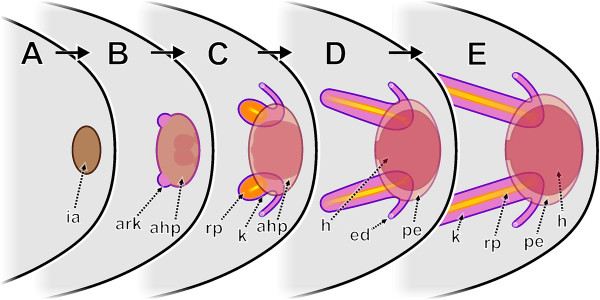
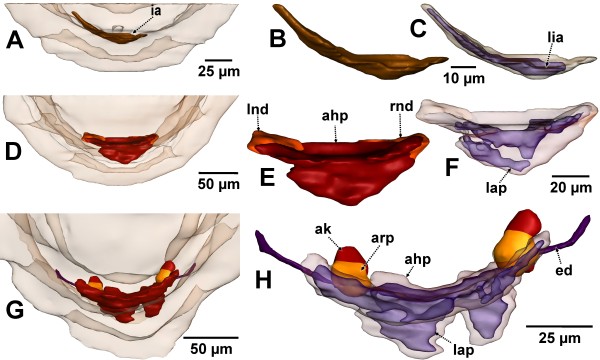
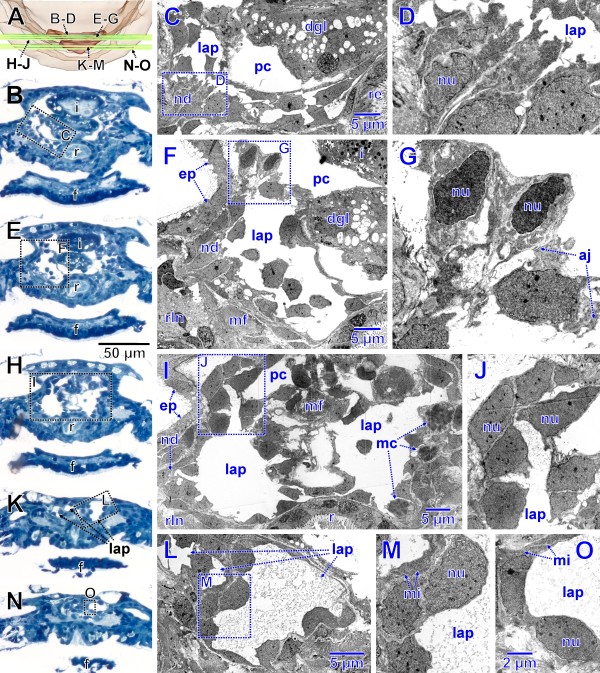
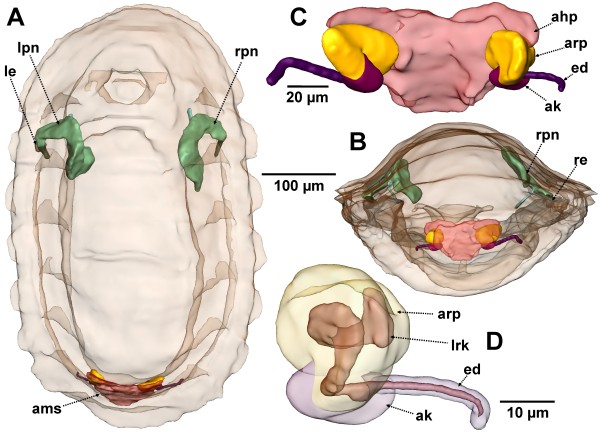
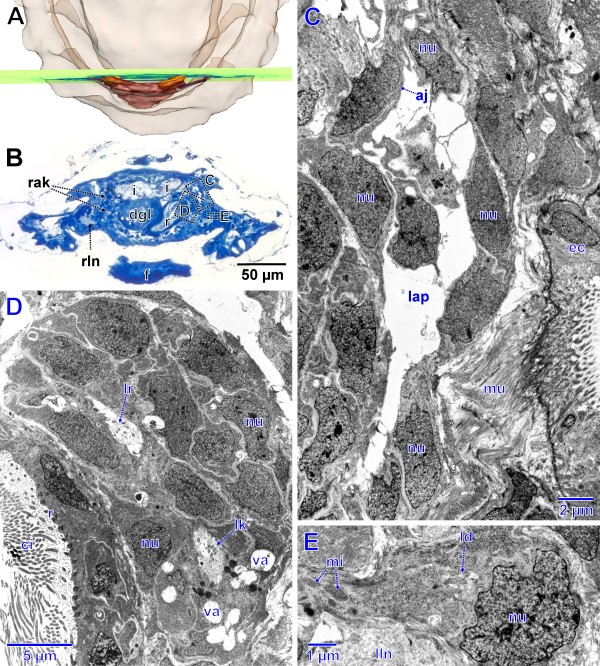
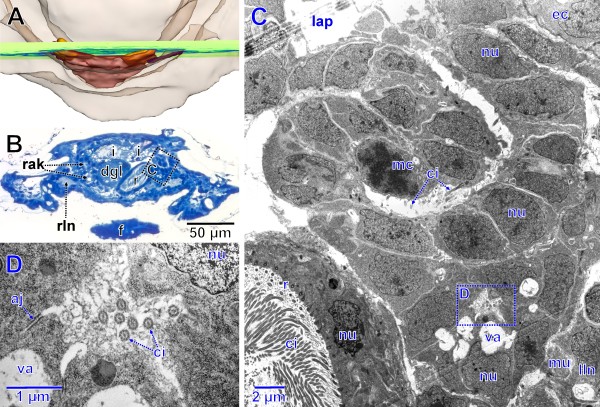
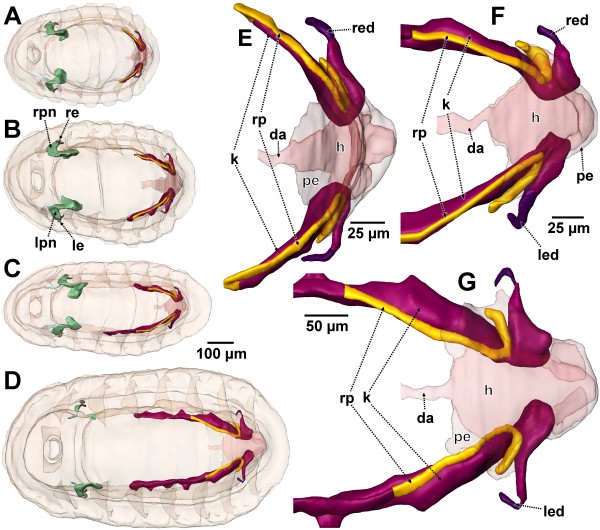
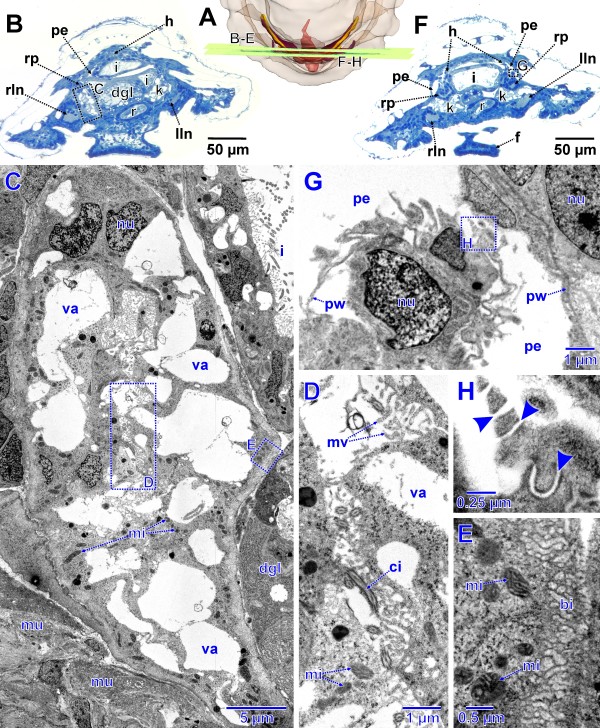
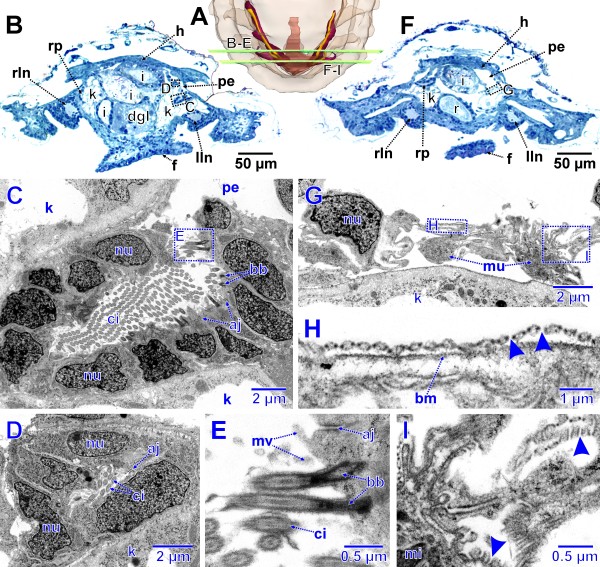
The metanephridial system of Lepidochitona corrugata develops rapidly in the early juvenile phase. It is formed from a coelomic anlage that soon achieves endothelial organization. The pericardium and heart are formed from the central portion of the anlage. The nephridial components are formed by outgrowth from lateral differentiations of the anlage. Simultaneously with formation of the heart, podocytes appear in the atrial wall of the pericardium. In addition, renopericardial ducts, kidneys and efferent nephroducts, all showing downstream ciliation towards the internal lumen, become differentiated (specimen length: 0.62 mm). Further development consists of elongation of the kidney and reinforcement of filtration and reabsorptive structures.
During development and in fully formed condition the metanephridial system of Lepidochitona corrugata shares many detailed traits (cellular and overall organization) with the protonephridia of the same species. Accordingly, we suggest a serial homology of various cell types and between the two excretory systems and the organs as a whole. The formation of the metanephridial system varies significantly within Mollusca, thus the mode of formation cannot be used as a homology criterion. Because of similarities in overall organization, we conclude that the molluscan metanephridial system is homologous with that of the annelids not only at the cellular but also at the organ level.
原肾管和后肾管系统是两侧对称动物中常见的两种排泄系统。环节动物类群的原肾管同源性已被广泛接受。相比之下,类群之间后肾管系统(包括作为功能单元的体腔)以及两种排泄系统之间的同源性是一个持续讨论的问题。这尤其涉及到软体动物的肾脏,由于不同的个体发生起源,它们大多被认为是从环节动物的后肾管趋同进化而来的。对多板类动物的肾发生进行重新研究,这些动物在软体动物中携带许多原始特征,可以为这些问题提供线索。
Lepidochitona corrugata 的后肾管系统在早期幼体阶段迅速发育。它由一个很快就具有内皮组织的体腔原基形成。心脏和心包由原基的中心部分形成。肾的组成部分是由原基的侧向分化形成的。在心包心房壁中出现足细胞的同时,心也形成了。此外,肾心包管、肾脏和排泄肾管都分化出来,并且都显示出向内部腔室下游的纤毛化(标本长度:0.62 毫米)。进一步的发育包括肾脏的伸长和过滤和重吸收结构的加强。
在发育过程中和完全形成的条件下,Lepidochitona corrugata 的后肾管系统与同一物种的原肾管在许多细节特征(细胞和整体组织)上共享。因此,我们建议各种细胞类型和两个排泄系统以及整个器官之间存在系列同源性。后肾管系统在软体动物中的形成方式差异很大,因此形成方式不能作为同源性标准。由于整体组织的相似性,我们得出结论,软体动物的后肾管系统不仅在细胞水平上,而且在器官水平上都与环节动物的后肾管系统同源。