Department of Pediatric Hematology and Oncology, University Medical Center Hamburg-Eppendorf, Germany.
Br J Cancer. 2012 Oct 9;107(8):1399-408. doi: 10.1038/bjc.2012.403. Epub 2012 Sep 13.
Tumours are responsive to temozolomide (TMZ) if they are deficient in O(6)-methylguanine-DNA methyltransferase (MGMT), and mismatch repair (MMR) proficient.
The effect of TMZ on medulloblastoma (MB) cell killing was analysed with clonogenic survival assays. Expression of DNA repair genes and enzymes was investigated using microarrays, western blot, and immunohistochemistry. DNA sequencing and promoter methylation analysis were employed to investigate the cause of loss of the expression of MMR gene MLH1.
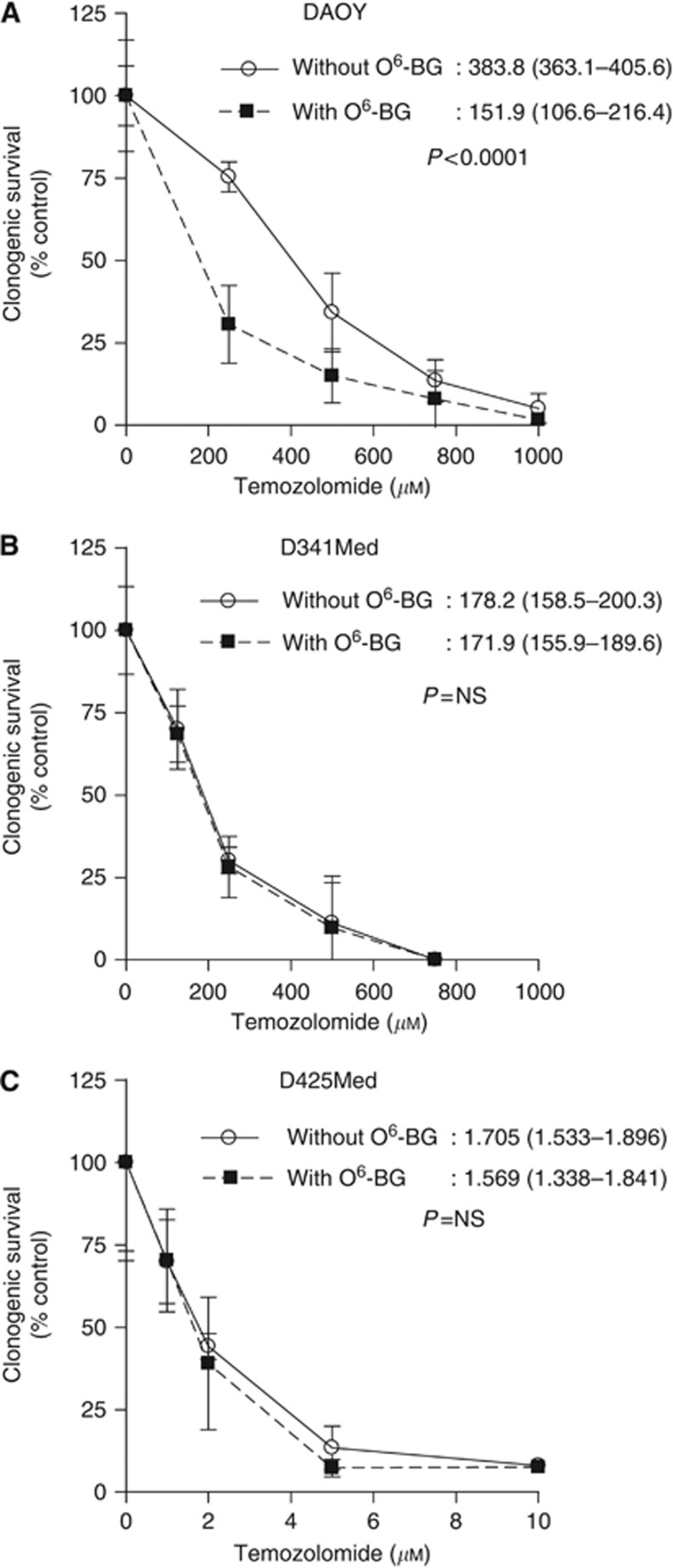
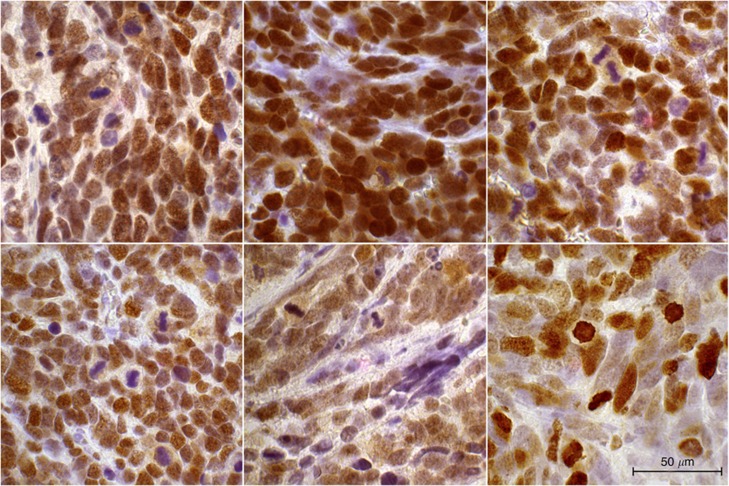
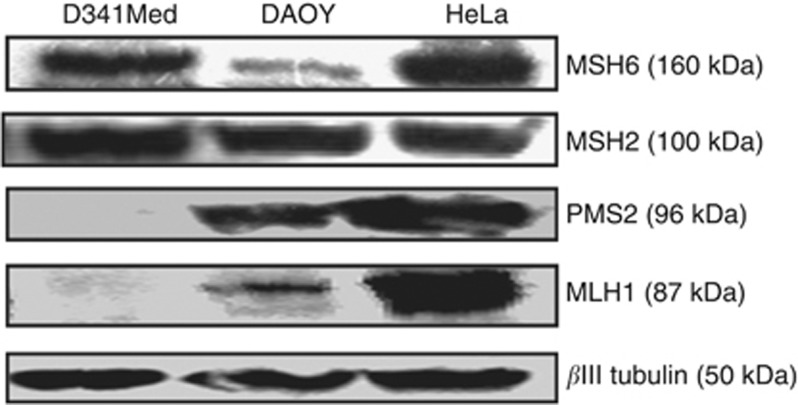
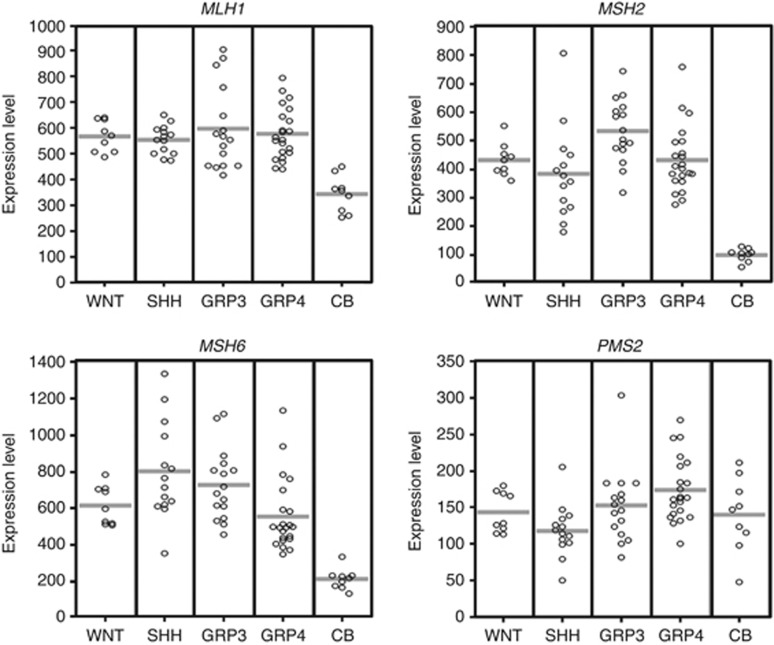
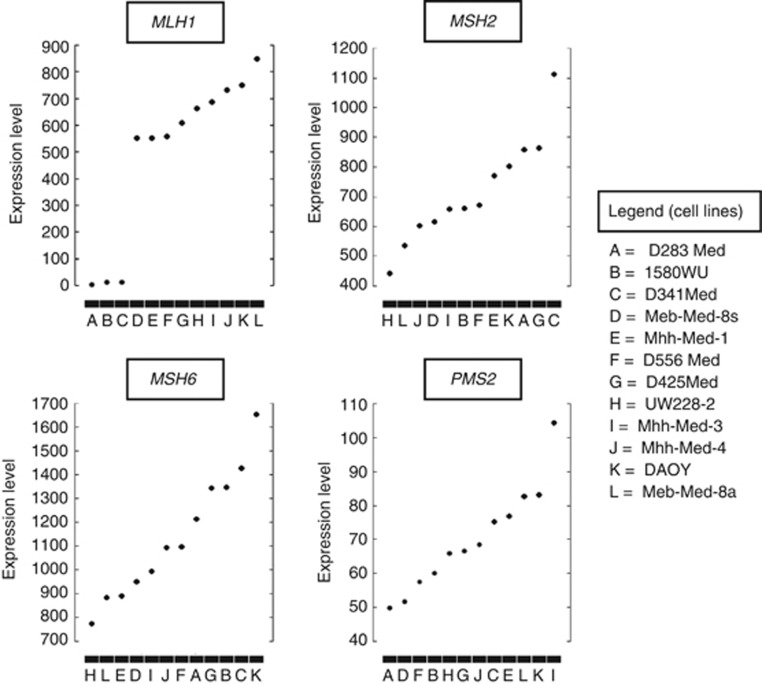
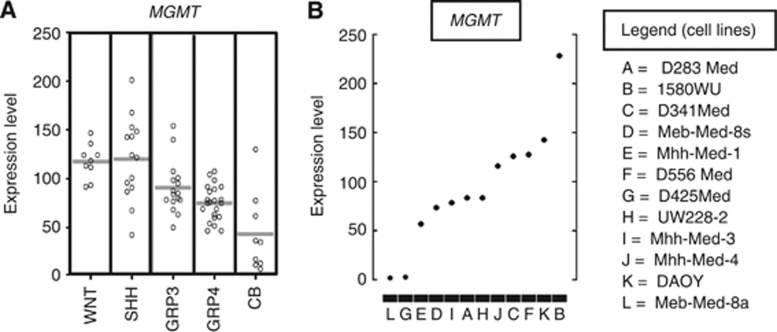
Temozolomide exhibited potent cytotoxic activity in D425Med (MGMT deficient, MLH1 proficient; IC(50)=1.7 μM), moderate activity against D341Med (MGMT proficient, MLH1 deficient), and DAOY MB cells (MGMT proficient, MLH1 proficient). MGMT inhibitor O(6)-benzylguanine sensitised DAOY, but not D341Med cells to TMZ. Of 12 MB cell lines, D341Med, D283Med, and 1580WÜ cells exhibited MMR deficiency due to MLH1 promoter hypermethylation. DNA sequencing of these cells provided no evidence for somatic genetic alterations in MLH1. Expression analyses of MMR and MGMT in MB revealed that all patient specimens (n=74; expression array, n=61; immunostaining, n=13) are most likely MMR proficient, whereas some tumours had low MGMT expression levels (according to expression array) or were totally MGMT deficient (3 out of 13 according to immunohistochemistry).
A subset of MB may respond to TMZ as some patient specimens are MGMT deficient, and tumours appear to be MMR proficient.
如果肿瘤中 O(6)-甲基鸟嘌呤-DNA 甲基转移酶(MGMT)缺乏和错配修复(MMR)功能正常,那么它们对替莫唑胺(TMZ)敏感。
通过集落形成存活分析来分析 TMZ 对髓母细胞瘤(MB)细胞杀伤的影响。使用微阵列、western blot 和免疫组织化学研究 DNA 修复基因和酶的表达。采用 DNA 测序和启动子甲基化分析来研究 MMR 基因 MLH1 表达缺失的原因。
TMZ 对 D425Med(MGMT 缺乏,MLH1 正常;IC(50)=1.7 μM)、D341Med(MGMT 正常,MLH1 缺乏)和 DAOY MB 细胞(MGMT 正常,MLH1 正常)具有很强的细胞毒性。MGMT 抑制剂 O(6)-苯甲基鸟嘌呤使 DAOY,但不使 D341Med 细胞对 TMZ 敏感。在 12 个 MB 细胞系中,D341Med、D283Med 和 1580WÜ 细胞由于 MLH1 启动子过度甲基化而表现出 MMR 缺陷。对这些细胞进行 DNA 测序没有发现 MLH1 体细胞遗传改变的证据。MB 中 MMR 和 MGMT 的表达分析表明,所有患者标本(n=74;表达谱,n=61;免疫组化,n=13)都很可能是 MMR 正常,而一些肿瘤的 MGMT 表达水平较低(根据表达谱)或完全缺乏 MGMT(根据免疫组化有 3 个)。
一些 MB 可能对 TMZ 有反应,因为一些患者标本中 MGMT 缺乏,而肿瘤似乎是 MMR 正常的。