Division of Hematology-Oncology, Massachusetts General Hospital Cancer Center, Boston, MA 02114, USA.
Clin Interv Aging. 2012;7:331-8. doi: 10.2147/CIA.S14566. Epub 2012 Sep 3.
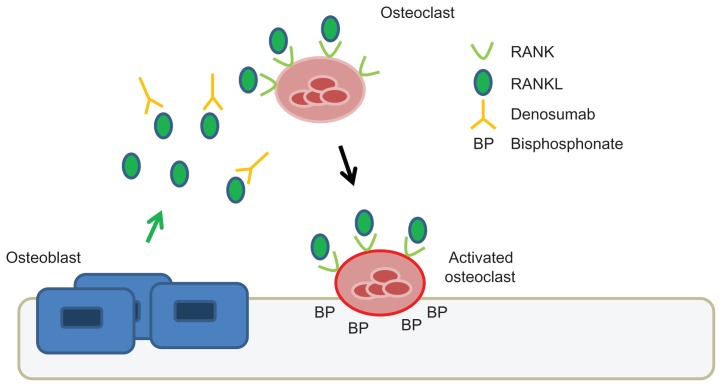
Bone loss is a common side effect of cancer treatments, especially antihormonal treatments used in the treatment of breast and prostate cancer. Denosumab is a monoclonal antibody given subcutaneously that inhibits osteoclast activity by targeting the RANK ligand. It is effective in settings ranging from preventing skeletal-related complications in cancer patients with metastatic disease to increasing bone mineral density in patients with osteoporosis. In cancer patients with early stage disease, denosumab can attenuate bone loss from antihormonal treatments, and in prostate cancer, may reduce disease progression. Here, we will discuss the important role denosumab may play in the management of bone loss in patients with cancer.
骨质流失是癌症治疗的常见副作用,尤其是用于治疗乳腺癌和前列腺癌的抗激素治疗。地舒单抗是一种皮下给予的单克隆抗体,通过靶向 RANK 配体抑制破骨细胞活性。它在各种情况下都有效,从预防转移性疾病的癌症患者的骨骼相关并发症到增加骨质疏松症患者的骨密度。在早期疾病的癌症患者中,地舒单抗可以减轻抗激素治疗引起的骨质流失,在前列腺癌中,可能会减缓疾病进展。在这里,我们将讨论地舒单抗在癌症患者骨质流失管理中可能发挥的重要作用。