Department of Psychology, University of Colorado Denver, Denver, CO, United States.
Physiol Behav. 2012 Oct 10;107(3):440-50. doi: 10.1016/j.physbeh.2012.09.002. Epub 2012 Sep 12.
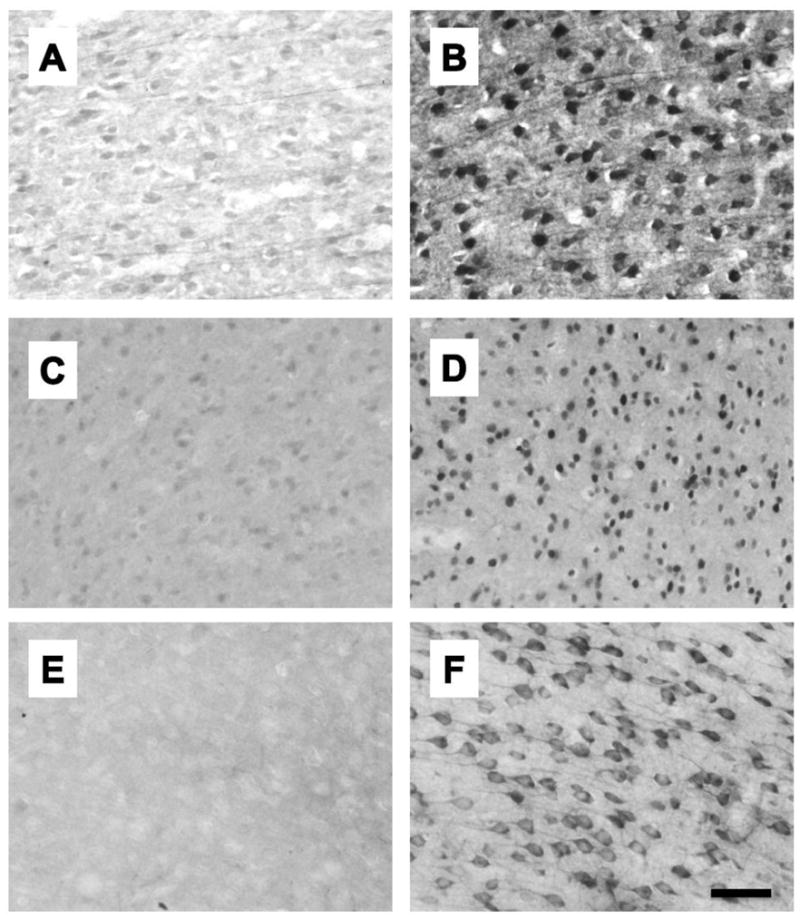
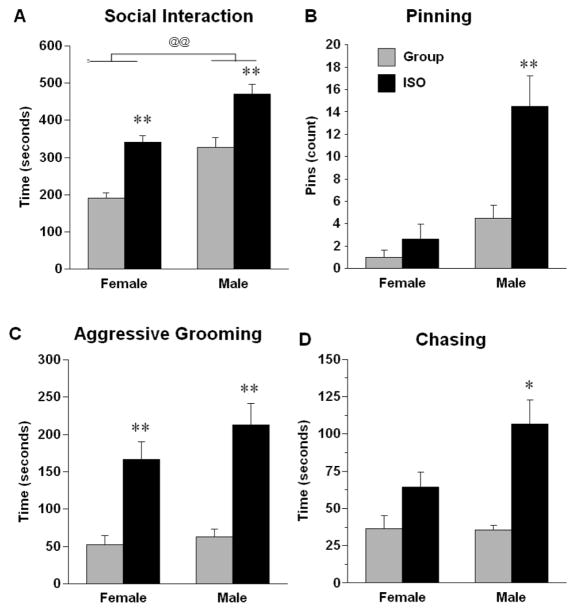
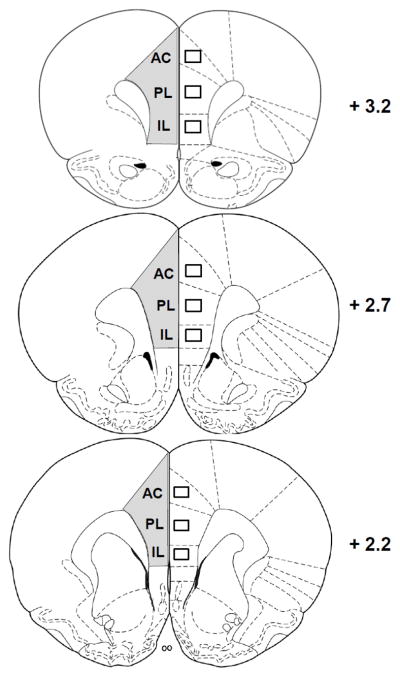
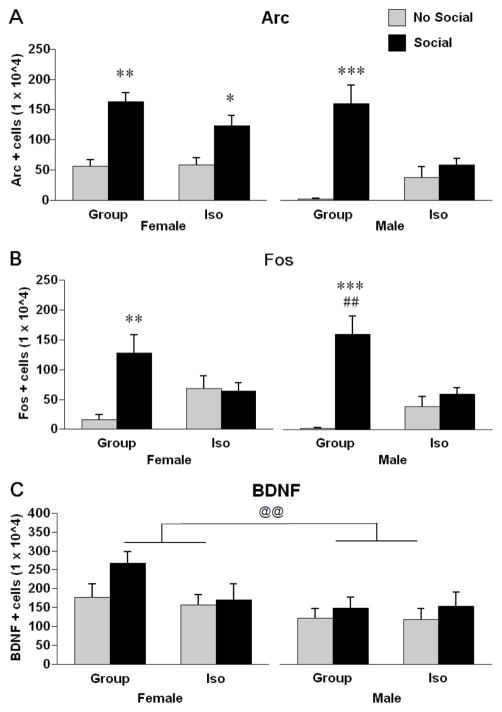
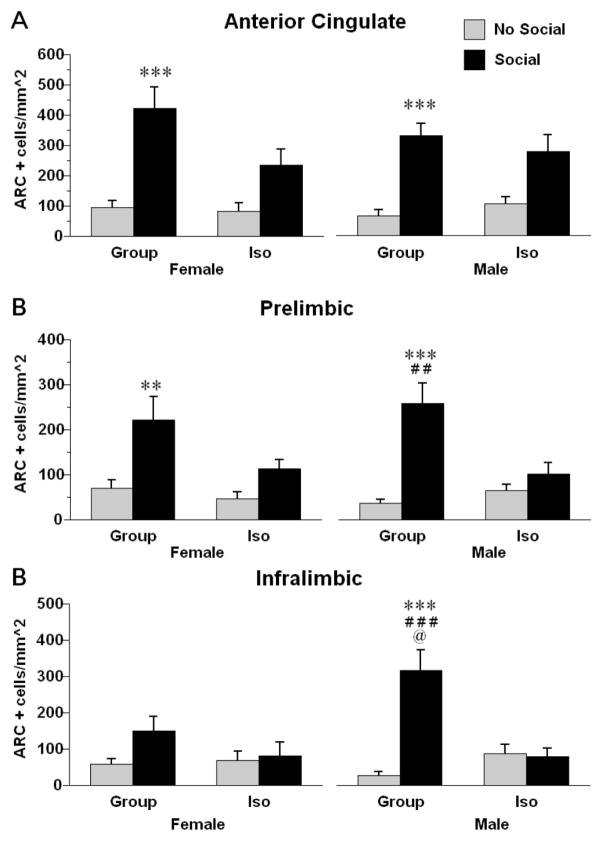
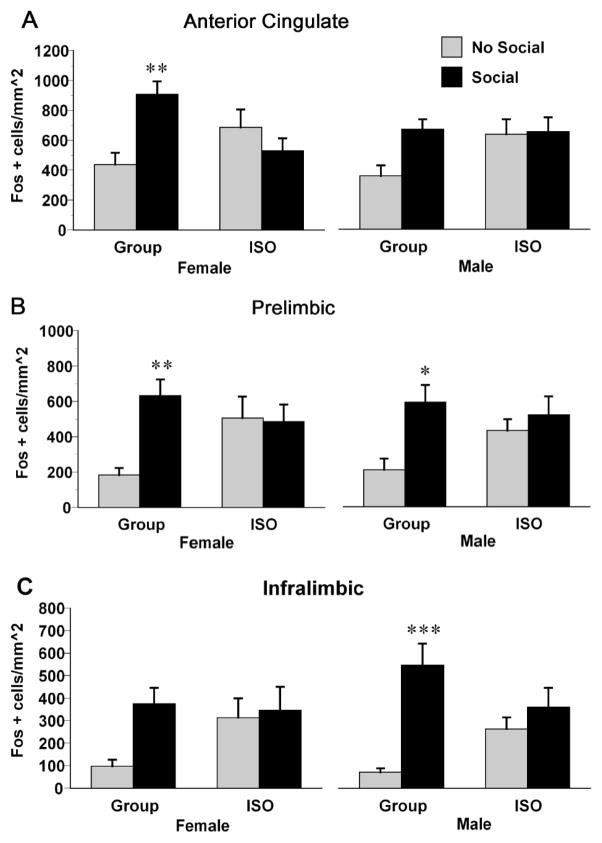
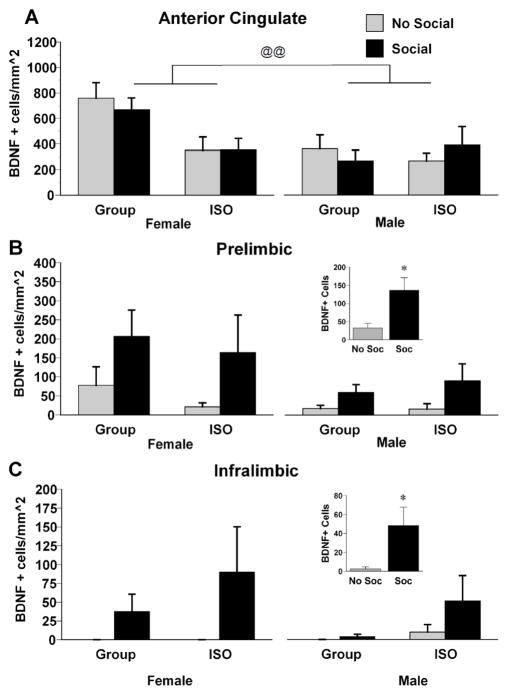
Early life adversity and stress in humans have been related to a number of psychological disorders including anxiety, depression, and addiction. The present study used isolation rearing, a well-characterized animal model of early life adversity, to examine its effects on social behavior and immediate early gene (IEG) expression produced by exposure to a novel social experience. Male and female rats were housed in same-sex groups or in isolation for 4 weeks beginning at weaning and were tested during late adolescence. The protein products of the IEGs c-fos and Arc, as well as the neurotrophic factor BDNF were assessed in medial prefrontal cortex (mPFC) subregions (anterior cingulate, prelimbic and infralimbic) using immunohistochemistry. Aggressive and non-aggressive behaviors during novel social exposure were also assessed. Exposure to a novel conspecific produced increases in Arc and c-fos activation in the mPFC of group reared animals in a sex- and subregion-dependent fashion compared to no social exposure controls, but this increase was blunted or absent in isolated animals. Isolates engaged in more social interactions and more aggressive behavior than group reared rats. Sex differences in some behaviors as well as in Arc and BDNF expression were observed. These results indicate that isolation rearing alters IEG activation in the mPFC produced by exposure to a novel conspecific, in addition to changing social behavior, and that these effects depend in part on sex.
早期生活逆境和人类压力与许多心理障碍有关,包括焦虑、抑郁和成瘾。本研究使用隔离饲养,一种典型的早期生活逆境动物模型,来研究其对暴露于新社交体验时产生的社交行为和即时早期基因(IEG)表达的影响。雄性和雌性大鼠在断奶后开始的 4 周内被饲养在同性群体中或隔离中,并在青春期晚期进行测试。使用免疫组织化学方法评估 IEG 蛋白产物 c-fos 和 Arc 以及神经营养因子 BDNF 在中前额皮质(mPFC)亚区(前扣带皮层、边缘前脑和边缘下脑)中的表达。在新的社交暴露期间还评估了攻击和非攻击行为。与没有社交暴露对照相比,暴露于新的同种动物会以性别和亚区依赖的方式增加群居动物 mPFC 中的 Arc 和 c-fos 激活,但这种增加在隔离动物中减弱或缺失。隔离动物比群居大鼠进行更多的社交互动和更具攻击性的行为。观察到一些行为以及 Arc 和 BDNF 表达存在性别差异。这些结果表明,除了改变社交行为外,隔离饲养还会改变暴露于新同种动物时 mPFC 中 IEG 的激活,并且这些影响部分取决于性别。