Wodewotzky T I, Lima-Neto J F, Pereira-Júnior O C M, Sudano M J, Lima S A F, Bersano P R O, Yoshioka S A, Landim-Alvarenga F C
Departamento de Reprodução Animal e Radiologia Veterinária, Faculdade de Medicina Veterinária e Zootecnia, Universidade Estadual de São Paulo, Botucatu, SP, Brasil.
Braz J Med Biol Res. 2012 Dec;45(12):1157-62. doi: 10.1590/s0100-879x2012007500149. Epub 2012 Sep 18.
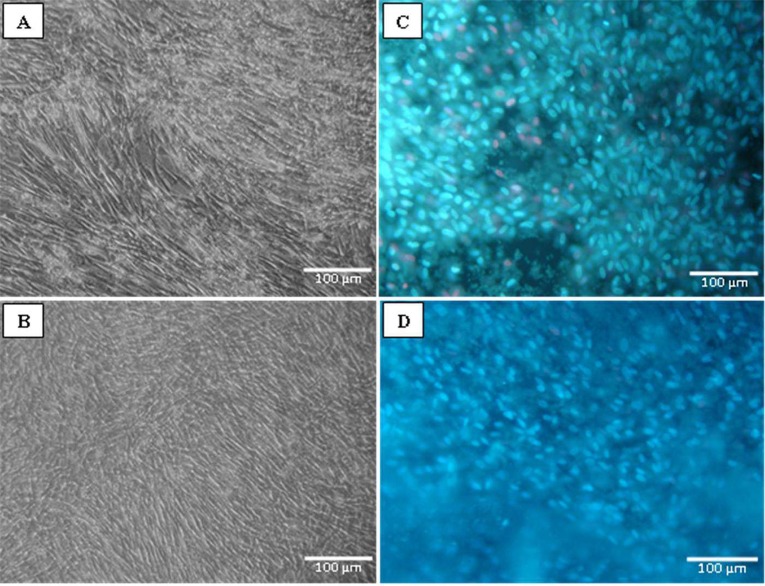
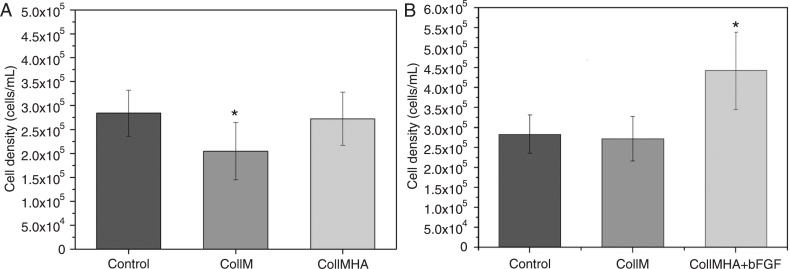
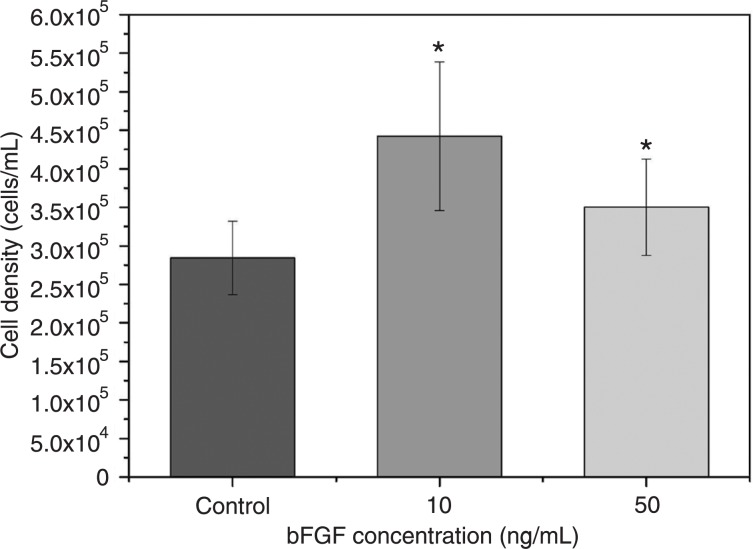
Support structures for dermal regeneration are composed of biodegradable and bioresorbable polymers, animal skin or tendons, or are bacteria products. The use of such materials is controversial due to their low efficiency. An important area within tissue engineering is the application of multipotent mesenchymal stromal cells (MSCs) to reparative surgery. The combined use of biodegradable membranes with stem cell therapy may lead to promising results for patients undergoing unsuccessful conventional treatments. Thus, the aim of this study was to test the efficacy of using membranes composed of anionic collagen with or without the addition of hyaluronic acid (HA) as a substrate for adhesion and in vitro differentiation of bone marrow-derived canine MSCs. The benefit of basic fibroblast growth factor (bFGF) on the differentiation of cells in culture was also tested. MSCs were collected from dog bone marrow, isolated and grown on collagen scaffolds with or without HA. Cell viability, proliferation rate, and cellular toxicity were analyzed after 7 days. The cultured cells showed uniform growth and morphological characteristics of undifferentiated MSCs, which demonstrated that MSCs successfully adapted to the culture conditions established by collagen scaffolds with or without HA. This demonstrates that such scaffolds are promising for applications to tissue regeneration. bFGF significantly increased the proliferative rate of MSCs by 63% when compared to groups without the addition of the growth factor. However, the addition of bFGF becomes limiting, since it has an inhibitory effect at high concentrations in culture medium.
用于皮肤再生的支撑结构由可生物降解和生物可吸收的聚合物、动物皮肤或肌腱组成,或者是细菌产物。由于其效率低下,此类材料的使用存在争议。组织工程学中的一个重要领域是将多能间充质基质细胞(MSCs)应用于修复手术。将可生物降解膜与干细胞疗法联合使用,对于接受传统治疗失败的患者可能会产生有前景的结果。因此,本研究的目的是测试使用由阴离子胶原蛋白组成、添加或不添加透明质酸(HA)的膜作为骨髓来源犬MSCs黏附和体外分化底物的功效。还测试了碱性成纤维细胞生长因子(bFGF)对培养中细胞分化的益处。从犬骨髓中收集MSCs,分离并在添加或不添加HA的胶原蛋白支架上培养。7天后分析细胞活力、增殖率和细胞毒性。培养的细胞显示出未分化MSCs的均匀生长和形态特征,这表明MSCs成功适应了添加或不添加HA的胶原蛋白支架所建立的培养条件。这表明此类支架在组织再生应用方面具有前景。与未添加生长因子的组相比,bFGF使MSCs的增殖率显著提高了63%。然而,bFGF的添加存在局限性,因为它在培养基高浓度时具有抑制作用。