Shenzhen Institutes of Advanced Technology, Chinese Academy of Science, Shenzhen 518055, China.
Comput Math Methods Med. 2012;2012:936243. doi: 10.1155/2012/936243. Epub 2012 Sep 3.
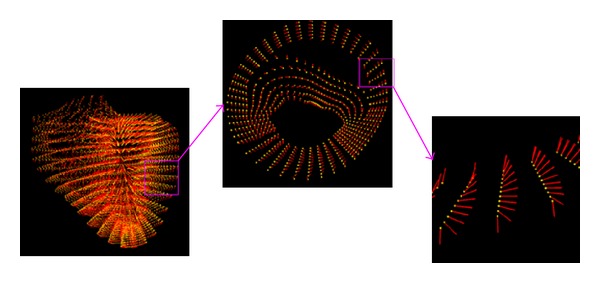
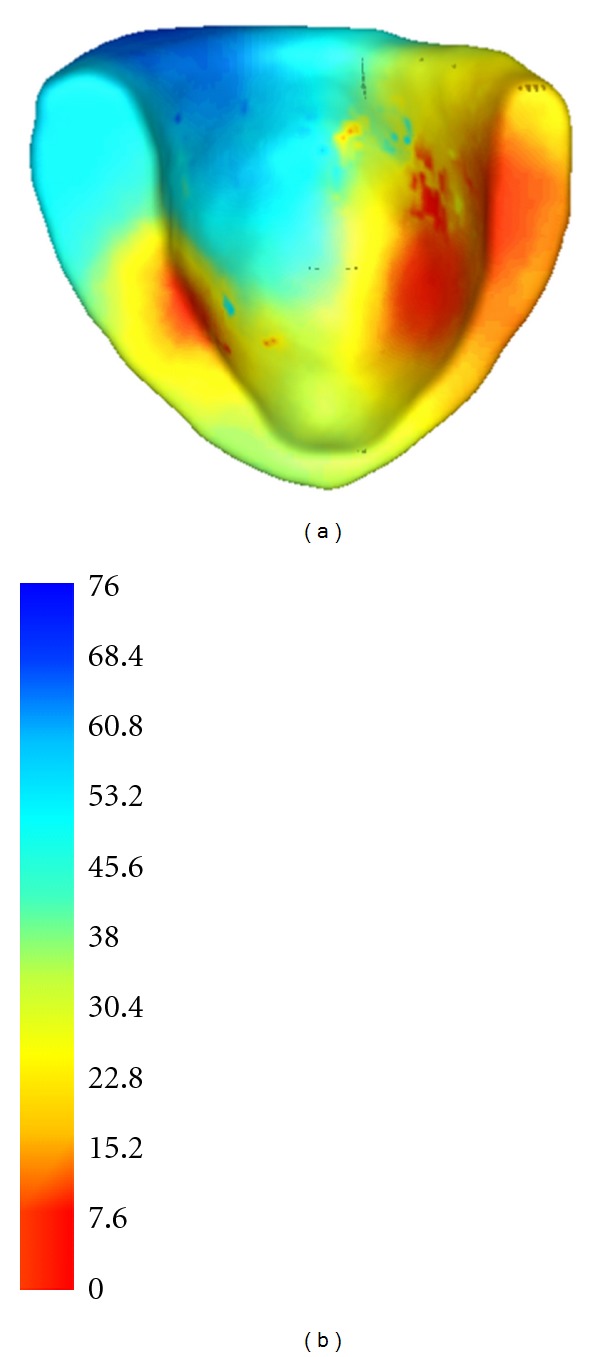
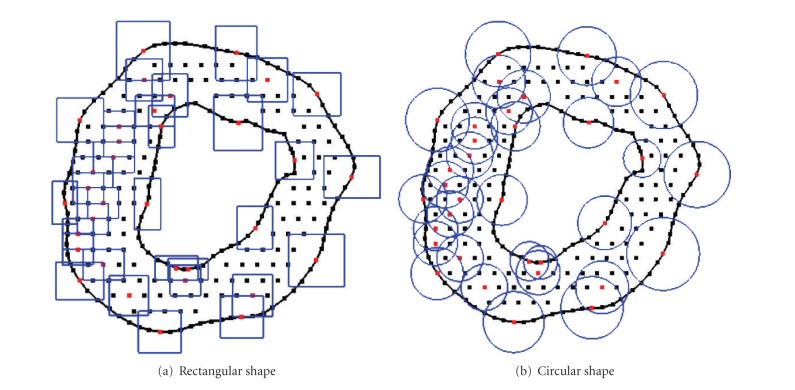
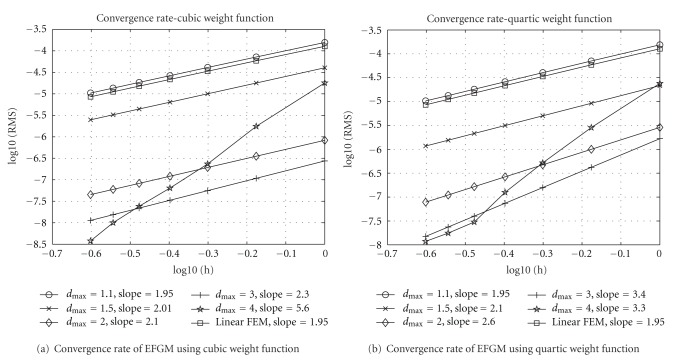
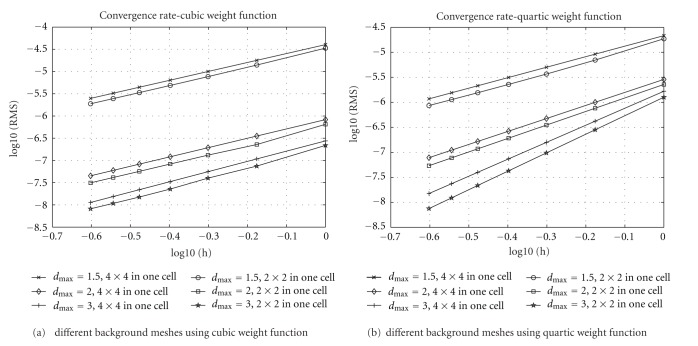
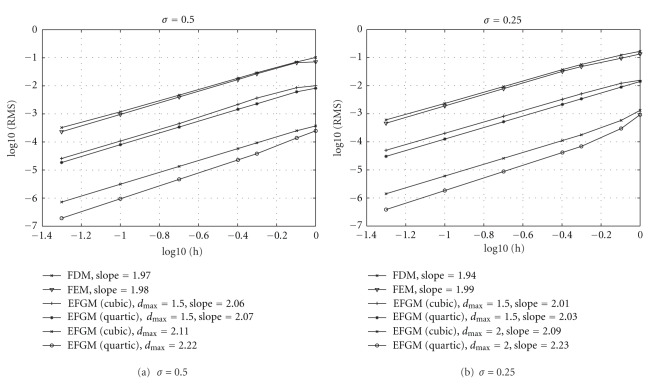
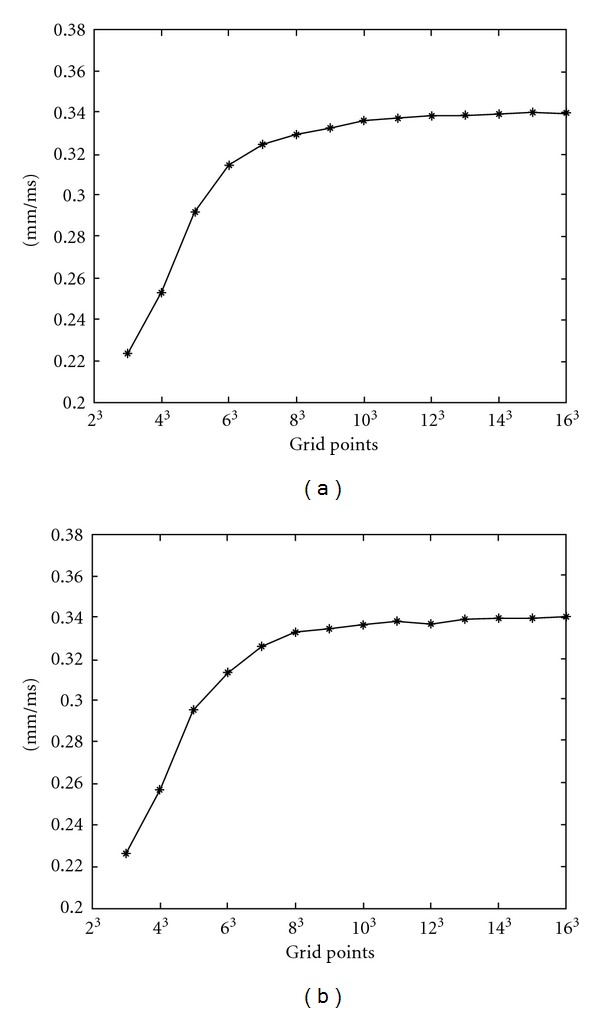
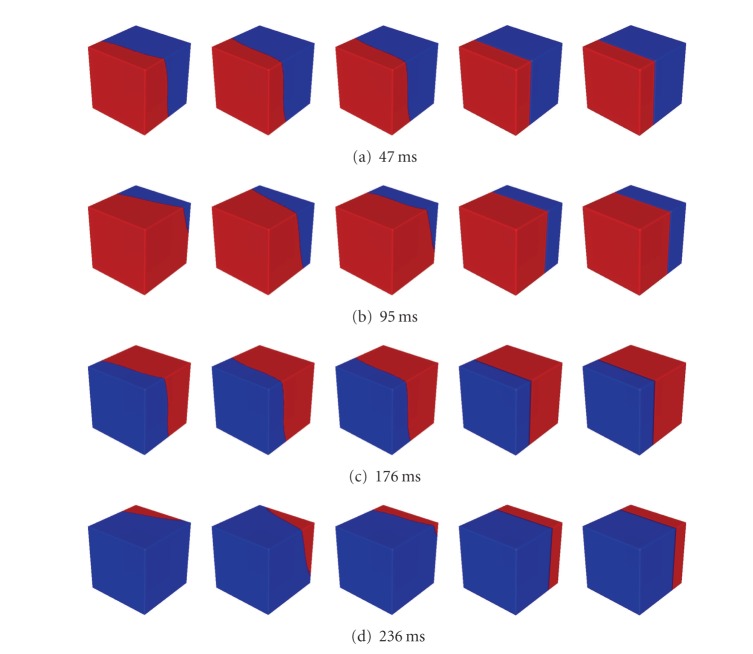
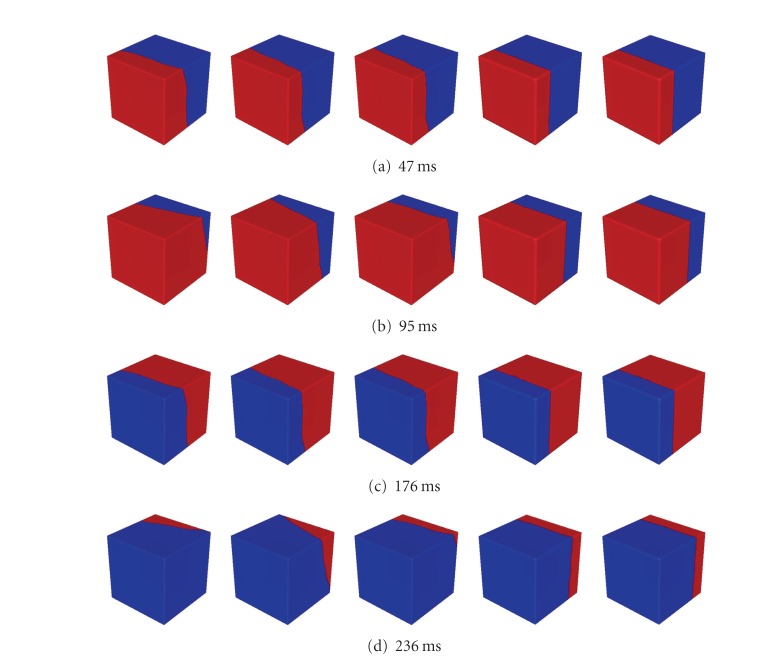
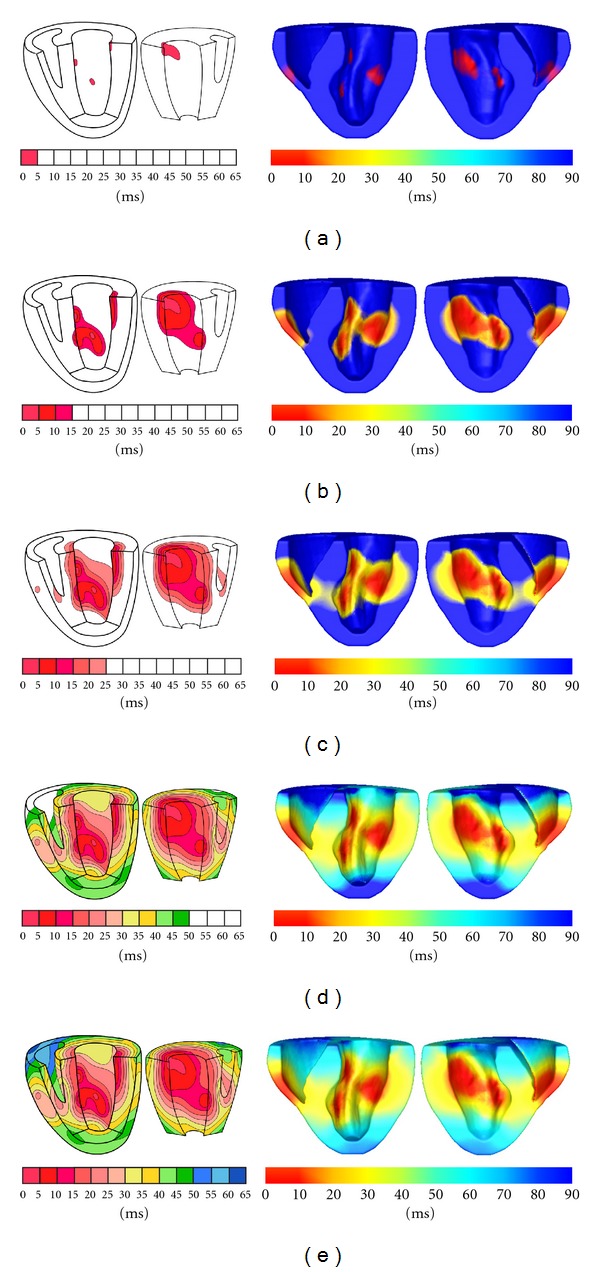
An element-free Galerkin method (EFGM) is proposed to simulate the propagation of myocardial electrical activation without explicit mesh constraints using a monodomain model. In our framework the geometry of myocardium is first defined by a meshfree particle representation that is, a sufficient number of sample nodes without explicit connectivities are placed in and inside the surface of myocardium. Fiber orientations and other material properties of myocardium are then attached to sample nodes according to their geometrical locations, and over the meshfree particle representation spatial variation of these properties is approximated using the shape function of EFGM. After the monodomain equations are converted to their Galerkin weak form and solved using EFGM, the propagation of myocardial activation can be simulated over the meshfree particle representation. The derivation of this solution technique is presented along a series of numerical experiments and a solution of monodomain model using a FitzHugh-Nagumo (FHN) membrane model in a canine ventricular model and a human-heart model which is constructed from digitized virtual Chinese dataset.
提出了一种无网格伽辽金方法(EFGM),用于使用单域模型模拟心肌电激活的传播,而无需显式网格约束。在我们的框架中,首先通过无网格粒子表示来定义心肌的几何形状,即在心肌的表面内和内部放置足够数量的无显式连接的样本节点。然后根据其几何位置将纤维方向和心肌的其他材料属性附加到样本节点上,并使用 EFGM 的形状函数来近似这些属性的空间变化。在将单域方程转换为其伽辽金弱形式并使用 EFGM 求解之后,可以在无网格粒子表示上模拟心肌激活的传播。沿着一系列数值实验以及在犬心室模型和从数字化虚拟中国数据集构建的人心模型中使用 FitzHugh-Nagumo (FHN) 膜模型的单域模型的解来呈现此解决方案技术的推导。