Department of Microbiology, Harbin Medical University, Harbin 150081, China.
Virology. 2012 Nov 25;433(2):513-21. doi: 10.1016/j.virol.2012.08.040. Epub 2012 Sep 23.
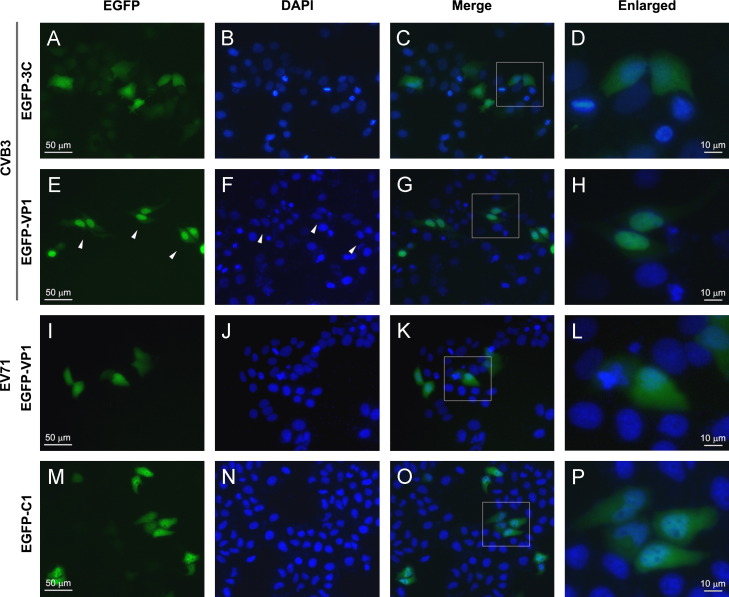
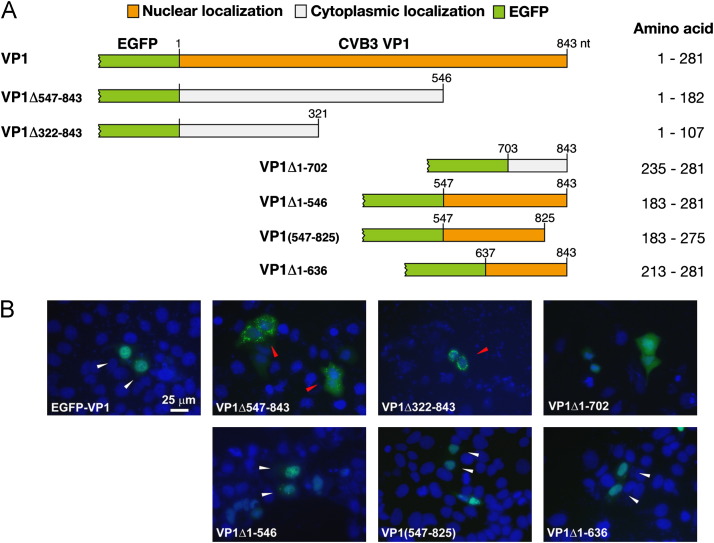
The capsid proteins of some RNA viruses can translocate to the nucleus and interfere with cellular phenotypes. In this study we found that the VP1 capsid protein of coxsackievirus B3 (CVB3) was dominantly localized in the nucleus of the cells transfected with VP1-expressing plasmid. The VP1 nuclear localization also occurred in the cells infected with CVB3. Truncation analysis indicated that the VP1 nuclear localization sequence located near the C-terminal. The substitution of His220 with threonine completely abolished its translocation. The VP1 proteins of other CVB types might have the nuclear localization potential because this region was highly conserved. Moreover, the VP1 nuclear localization induced cell cycle deregulation, including a prolonged S phase and shortened G2-M phase. Besides these findings, we also found a domain between Ala72 and Phe106 that caused the VP1 truncates dotted distributed in the cytoplasm. Our results suggest a new pathogenic mechanism of CVB.
某些 RNA 病毒的衣壳蛋白可以转位到细胞核并干扰细胞表型。在这项研究中,我们发现柯萨奇病毒 B3(CVB3)的 VP1 衣壳蛋白在转染表达 VP1 的质粒的细胞中主要定位于细胞核中。CVB3 感染的细胞也发生了 VP1 核定位。截断分析表明,VP1 核定位序列位于 C 端附近。用苏氨酸取代 His220 完全消除了其易位。其他 CVB 型的 VP1 蛋白可能具有核定位潜力,因为该区域高度保守。此外,VP1 核定位诱导细胞周期失调,包括 S 期延长和 G2-M 期缩短。除了这些发现,我们还发现 Ala72 和 Phe106 之间的一个结构域导致 VP1 截断物点状分布在细胞质中。我们的结果表明了 CVB 的一种新的致病机制。