Department of Animal Biology (Invertebrates), Faculty of Biology, University of Barcelona, Av. Diagonal 643, Barcelona 08028, Catalunya, Spain.
Institute of Biomolecular Chemistry, CNR, Via Campi Flegrei 34, Pozzuoli I-80078, Napoli, Italy.
Mar Drugs. 2012 Aug;10(8):1741-1764. doi: 10.3390/md10081741. Epub 2012 Aug 20.
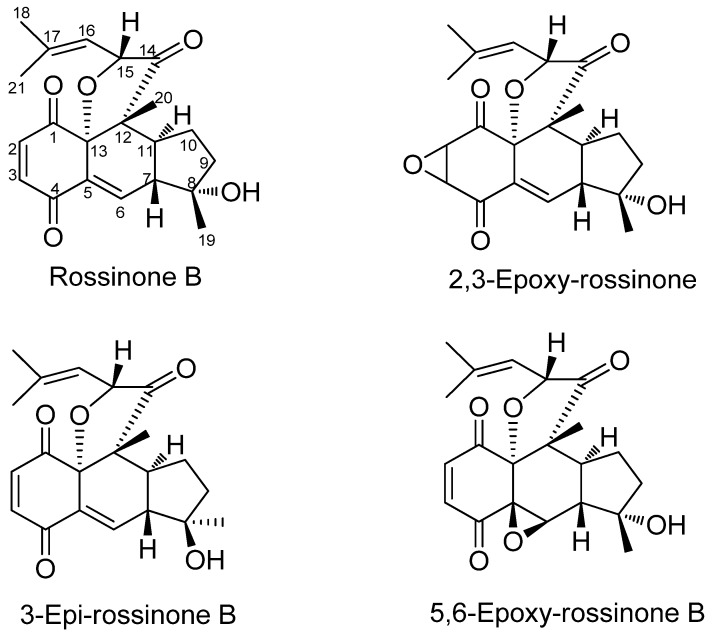
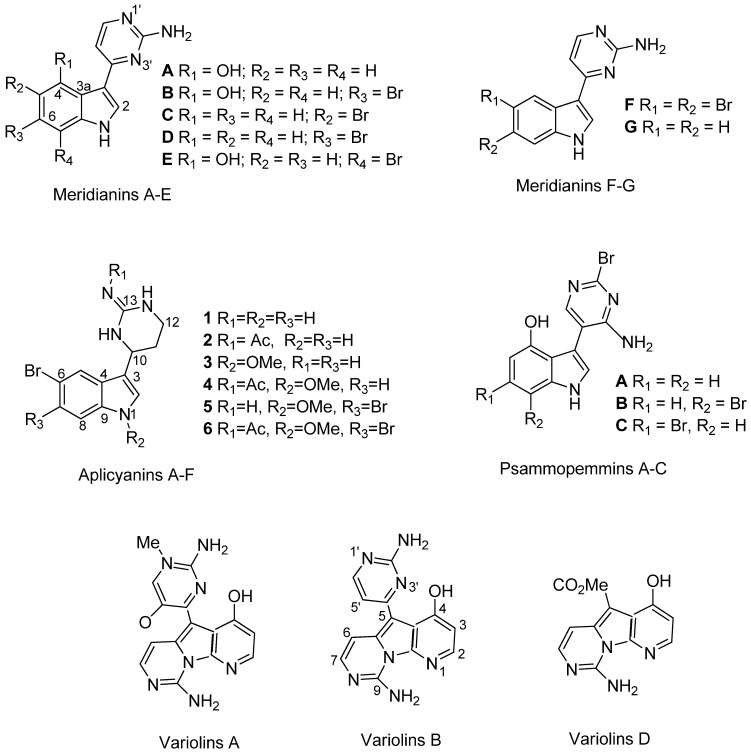
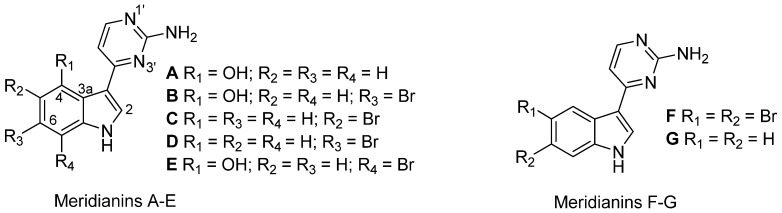
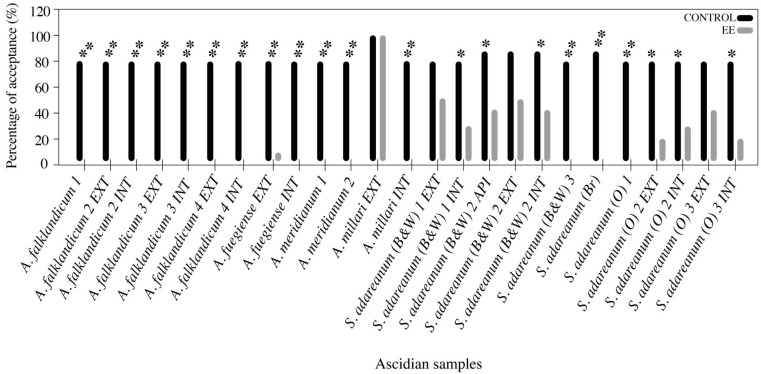
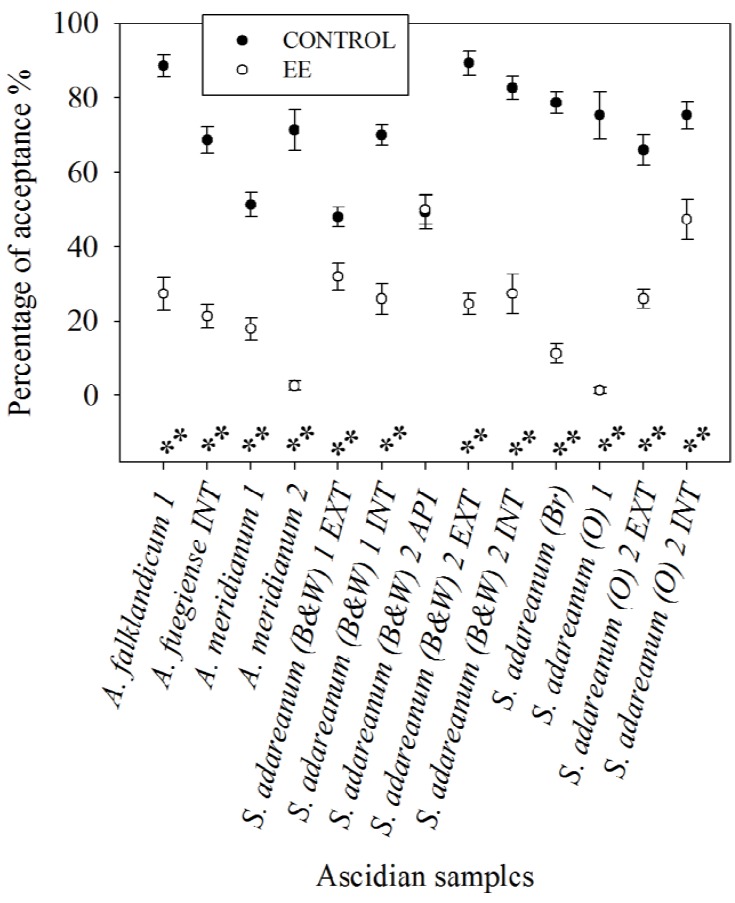
Ascidians have developed multiple defensive strategies mostly related to physical, nutritional or chemical properties of the tunic. One of such is chemical defense based on secondary metabolites. We analyzed a series of colonial Antarctic ascidians from deep-water collections belonging to the genera Aplidium and Synoicum to evaluate the incidence of organic deterrents and their variability. The ether fractions from 15 samples including specimens of the species A. falklandicum, A. fuegiense, A. meridianum, A. millari and S. adareanum were subjected to feeding assays towards two relevant sympatric predators: the starfish Odontaster validus, and the amphipod Cheirimedon femoratus. All samples revealed repellency. Nonetheless, some colonies concentrated defensive chemicals in internal body-regions rather than in the tunic. Four ascidian-derived meroterpenoids, rossinones B and the three derivatives 2,3-epoxy-rossinone B, 3-epi-rossinone B, 5,6-epoxy-rossinone B, and the indole alkaloids meridianins A-G, along with other minoritary meridianin compounds were isolated from several samples. Some purified metabolites were tested in feeding assays exhibiting potent unpalatabilities, thus revealing their role in predation avoidance. Ascidian extracts and purified compound-fractions were further assessed in antibacterial tests against a marine Antarctic bacterium. Only the meridianins showed inhibition activity, demonstrating a multifunctional defensive role. According to their occurrence in nature and within our colonial specimens, the possible origin of both types of metabolites is discussed.
海鞘发展了多种防御策略,主要与被囊的物理、营养或化学特性有关。其中之一是基于次生代谢物的化学防御。我们分析了一系列来自深海采集的、属于 Aplidium 和 Synoicum 属的殖民地南极海鞘,以评估有机驱避剂的发生率及其可变性。对 15 个样本的乙醚馏分进行了分析,这些样本包括 Falklandicum、Fuegiense、Meridianum、Millari 和 Adareanum 物种的标本,并用两种相关的共生捕食者进行了摄食测定:星鱼 Odontaster validus 和片脚类动物 Cheirimedon femoratus。所有样本都显示出驱避性。尽管如此,一些海鞘在内部身体区域而不是在被囊中集中防御性化学物质。从几个样本中分离出了四种海鞘衍生的混合萜类化合物、rossinones B 和三种衍生物 2,3-环氧-rossinone B、3-epi-rossinone B、5,6-环氧-rossinone B,以及吲哚生物碱 meridianins A-G,以及其他 minoritary meridianin 化合物。一些纯化的代谢物在摄食测定中进行了测试,表现出强烈的不可口性,从而揭示了它们在避免捕食中的作用。海鞘提取物和纯化的化合物级分进一步在对抗海洋南极细菌的抗菌测试中进行了评估。只有 meridianins 表现出抑制活性,证明了其具有多功能防御作用。根据它们在自然界中的出现和在我们的殖民地标本中的存在,讨论了这两种代谢物的可能来源。