Faculty of Resource Science and Technology, Universiti Malaysia Sarawak, 94300, Kota Samarahan, Sarawak, Malaysia.
AMB Express. 2012 Sep 28;2(1):53. doi: 10.1186/2191-0855-2-53.
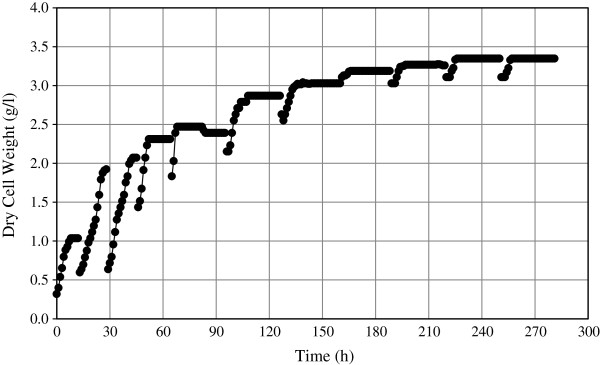
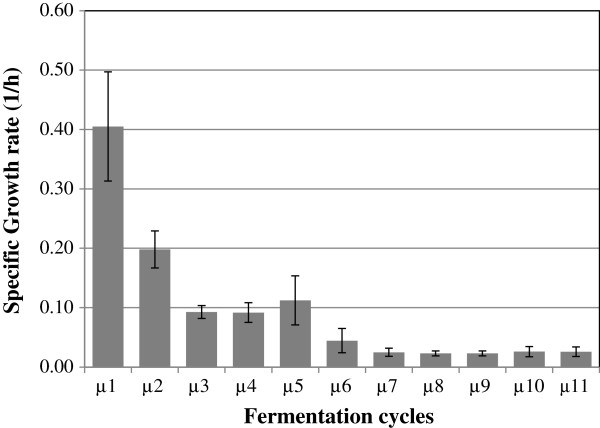
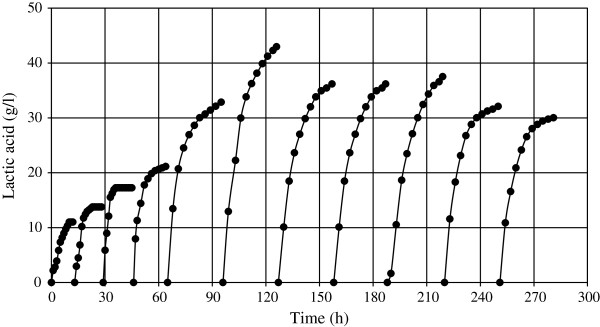
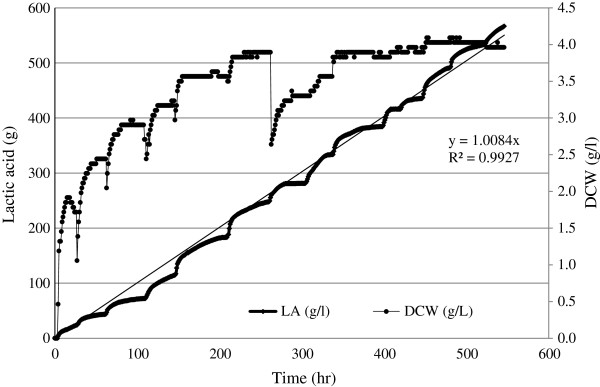
Enterococcus faecium No. 78 (PNCM-BIOTECH 10375) isolated from puto, a type of fermented rice in the Philippines was used to produce lactic acid in repeated batch fermentation mode. Enzymatically liquefied sago starch was used as the sole carbon source, since sago (Metroxylon spp) is a sustainable crop for industrial exploitation. Liquefied sago starch was inoculated with E. faecium to perform the saccharification and fermentation processes simultaneously. Results demonstrated that E. faecium was reused for 11 fermentation cycles with an average lactic acid yield of 36.3 ± 4.71 g/l. The lactic acid production was superior to that of simple batch mode and continuous fermentation in terms of lactic acid concentration. An un-dissociated lactic acid concentration of 1.15 mM affected the productivity of the cells. Work is in progress to maintain and increase the usability of the cells over higher fermentation cycles.
从菲律宾发酵米普托(puto)中分离出的屎肠球菌 No.78(PNCM-BIOTECH 10375),被用于在重复分批发酵模式下生产乳酸。采用酶解木薯淀粉作为唯一的碳源,因为木薯(Metroxylon spp)是一种可持续的工业开发作物。将液化木薯淀粉接种屎肠球菌,同时进行糖化和发酵过程。结果表明,屎肠球菌可重复使用 11 次发酵周期,平均乳酸产量为 36.3±4.71 g/L。在乳酸浓度方面,与简单分批模式和连续发酵相比,该方法的乳酸产率更高。未离解的乳酸浓度为 1.15 mM 会影响细胞的生产力。目前正在努力维持和提高细胞在更高发酵周期下的可用性。