Arnold Arthur P, Chen Xuqi, Itoh Yuichiro
Department of Integrative Biology and Physiology, University of California, Los Angeles, CA 90095, USA.
Handb Exp Pharmacol. 2012(214):67-88. doi: 10.1007/978-3-642-30726-3_4.
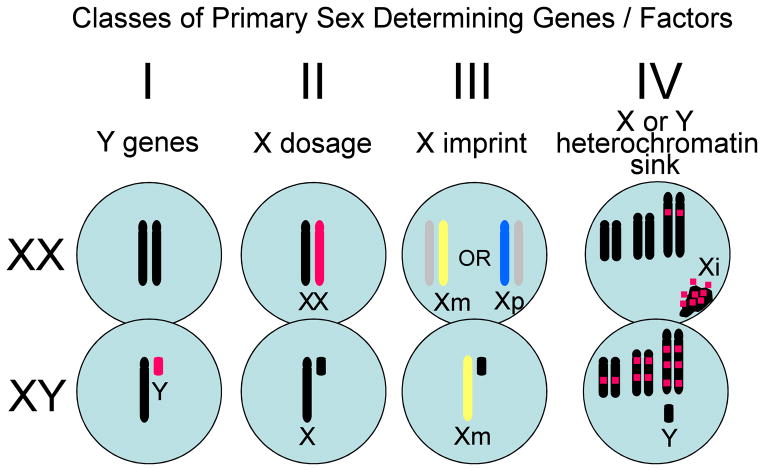
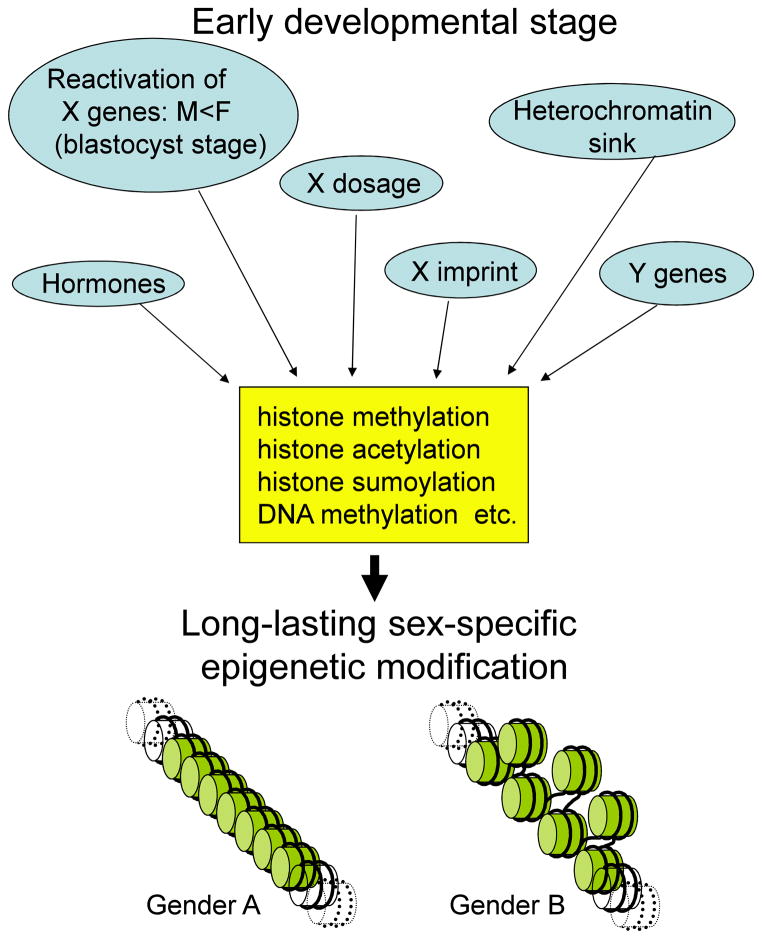
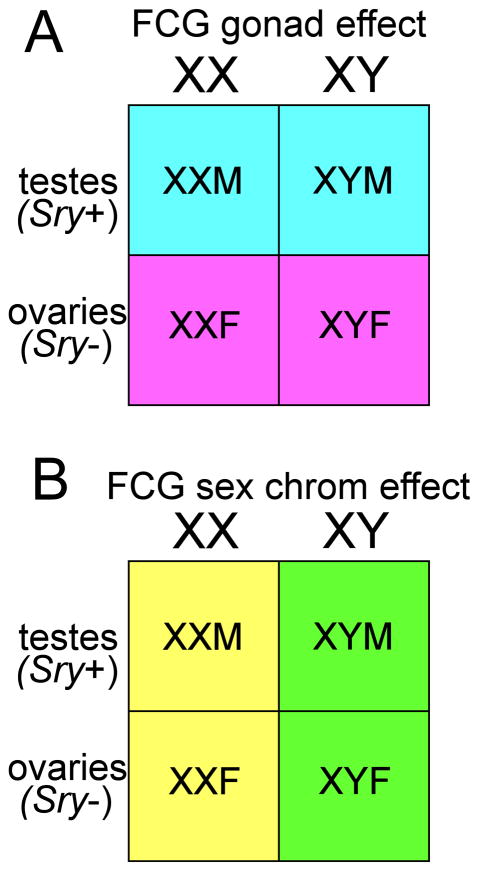
A modern general theory of sex determination and sexual differentiation identifies the factors that cause sexual bias in gene networks, leading to sex differences in physiology and disease. The primary sex-biasing factors are those encoded on the sex chromosomes that are inherently different in the male and female zygotes. These factors, and downstream factors such as gonadal hormones, act directly on tissues to produce sex differences and antagonize each other to reduce sex differences. Recent studies of mouse models such as the four core genotypes have begun to distinguish between the direct effects of sex chromosome complement (XX vs. XY) and hormonal effects. Several lines of evidence implicate epigenetic processes in the control of sex differences, although a great deal of information is needed about sex differences in the epigenome.
一种现代的性别决定和性分化通用理论确定了导致基因网络中出现性别偏向的因素,进而导致生理和疾病方面的性别差异。主要的性别偏向因素是那些在性染色体上编码的因素,这些因素在雄性和雌性受精卵中本质上是不同的。这些因素以及下游因素(如性腺激素)直接作用于组织以产生性别差异,并相互拮抗以减少性别差异。最近对诸如四种核心基因型等小鼠模型的研究已开始区分性染色体组成(XX与XY)的直接影响和激素影响。尽管在表观基因组中的性别差异方面需要大量信息,但有几条证据表明表观遗传过程参与了性别差异的控制。