Department of Microbiology, Immunology, and Cell Biology, West Virginia University School of Medicine, Morgantown, WV, USA.
Department of Research, West Virginia University School of Dentistry, Morgantown, WV, USA.
Biol Sex Differ. 2024 Mar 14;15(1):21. doi: 10.1186/s13293-024-00597-0.
Differences in male vs. female immune responses are well-documented and have significant clinical implications. While the immunomodulatory effects of sex hormones are well established, the contributions of sex chromosome complement (XX vs. XY) and gut microbiome diversity on immune sexual dimorphisms have only recently become appreciated. Here we investigate the individual and collaborative influences of sex chromosome complements and gut microbiota on humoral immune activation.
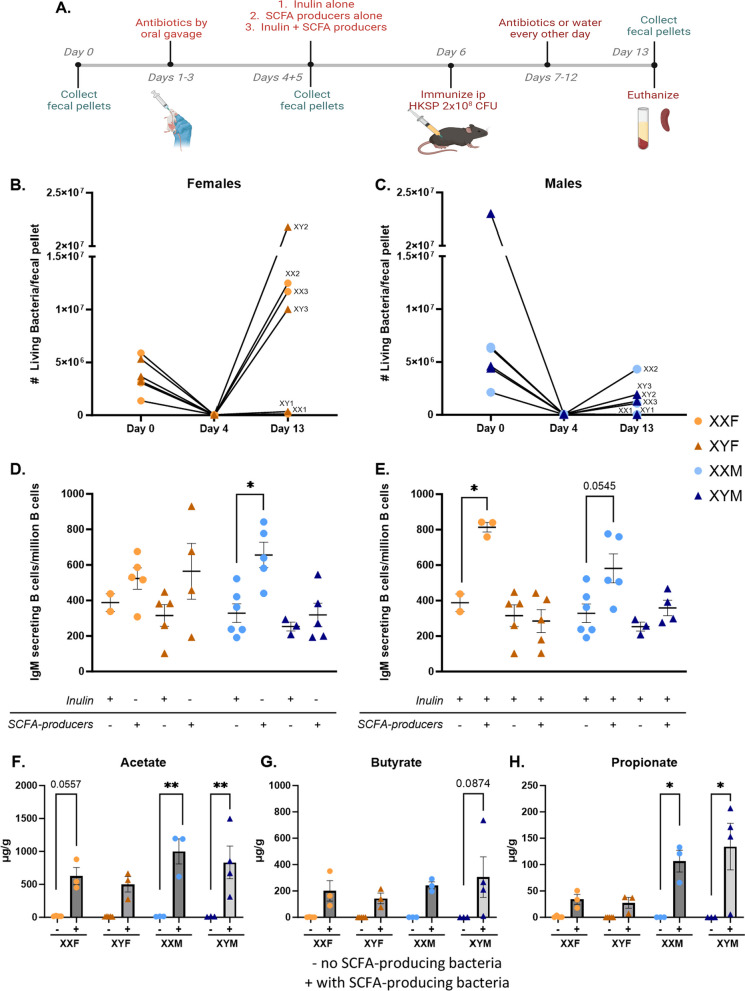
Male and female Four Core Genotype (FCG) mice were immunized with heat-killed Streptococcus pneumoniae (HKSP). Humoral immune responses were assessed, and X-linked immune-related gene expression was evaluated to explain the identified XX-dependent phenotype. The functional role of Kdm6a, an X-linked epigenetic regulatory gene of interest, was evaluated ex vivo using mitogen stimulation of B cells. Additional influences of the gut microbiome on sex chromosome-dependent B cell activation was also evaluated by antibiotically depleting gut microbiota prior to HKSP immunization. Reconstitution of the depleted microbiome with short-chain fatty acid (SCFA)-producing bacteria tested the impact of SCFAs on XX-dependent immune activation.
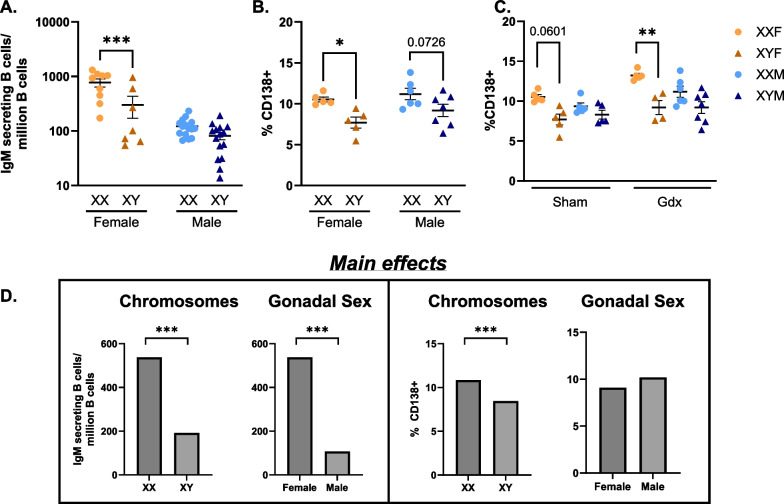
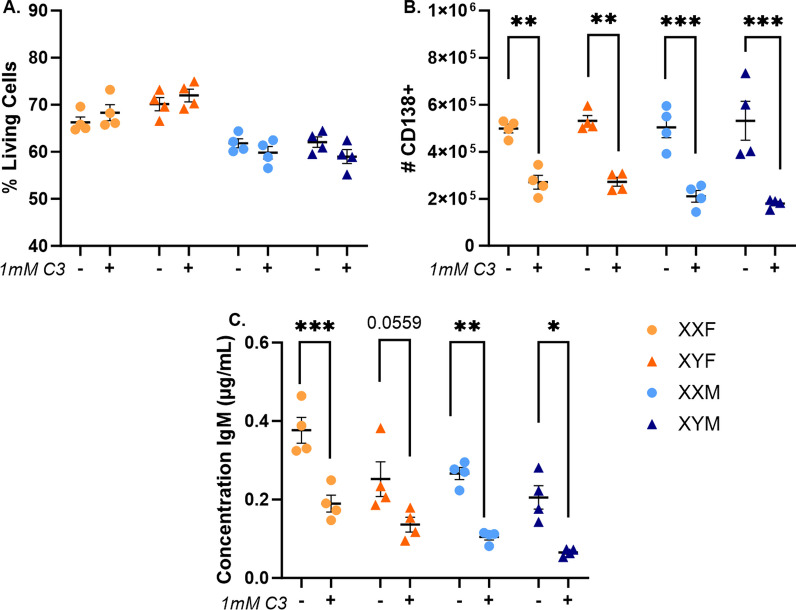
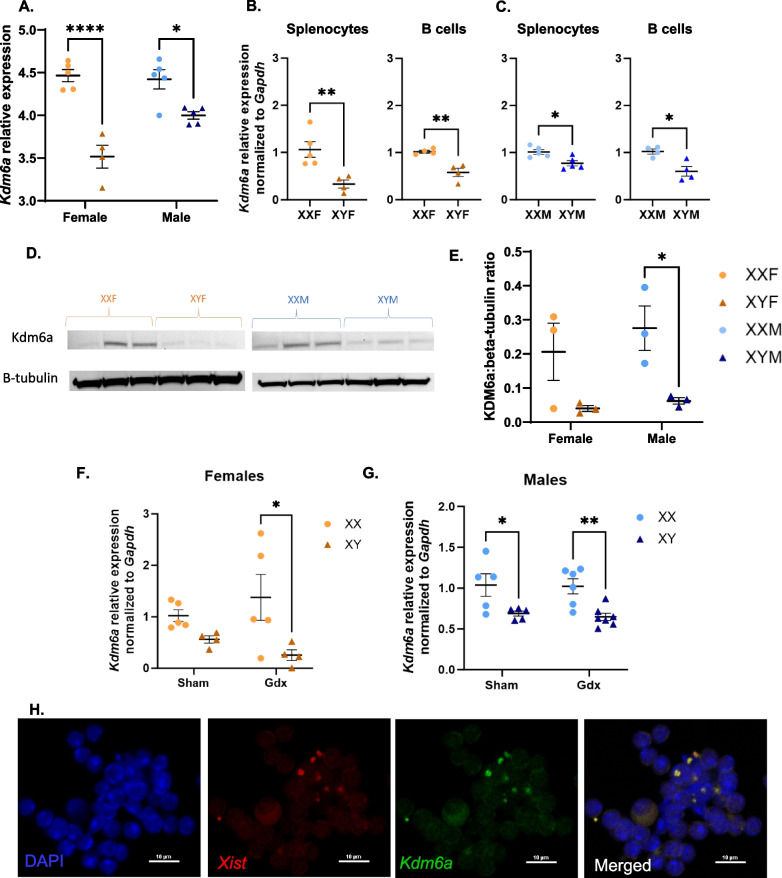
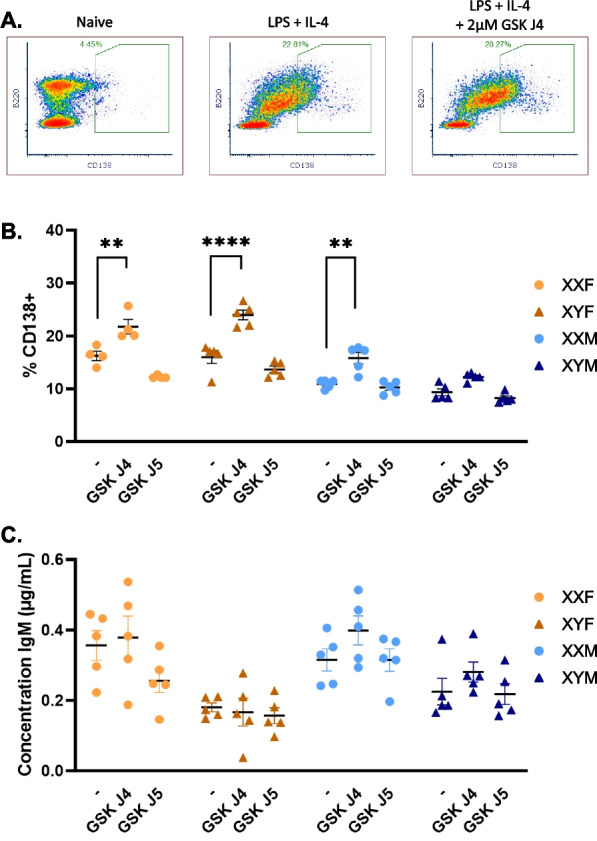
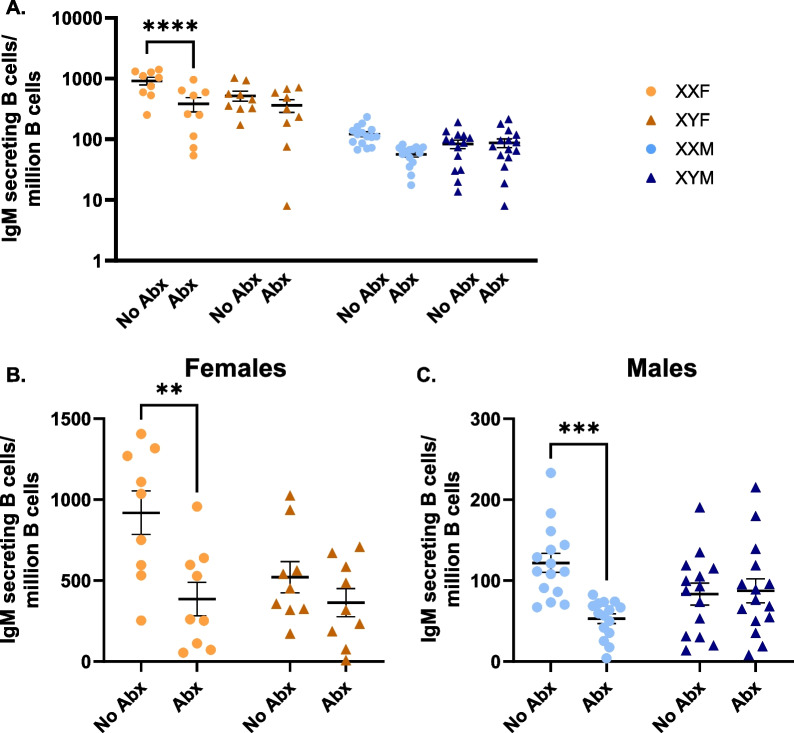
XX mice exhibited higher HKSP-specific IgM-secreting B cells and plasma cell frequencies than XY mice, regardless of gonadal sex. Although Kdm6a was identified as an X-linked gene overexpressed in XX B cells, inhibition of its enzymatic activity did not affect mitogen-induced plasma cell differentiation or antibody production in a sex chromosome-dependent manner ex vivo. Enhanced humoral responses in XX vs. XY immunized FCG mice were eliminated after microbiome depletion, indicating that the microbiome contributes to the identified XX-dependent immune enhancement. Reconstituting microbiota-depleted mice with select SCFA-producing bacteria enhanced fecal SCFA concentrations and increased humoral responses in XX, but not XY, FCG mice. However, exposure to the SCFA propionate alone did not enhance mitogenic B cell stimulation in ex vivo studies.
FCG mice have been used to assess sex hormone and sex chromosome complement influences on various sexually dimorphic traits. The current study indicates that the gut microbiome impacts humoral responses in an XX-dependent manner, suggesting that the collaborative influence of gut bacteria and other sex-specific factors should be considered when interpreting data aimed at delineating the mechanisms that promote sexual dimorphism.
男性和女性免疫反应的差异已有充分的记录,并具有重要的临床意义。虽然性激素的免疫调节作用已得到充分证实,但性染色体组成(XX 与 XY)和肠道微生物多样性对免疫性别二态性的贡献最近才得到重视。在这里,我们研究了性染色体组成和肠道微生物群对体液免疫激活的单独和协同影响。
用热灭活肺炎链球菌(HKSP)免疫雄性和雌性四核心基因型(FCG)小鼠。评估体液免疫反应,并评估与 X 连锁相关的免疫基因表达,以解释鉴定出的 XX 依赖性表型。使用有丝分裂原刺激 B 细胞,体外评估 X 连锁表观遗传调节基因 Kdm6a 的功能作用,该基因是一个感兴趣的基因。在 HKSP 免疫之前,抗生素耗竭肠道微生物群,还评估了肠道微生物群对依赖性 B 细胞激活的性别染色体的额外影响。用产生短链脂肪酸(SCFA)的细菌重建耗竭的微生物群,测试 SCFA 对 XX 依赖性免疫激活的影响。
无论性腺性别如何,XX 小鼠表现出比 XY 小鼠更高的 HKSP 特异性 IgM 分泌 B 细胞和浆细胞频率。尽管 Kdm6a 被鉴定为 XX 细胞中过度表达的 X 连锁基因,但在体外以性染色体依赖的方式抑制其酶活性不会影响有丝分裂原诱导的浆细胞分化或抗体产生。FCG 免疫的 XX 与 XY 小鼠中,微生物群耗竭后,XX 与 XY 免疫的 FCG 小鼠增强的体液反应被消除,表明微生物群有助于鉴定出的 XX 依赖性免疫增强。用选定的产生 SCFA 的细菌重建微生物群耗竭的小鼠,增加了 XX 但不增加 XY FCG 小鼠的粪便 SCFA 浓度和体液反应。然而,在体外研究中,单独暴露于 SCFA 丙酸盐并不能增强有丝分裂原刺激的 B 细胞刺激。
FCG 小鼠已被用于评估性激素和性染色体组成对各种性别二态性特征的影响。本研究表明,肠道微生物群以 XX 依赖的方式影响体液反应,这表明在解释旨在阐明促进性别二态性的机制的数据时,应考虑肠道细菌和其他性别特异性因素的协同影响。