Department of Mechanical and Aerospace Engineering, SUNY-Buffalo, Buffalo, New York, United States of America.
PLoS One. 2012;7(9):e44167. doi: 10.1371/journal.pone.0044167. Epub 2012 Sep 19.
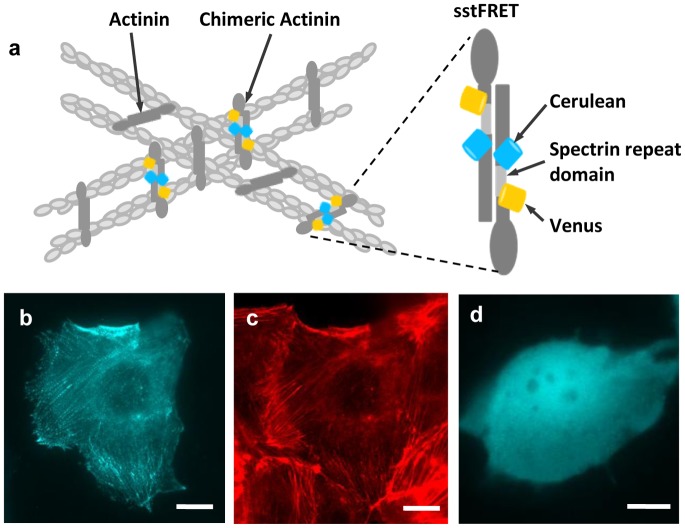
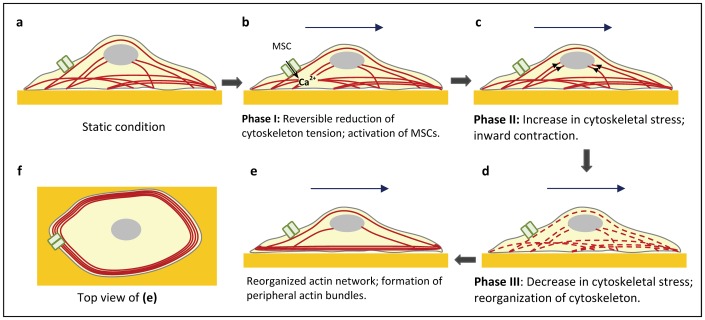
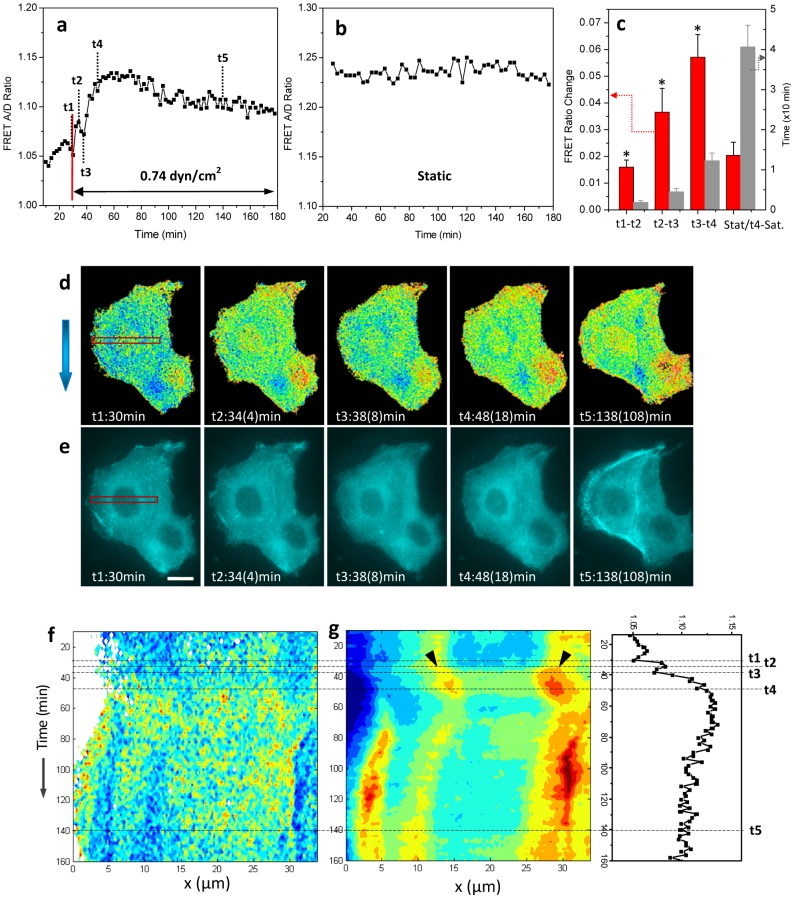
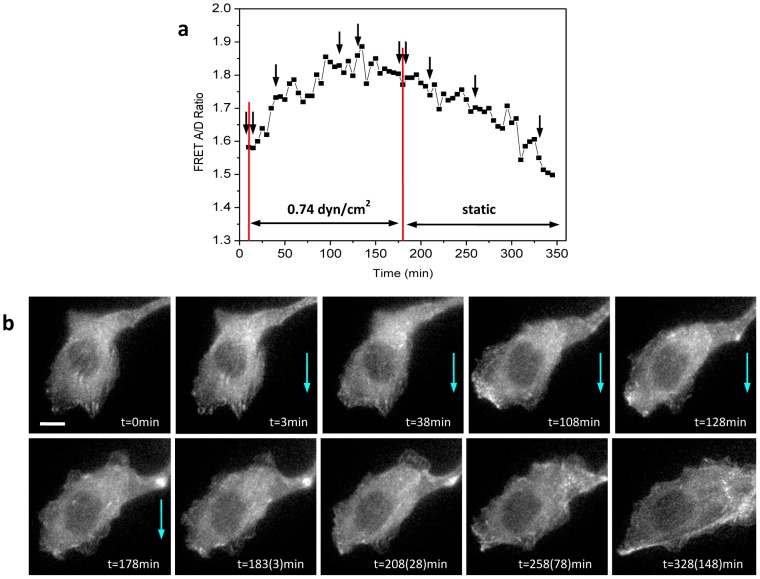
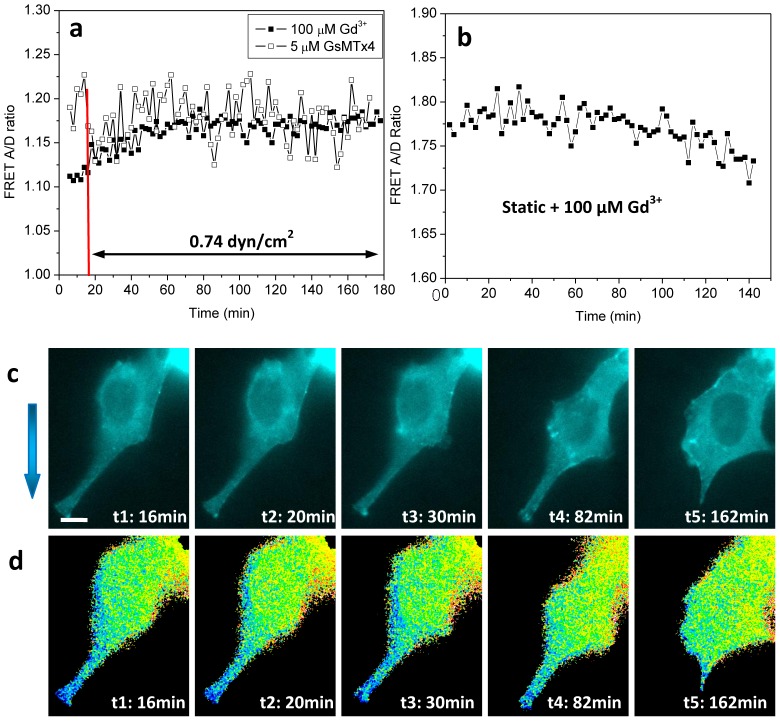
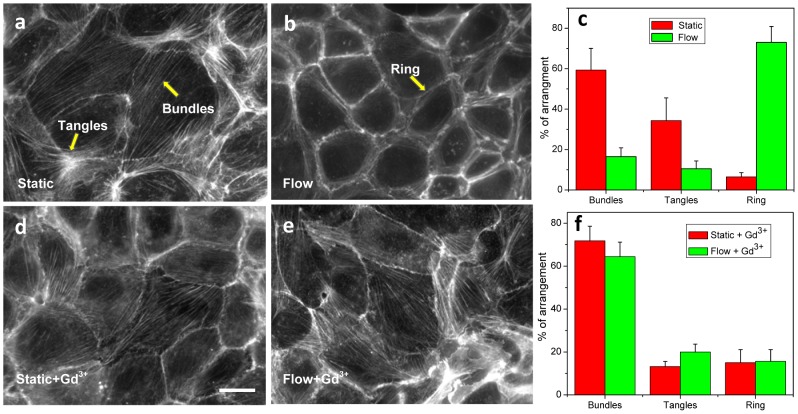
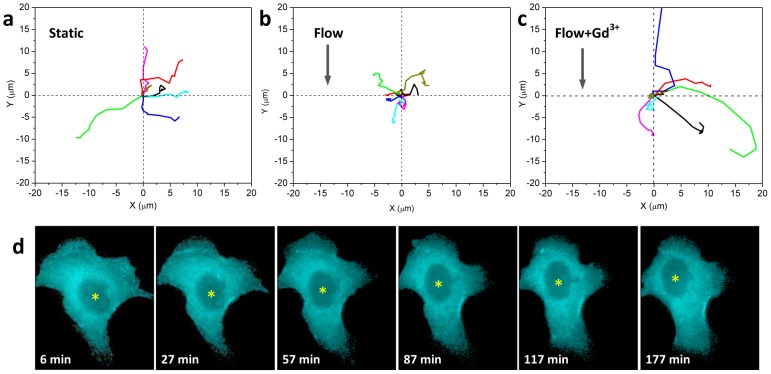
Using stress sensitive FRET sensors we have measured cytoskeletal stresses in α-actinin and the associated reorganization of the actin cytoskeleton in cells subjected to chronic shear stress. We show that long-term shear stress reduces the average actinin stress and this effect is reversible with removal of flow. The flow-induced changes in cytoskeletal stresses are found to be dynamic, involving a transient decrease in stress (phase-I), a short-term increase (3-6 min) (Phase-II), followed by a longer-term decrease that reaches a minimum in ~20 min (Phase-III), before saturating. These changes are accompanied by reorganization of the actin cytoskeleton from parallel F-actin bundles to peripheral bundles. Blocking mechanosensitive ion channels (MSCs) with Gd(3+) and GsMTx4 (a specific inhibitor) eliminated the changes in cytoskeletal stress and the corresponding actin reorganization, indicating that Ca(2+) permeable MSCs participate in the signaling cascades. This study shows that shear stress induced cell adaptation is mediated via MSCs.
利用应力敏感的 FRET 传感器,我们测量了α-辅肌动蛋白中的细胞骨架应力,并研究了慢性切应力下细胞中肌动蛋白细胞骨架的相关重排。结果表明,长期切应力会降低肌动蛋白的平均应力,这种效应在停止流动后是可逆的。发现细胞骨架应力的流诱导变化是动态的,包括应力的短暂下降(I 相)、短期增加(3-6 分钟)(II 相),然后是较长时间的下降,约 20 分钟后达到最小值(III 相),然后饱和。这些变化伴随着肌动蛋白细胞骨架从平行的 F-肌动蛋白束到外周束的重排。用 Gd(3+)和 GsMTx4(一种特异性抑制剂)阻断机械敏感离子通道(MSCs)消除了细胞骨架应力的变化和相应的肌动蛋白重排,表明 Ca(2+)可渗透的 MSCs 参与了信号级联反应。这项研究表明,切应力诱导的细胞适应是通过 MSCs 介导的。