Sachs Frederick
UB School of Medicine and Biomedical Sciences, Physiology and Biophysics, Buffalo, NY 14214, United States.
World J Neurol. 2015 Sep 28;5(3):74-87. doi: 10.5316/wjn.v5.i3.74.
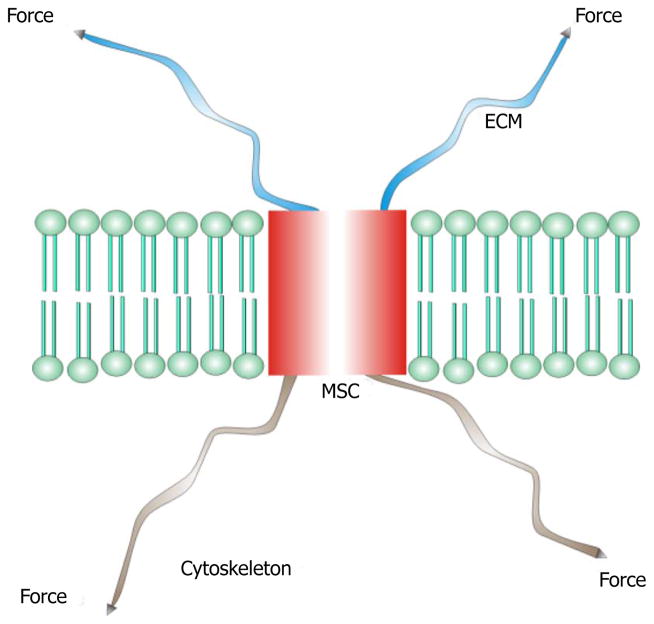
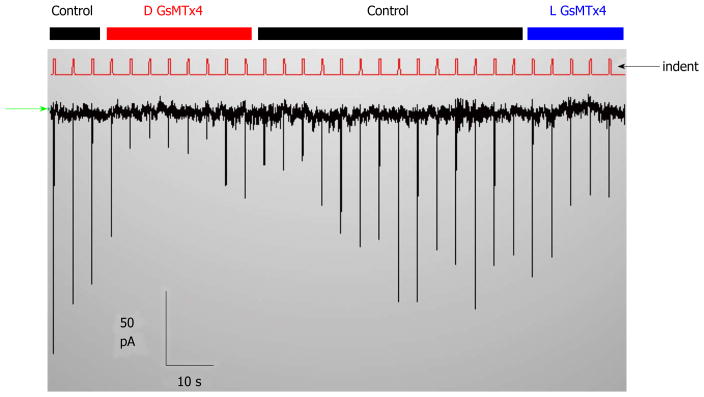
Mechanical transduction by ion channels occurs in all cells. The physiological functions of these channels have just begun to be elaborated, but if we focus on the upper animal kingdom, these channels serve the common sensory services such as hearing and touch, provide the central nervous system with information on the force and position of muscles and joints, and they provide the autonomic system with information about the filling of hollow organs such as blood vessels. However, all cells of the body have mechanosensitive channels (MSCs), including red cells. Most of these channels are cation selective and are activated by bilayer tension. There are also K selective MSCs found commonly in neurons where they may be responsible for both general anesthesia and knockout punches in the boxing ring by hyperpolarizing neurons to reduce excitability. The cationic MSCs are typically inactive under normal mechanical stress, but open under pathologic stress. The channels are normally inactive because they are shielded from stress by the cytoskeleton. The cationic MSCs are specifically blocked by the externally applied peptide GsMtx4 (aka, AT-300). This is the first drug of its class and provides a new approach to many pathologies since it is nontoxic, non-immunogenic, stable in a biological environment and has a long pharmacokinetic lifetime. Pathologies involving excessive stress are common. They produce cardiac arrhythmias, contraction in stretched dystrophic muscle, xerocytotic and sickled red cells, . The channels seem to function primarily as "fire alarms", providing feedback to the cytoskeleton that a region of the bilayer is under excessive tension and needs reinforcing. The eukaryotic forms of MSCs have only been cloned in recent years and few people have experience working with them. "Newbies" need to become aware of the technology, potential artifacts, and the fundamentals of mechanics. The most difficult problem in studying MSCs is that the actual stimulus, the force applied to the channel, is not known. We don't have direct access to the channels themselves but only to larger regions of the membrane as seen in patches. Cortical forces are shared by the bilayer, the cytoskeleton and the extracellular matrix. How much of an applied stimulus reaches the channel is unknown. Furthermore, many of these channels exist in spatial domains where the forces within a domain are different from forces outside the domain, although we often hope they are proportional. This review is intended to be a guide for new investigators who want to study mechanosensitive ion channels.
离子通道介导的机械转导在所有细胞中都存在。这些通道的生理功能才刚刚开始被阐明,但如果我们聚焦于高等动物界,这些通道执行诸如听觉和触觉等常见的感觉功能,为中枢神经系统提供有关肌肉和关节的力量及位置的信息,并且为自主神经系统提供有关诸如血管等中空器官充盈情况的信息。然而,身体的所有细胞都有机械敏感通道(MSC),包括红细胞。这些通道大多对阳离子具有选择性,并由双层膜张力激活。在神经元中也普遍发现了对钾离子具有选择性的MSC,在那里它们可能通过使神经元超极化以降低兴奋性,从而对全身麻醉和拳击比赛中的击倒重击都负有责任。阳离子型MSC在正常机械应力下通常是不活跃的,但在病理应力下会打开。这些通道通常不活跃是因为它们被细胞骨架保护而免受应力影响。阳离子型MSC会被外部施加的肽GsMtx4(又名AT - 300)特异性阻断。这是该类药物中的第一种,为许多疾病提供了一种新方法,因为它无毒、无免疫原性、在生物环境中稳定且具有较长的药代动力学半衰期。涉及过度应力的疾病很常见。它们会导致心律失常、拉伸的营养不良肌肉收缩、皱缩红细胞和镰状红细胞等。这些通道似乎主要起到“火警报警器”的作用,向细胞骨架反馈双层膜的某个区域处于过度张力之下且需要加强。真核形式的MSC直到最近几年才被克隆出来,很少有人有处理它们的经验。“新手”需要了解这项技术、潜在的假象以及力学的基本原理。研究MSC最困难的问题在于,实际的刺激,即施加到通道上的力,是未知的。我们无法直接接触通道本身,而只能接触到如膜片那样较大的膜区域。皮质力由双层膜、细胞骨架和细胞外基质共同承担。施加的刺激有多少能到达通道是未知的。此外,这些通道中的许多存在于空间区域,其中一个区域内的力与该区域外的力不同,尽管我们常常希望它们是成比例的。这篇综述旨在为想要研究机械敏感离子通道的新研究者提供指导。