Department of Paediatric and Adolescents Medicine, Friedrich-Alexander-University Erlangen/Nuremberg, Erlangen, Germany.
PLoS One. 2012;7(9):e44349. doi: 10.1371/journal.pone.0044349. Epub 2012 Sep 18.
In recent years, efforts have been made to improve paediatric drug therapy. The aim of this research was to investigate any changes regarding the frequency and nature of adverse drug reactions (ADRs) in hospitalized children in one paediatric general medical ward over a 9-year period.
Two prospective observational cohort studies were conducted at a large University hospital in Germany in 1999 and 2008, respectively. Children aged 0-18 years admitted to the study ward during the study periods were included. ADRs were identified using intensive chart review. Uni- and multivariable regression has been used for data analysis.
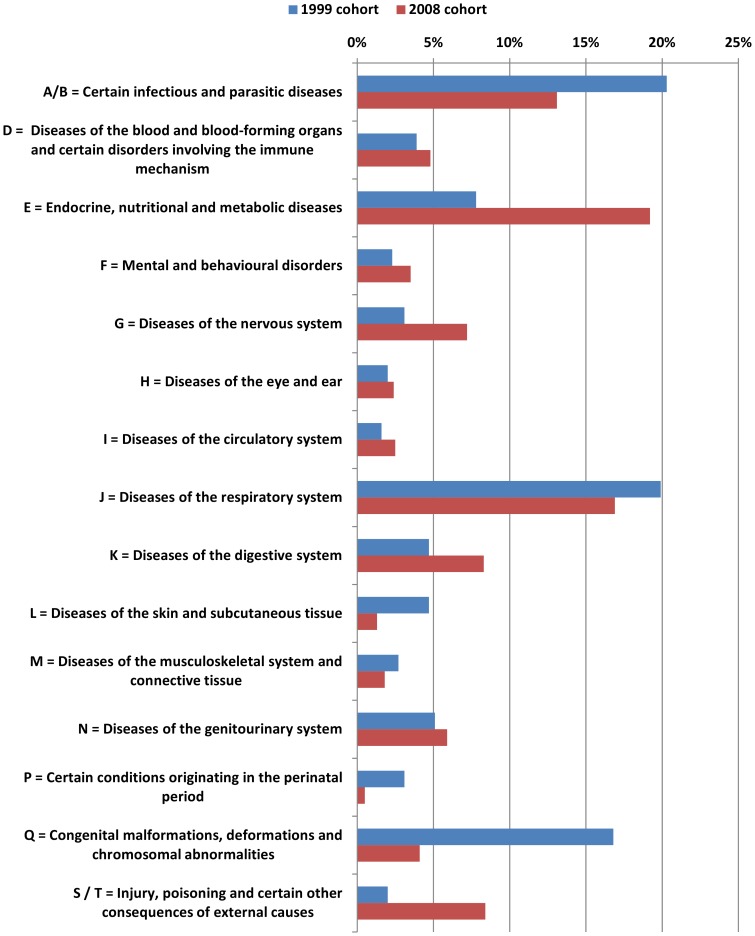
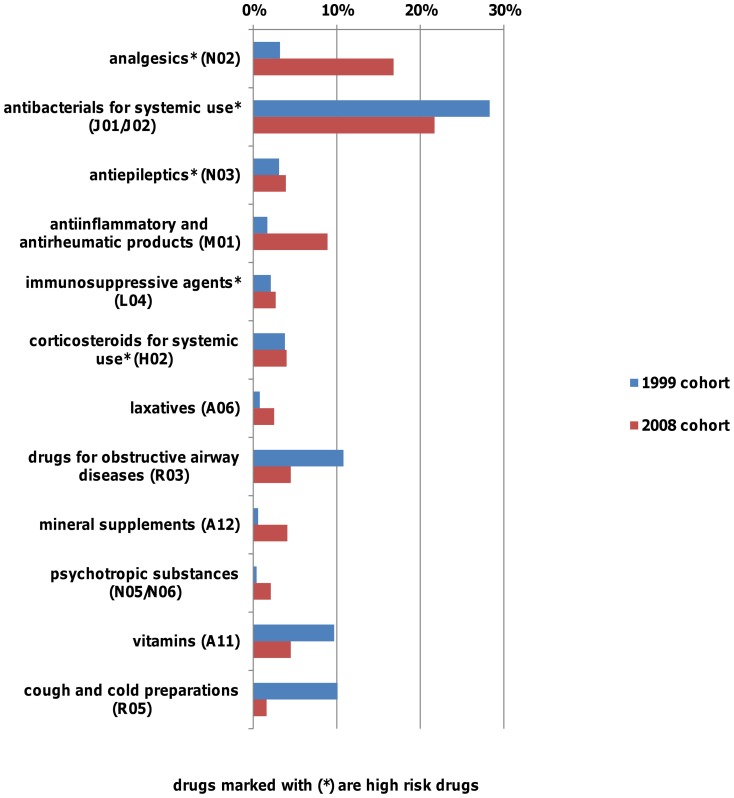
A total of 520 patients (574 admissions) were included [1999: n = 144 (167); 2008: n = 376 (407)]. Patients received a total of 2053 drugs [median 3, interquartile range (IQR) 2-5]. 19% of patients did not receive any medication. Median length of stay was 4 days (IQR 3-7; range 1-190 days) with a significantly longer length of stay in 1999. The overall ADR incidence was 13.1% (95% CI, 9.8-16.3) varying significantly between the two study cohorts [1999: 21.9%, 95% CI, 14.7-29.0; 2008: 9.2%, 95% CI, 5.9-12.5 (p<0.001)]. Antibacterials and corticosteroids for systemic use caused most of the ADRs in both cohorts (1999; 2008). Exposure to systemic antibacterials decreased from 62.9% to 43.5% whereas exposure to analgesics and anti-inflammatory drugs increased from 17.4% to 45.2%, respectively. The use of high risk drugs decreased from 75% to 62.2%. In 1999, 45.7% and in 2008 96.2% of ADRs were identified by treating clinicians (p<0.001).
Between 1999 and 2008, the incidence of ADRs decreased significantly. Improved treatment strategies and an increased awareness of ADRs by physicians are most likely to be the cause for this positive development. Nevertheless further research on ADRs particularly in primary care and the establishment of prospective pharmacovigilance systems are still needed.
近年来,人们一直在努力改善儿科药物治疗。本研究的目的是调查在德国一家儿科综合医疗病房的 9 年间,住院儿童中不良药物反应(ADR)的频率和性质是否发生变化。
分别于 1999 年和 2008 年在德国一家大型大学医院进行了两项前瞻性观察队列研究。纳入研究期间入住研究病房的 0-18 岁儿童。通过密集的图表审查来确定 ADR。采用单变量和多变量回归进行数据分析。
共纳入 520 例患者(574 例入院)[1999 年:n=144(167);2008 年:n=376(407)]。患者共接受了 2053 种药物[中位数 3,四分位距(IQR)2-5]。19%的患者未接受任何药物治疗。中位住院时间为 4 天(IQR 3-7;范围 1-190 天),1999 年的住院时间明显更长。总体 ADR 发生率为 13.1%(95%CI,9.8-16.3),两个研究队列之间差异有统计学意义[1999 年:21.9%,95%CI,14.7-29.0;2008 年:9.2%,95%CI,5.9-12.5(p<0.001)]。全身性抗菌药物和皮质类固醇是两个队列中引起 ADR 的主要原因(1999 年;2008 年)。全身性抗菌药物的暴露率从 62.9%降至 43.5%,而镇痛药和抗炎药的暴露率从 17.4%增至 45.2%。高危药物的使用率从 75%降至 62.2%。1999 年有 45.7%的 ADR 是由治疗医生确定的,而 2008 年则有 96.2%(p<0.001)。
1999 年至 2008 年间,ADR 的发生率显著下降。治疗策略的改进和医生对 ADR 的认识提高很可能是这种积极发展的原因。尽管如此,仍需要对 ADR 进行进一步的研究,特别是在初级保健领域,并建立前瞻性药物警戒系统。