Integrated Department of Immunology, National Jewish Health, Denver, Colorado, USA.
PLoS One. 2012;7(9):e45186. doi: 10.1371/journal.pone.0045186. Epub 2012 Sep 18.
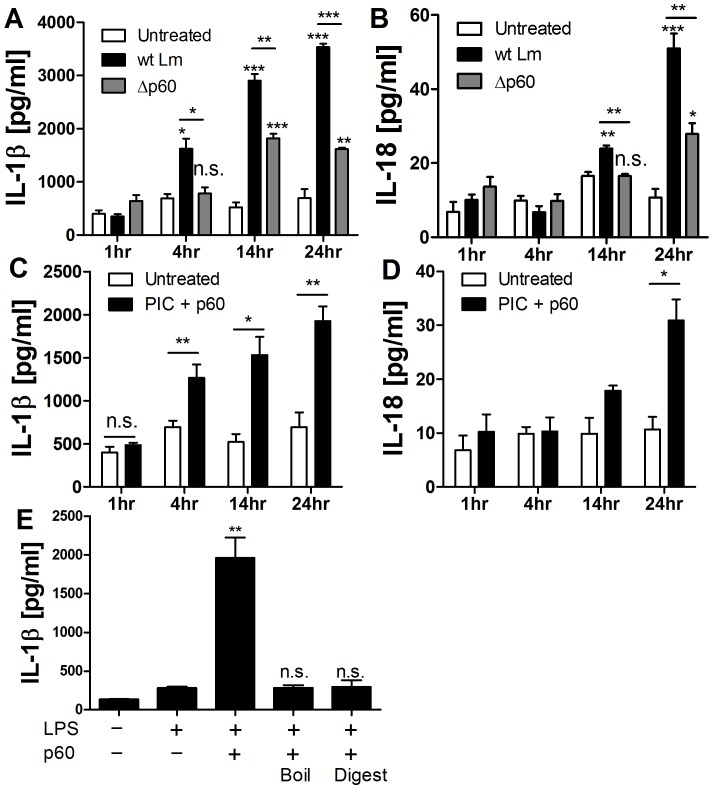
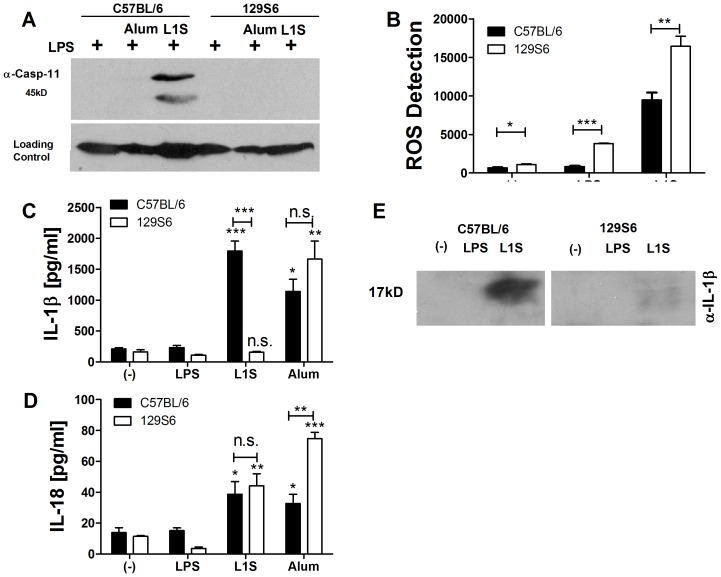
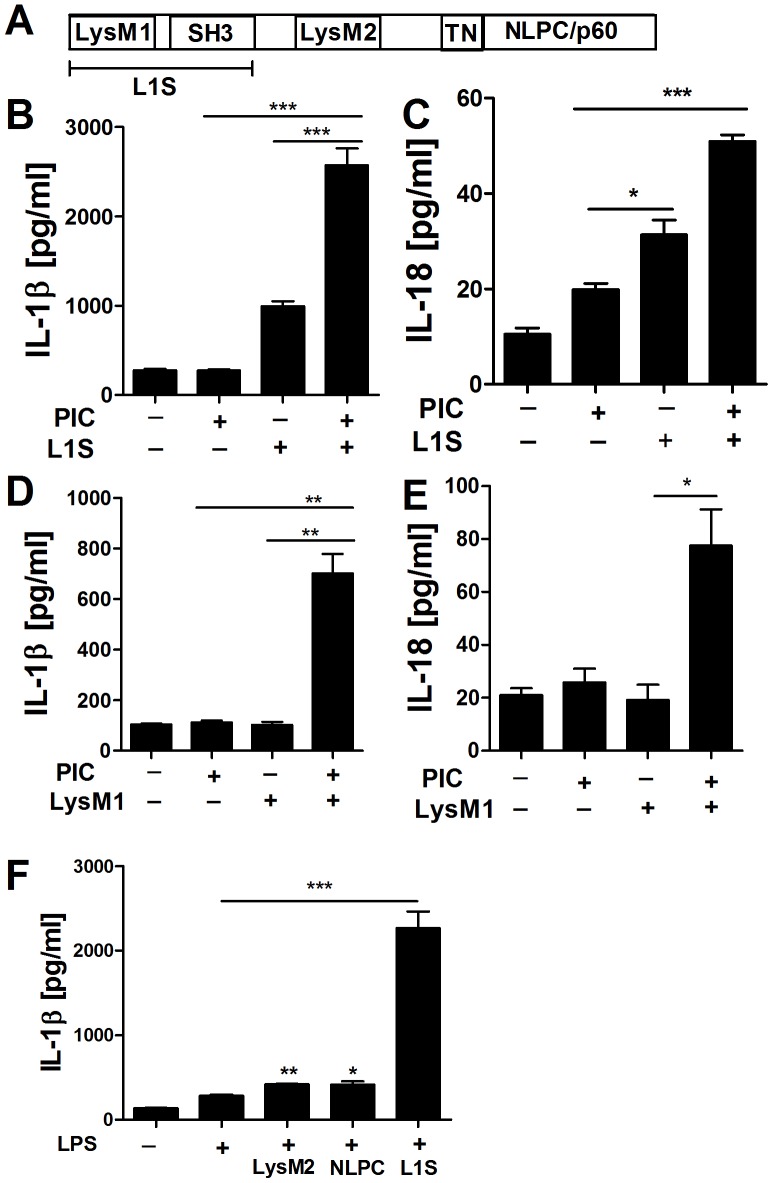
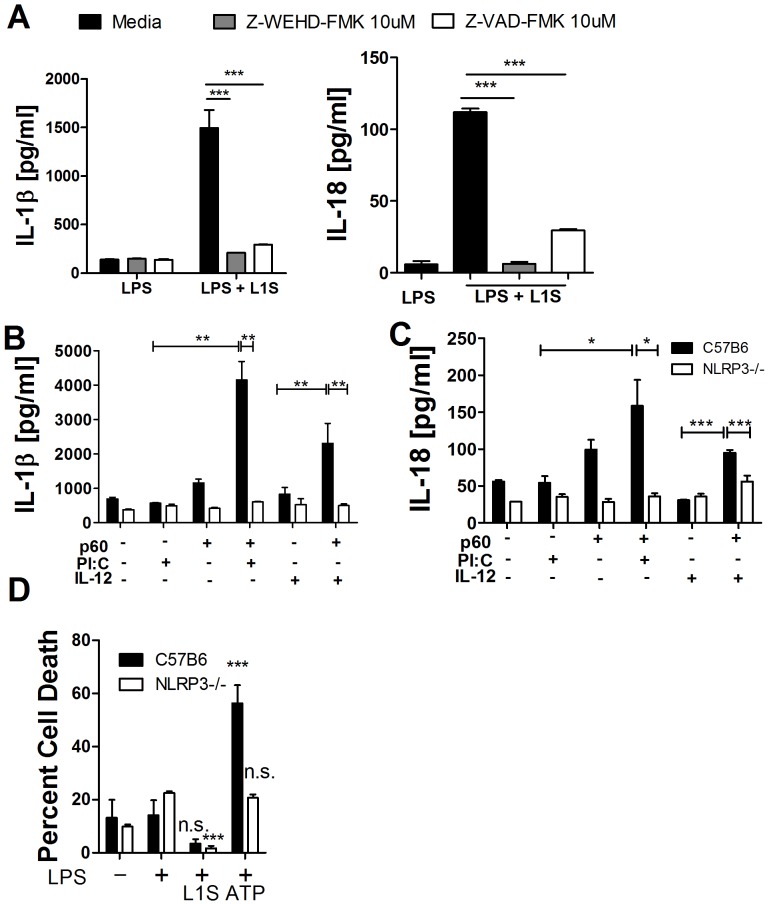
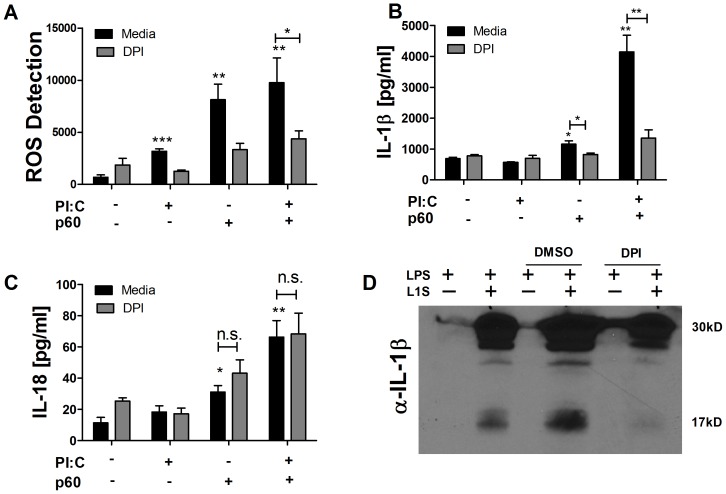
Inflammasome activation permits processing of interleukins (IL)-1β and 18 and elicits cell death (pyroptosis). Whether these responses are independently licensed or are "hard-wired" consequences of caspase-1 (casp1) activity has not been clear. Here, we show that that each of these responses is independently regulated following activation of NLRP3 inflammasomes by a "non-canonical" stimulus, the secreted Listeria monocytogenes (Lm) p60 protein. Primed murine dendritic cells (DCs) responded to p60 stimulation with reactive oxygen species (ROS) production and secretion of IL-1β and IL-18 but not pyroptosis. Inhibitors of ROS production inhibited secretion of IL-1β, but did not impair IL-18 secretion. Furthermore, DCs from caspase-11 (casp11)-deficient 129S6 mice failed to secrete IL-1β in response to p60 but were fully responsive for IL-18 secretion. These findings reveal that there are distinct licensing requirements for processing of IL-18 versus IL-1β by NLRP3 inflammasomes.
炎症小体的激活允许白细胞介素 (IL)-1β 和 18 的加工,并引发细胞死亡(细胞焦亡)。这些反应是否是 caspase-1 (casp1) 活性的独立许可,或者是“硬连线”的结果,尚不清楚。在这里,我们表明,在 NOD、LRR 和 pyrin 结构域包含 3 (NLRP3) 炎症小体被“非经典”刺激物——分泌的单核细胞增生李斯特菌 (Lm) p60 蛋白激活后,这些反应中的每一种都是独立调节的。被激活的小鼠树突状细胞 (DC) 对 p60 刺激的反应是活性氧 (ROS) 的产生和 IL-1β 和 IL-18 的分泌,但没有细胞焦亡。ROS 产生抑制剂抑制了 IL-1β 的分泌,但没有损害 IL-18 的分泌。此外,来自 caspase-11 (casp11) 缺陷的 129S6 小鼠的 DC 不能对 p60 反应分泌 IL-1β,但对 IL-18 分泌完全有反应。这些发现揭示了 NLRP3 炎症小体对 IL-18 与 IL-1β 的加工有不同的许可要求。