Universidad de Los Andes, Laboratorio de Ecología de Bosques Tropicales y de Primatología, Centro de Investigaciones Ecológicas La Macarena, Bogotá, Colombia.
PLoS One. 2012;7(9):e45199. doi: 10.1371/journal.pone.0045199. Epub 2012 Sep 18.
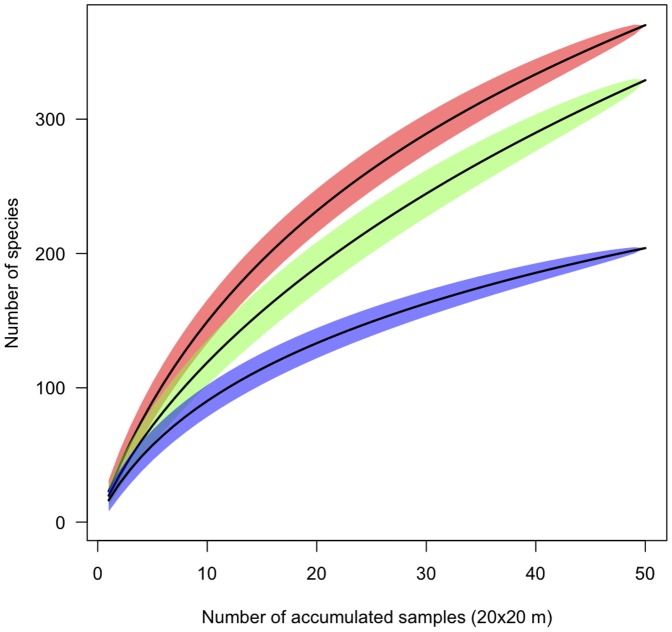
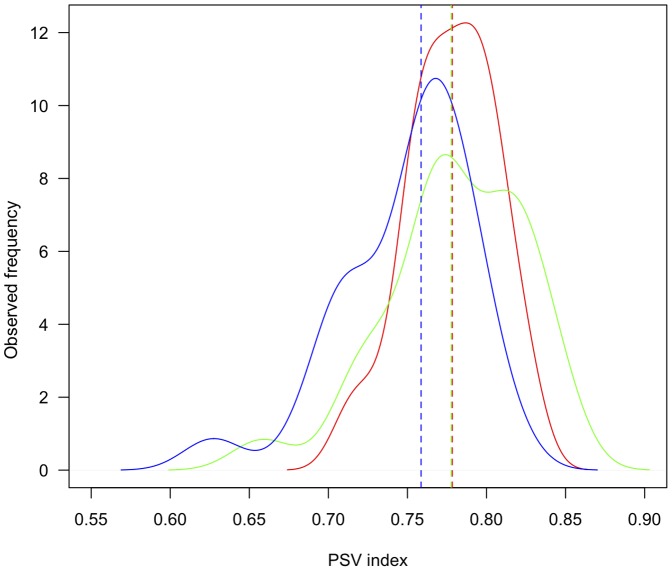
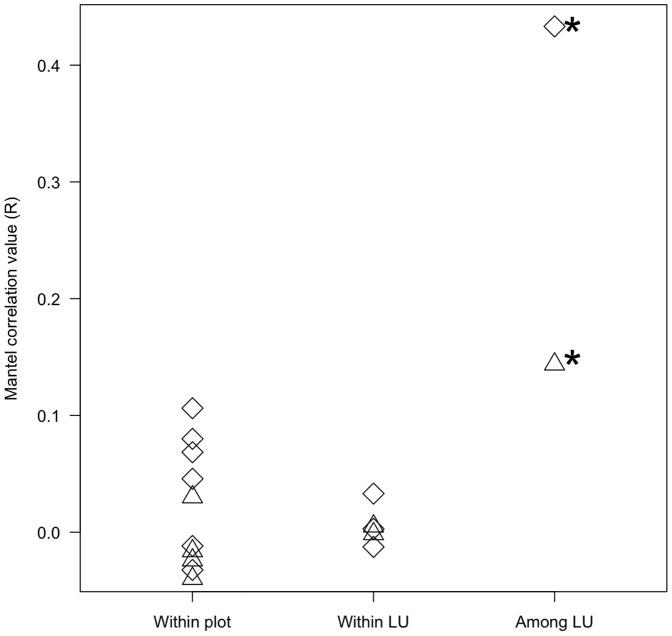
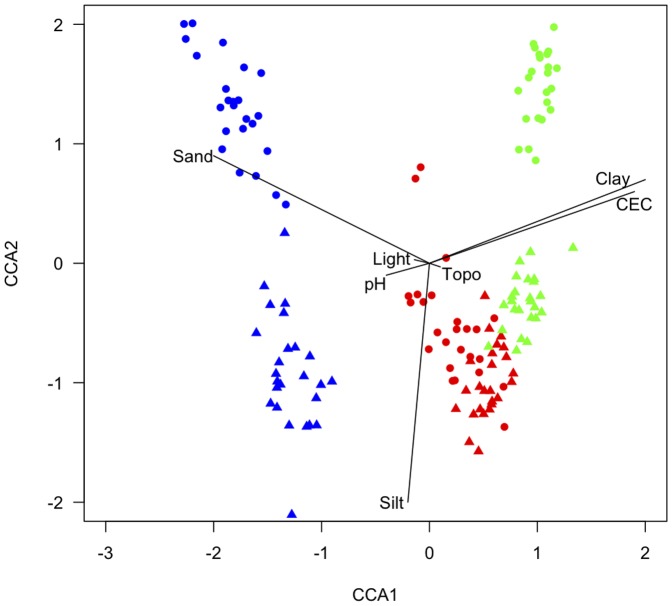
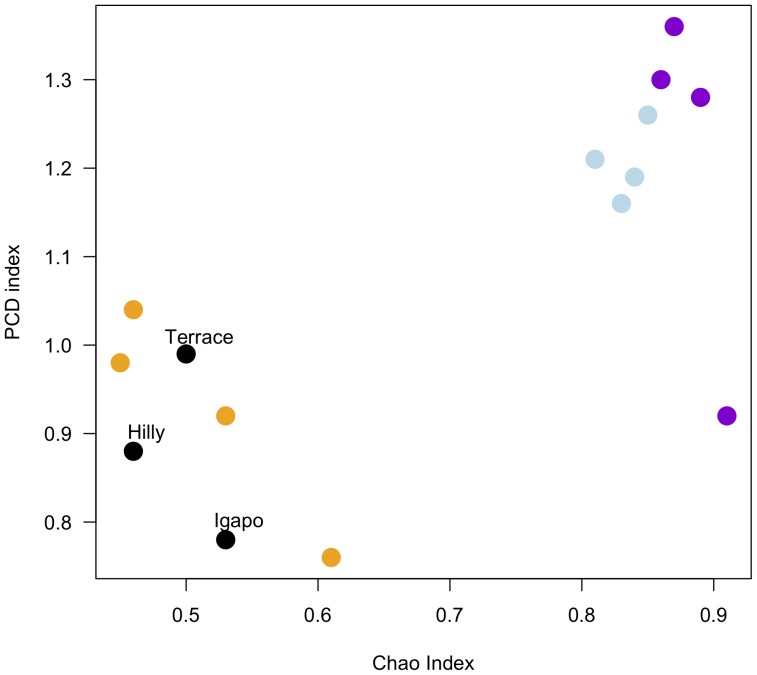
The Amazon harbours one of the richest ecosystems on Earth. Such diversity is likely to be promoted by plant specialization, associated with the occurrence of a mosaic of landscape units. Here, we integrate ecological and phylogenetic data at different spatial scales to assess the importance of habitat specialization in driving compositional and phylogenetic variation across the Amazonian forest. To do so, we evaluated patterns of floristic dissimilarity and phylogenetic turnover, habitat association and phylogenetic structure in three different landscape units occurring in terra firme (Hilly and Terrace) and flooded forests (Igapó). We established two 1-ha tree plots in each of these landscape units at the Caparú Biological Station, SW Colombia, and measured edaphic, topographic and light variables. At large spatial scales, terra firme forests exhibited higher levels of species diversity and phylodiversity than flooded forests. These two types of forests showed conspicuous differences in species and phylogenetic composition, suggesting that environmental sorting due to flood is important, and can go beyond the species level. At a local level, landscape units showed floristic divergence, driven both by geographical distance and by edaphic specialization. In terms of phylogenetic structure, Igapó forests showed phylogenetic clustering, whereas Hilly and Terrace forests showed phylogenetic evenness. Within plots, however, local communities did not show any particular trend. Overall, our findings suggest that flooded forests, characterized by stressful environments, impose limits to species occurrence, whereas terra firme forests, more environmentally heterogeneous, are likely to provide a wider range of ecological conditions and therefore to bear higher diversity. Thus, Amazonia should be considered as a mosaic of landscape units, where the strength of habitat association depends upon their environmental properties.
亚马逊拥有地球上最丰富的生态系统之一。这种多样性很可能是由与景观单元镶嵌体出现相关的植物特化所促进的。在这里,我们整合了不同空间尺度的生态和系统发育数据,以评估栖息地特化在驱动亚马逊森林的组成和系统发育变化方面的重要性。为此,我们评估了不同景观单元(丘陵和梯田的旱地森林和泛滥森林的伊加波)中植物区系差异和系统发育周转率、栖息地关联和系统发育结构的模式。我们在哥伦比亚西南部的卡帕鲁生物站的这些景观单元中每个都建立了两个 1 公顷的树木样地,并测量了土壤、地形和光照变量。在大的空间尺度上,旱地森林的物种多样性和系统发育多样性高于泛滥森林。这两种类型的森林在物种和系统发育组成上表现出明显的差异,这表明由于洪水导致的环境分选很重要,而且可能超出了物种水平。在局部水平上,景观单元表现出由地理距离和土壤特化驱动的植物区系差异。就系统发育结构而言,伊加波森林表现出系统发育聚类,而丘陵和梯田森林则表现出系统发育均匀性。然而,在样地内,本地群落没有表现出任何特定的趋势。总的来说,我们的研究结果表明,以恶劣环境为特征的泛滥森林限制了物种的出现,而环境更加多样化的旱地森林可能提供更广泛的生态条件,从而承载更高的多样性。因此,亚马逊地区应该被视为一个景观单元的镶嵌体,其中栖息地关联的强度取决于其环境特性。