Department of Chemistry and Biochemistry, University of California Santa Cruz, Santa Cruz, California, United States of America.
PLoS One. 2012;7(9):e46172. doi: 10.1371/journal.pone.0046172. Epub 2012 Sep 27.
Human African trypanosomiasis (HAT) is an infectious disease with a large global health burden occurring primarily in Central and Eastern Africa. Most current treatments have poor blood brain barrier (BBB) penetration, which prevent them from targeting the most lethal stage of the infection. In addition, current therapeutics suffer from a variety of limitations ranging from serious side effects to difficulties with treatment administration. Therefore it is of crucial importance to find new treatments that are safe, affordable, and effective against both sub-species of Trypanosoma brucei.
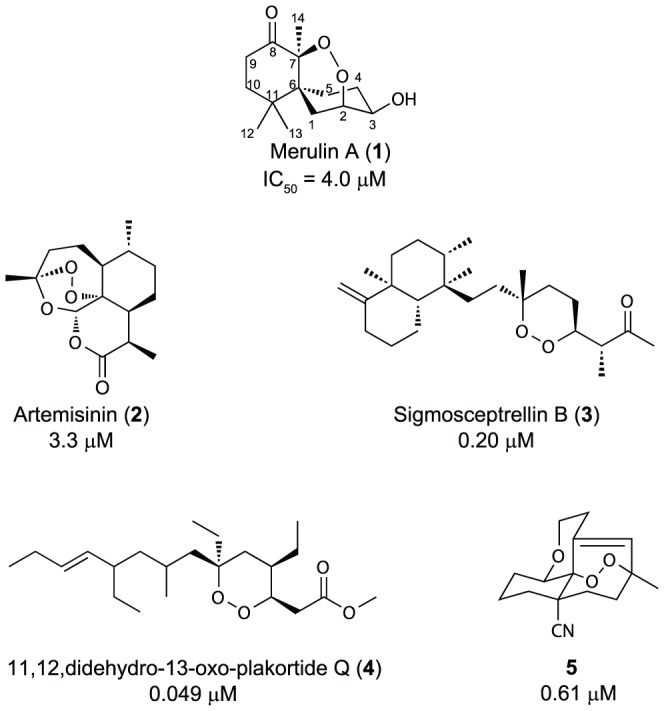
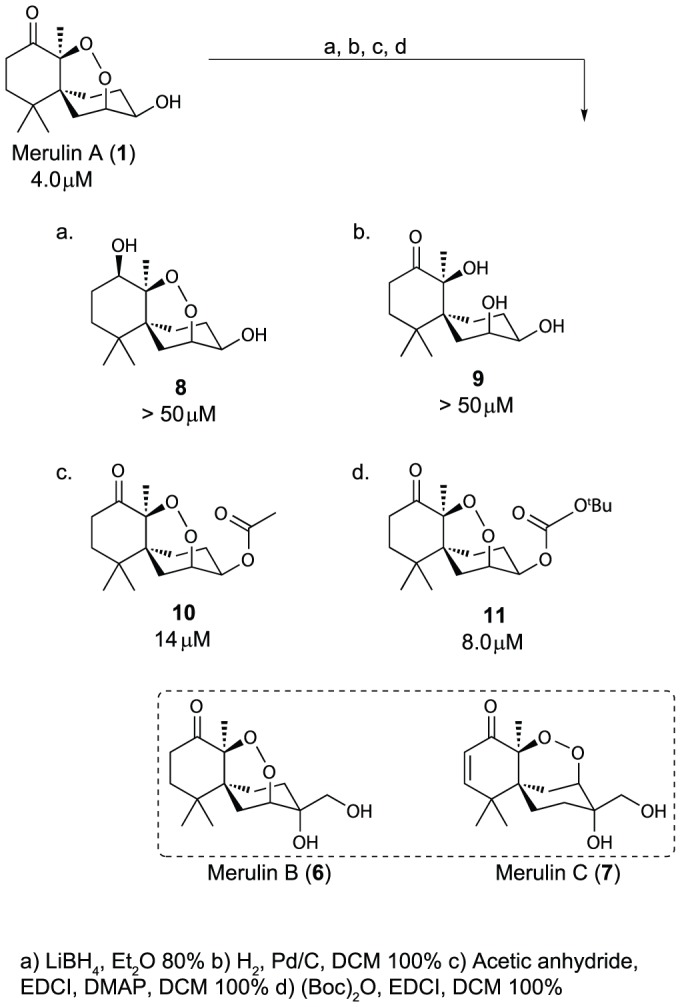
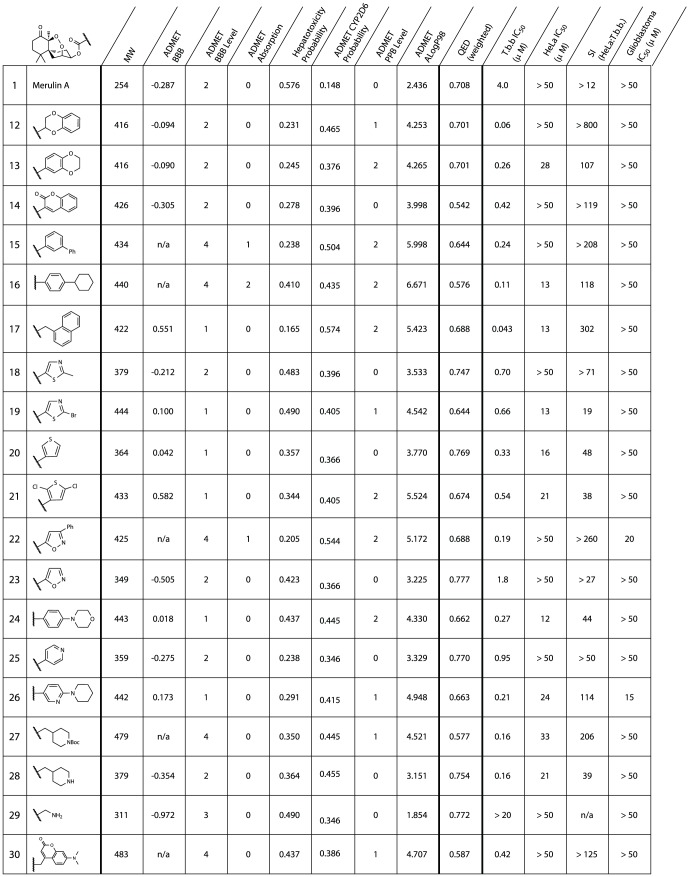
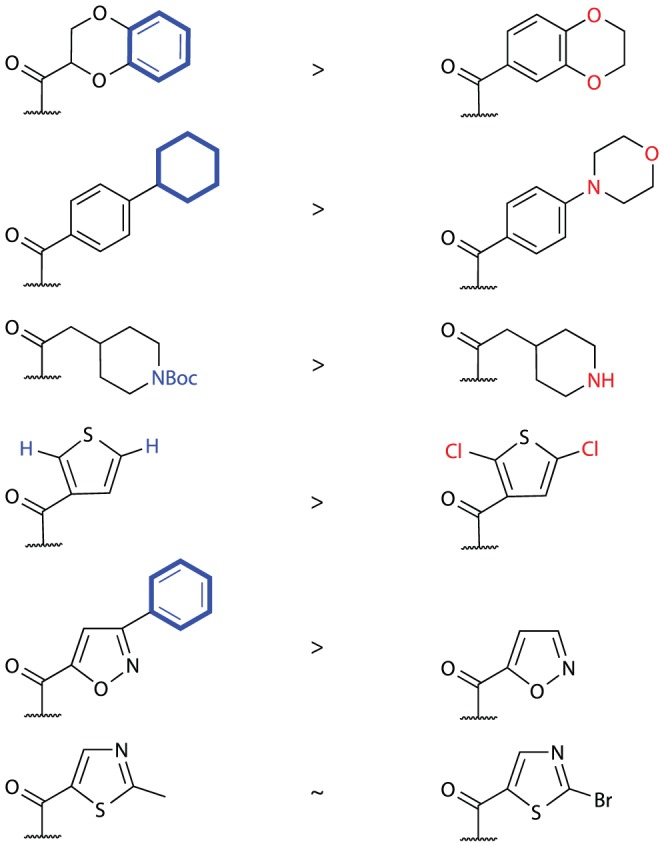
Semi-synthetic derivatization of the fungally-derived natural product merulin A (1) has led to the discovery of new development candidates for the protozoan parasite T. brucei, the causative agent of HAT. Creation of an initial SAR library based around the merulin scaffold revealed several key features required for activity, including the endoperoxide bridge, as well as one position suitable for further derivatization. Subsequent synthesis of a 20-membered analogue library, guided by the addition of acyl groups that improve the drug-like properties of the merulin A core, resulted in the development of compound 12 with an IC(50) of 60 nM against T. brucei, and a selectivity index greater than 300-fold against HeLa and immortalized glial cells.
We report the semi-synthetic optimization of the merulin class of endoperoxide natural products as development candidates against T. brucei. We have identified compounds with low nM antiparasitic activities and high selectivity indices against HeLa cells. These compounds can be produced economically in large quantities via a one step derivatization from the microbial fermentation broth isolate, making them encouraging lead candidates for further development.
人类非洲锥虫病(HAT)是一种具有较大全球健康负担的传染病,主要发生在中非和东非。大多数现有治疗方法的血脑屏障(BBB)穿透性差,这阻止了它们针对感染的最致命阶段。此外,目前的治疗方法存在各种限制,从严重的副作用到治疗管理的困难。因此,寻找新的治疗方法至关重要,这些治疗方法应安全、负担得起且对两种布氏锥虫亚种均有效。
真菌来源的天然产物 merulin A(1)的半合成衍生化导致了针对原生动物寄生虫 T. brucei(引起 HAT 的病原体)的新开发候选药物的发现。基于 merulin 支架创建的初始 SAR 文库揭示了活性所需的几个关键特征,包括内过氧化物桥,以及一个适合进一步衍生化的位置。随后,根据添加改善 merulin A 核心药物特性的酰基,合成了 20 元类似物文库,指导合成了化合物 12,其对 T. brucei 的 IC50 为 60 nM,对 HeLa 和永生化神经胶质细胞的选择性指数大于 300 倍。
我们报告了 merulin 类过氧化物天然产物的半合成优化,作为针对 T. brucei 的开发候选物。我们已经鉴定出具有低 nM 抗寄生虫活性和对 HeLa 细胞高选择性指数的化合物。这些化合物可以通过从微生物发酵液分离物的一步衍生化经济地大量生产,使它们成为进一步开发的有希望的先导候选物。