Department of Cardiology, Yijishan Hospital of Wannan Medical College, Wuhu, China.
PLoS One. 2012;7(9):e46186. doi: 10.1371/journal.pone.0046186. Epub 2012 Sep 28.
Increasing evidence indicates that the rapid component of delayed rectifier potassium current (I(Kr)) is modulated by α- and β-adrenergic stimulation. However, the role and mechanism regulating I(Kr) through β(2)-adrenoreceptor (β-AR) stimulation in heart failure (HF) are unclear.
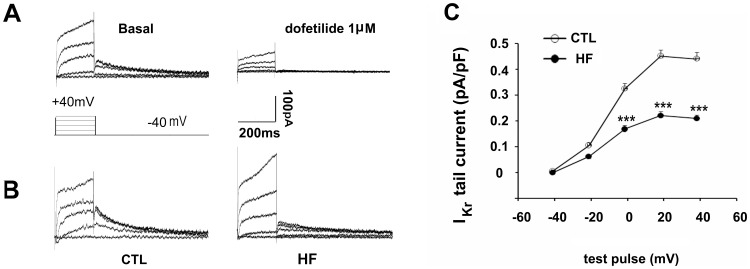
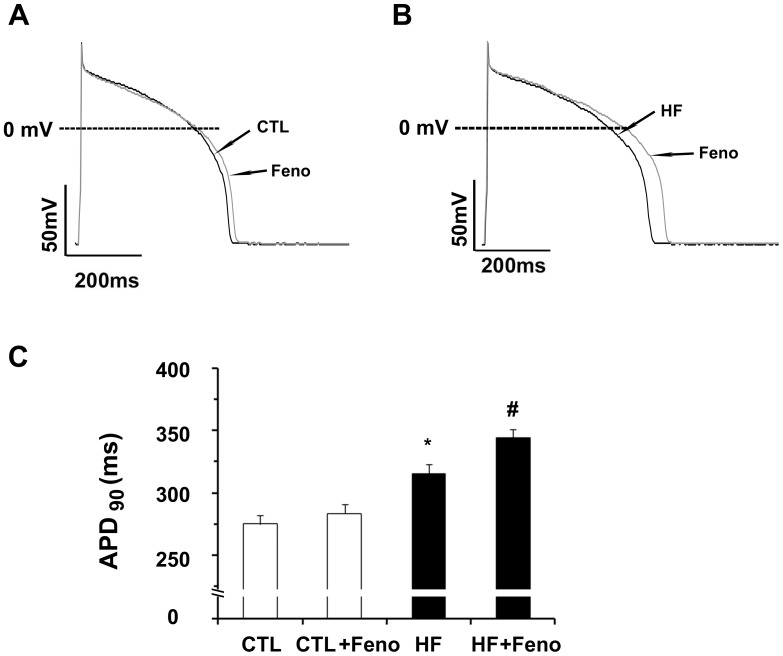
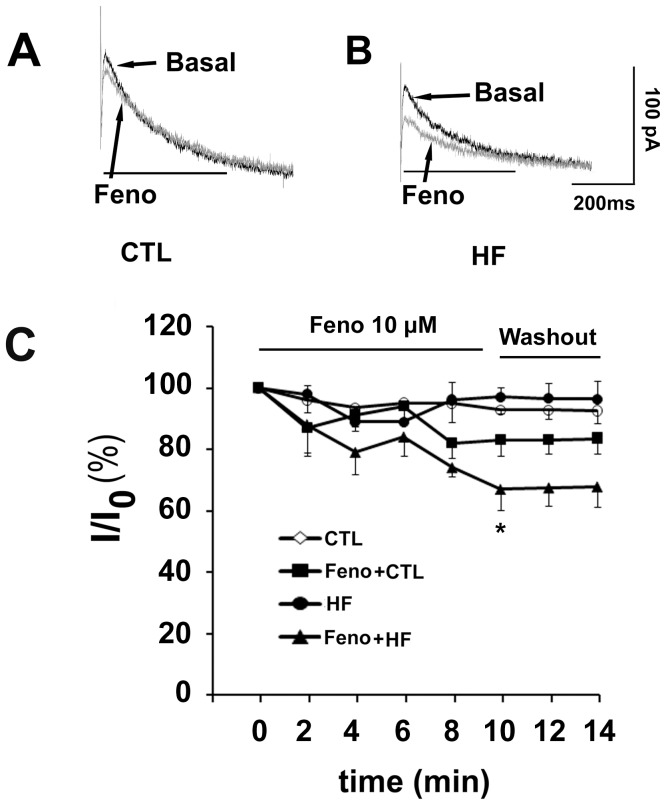
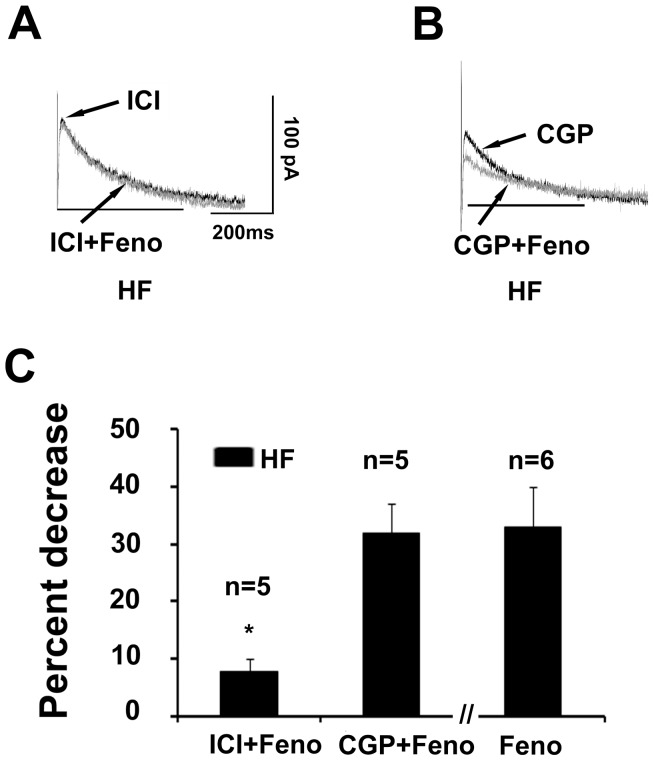
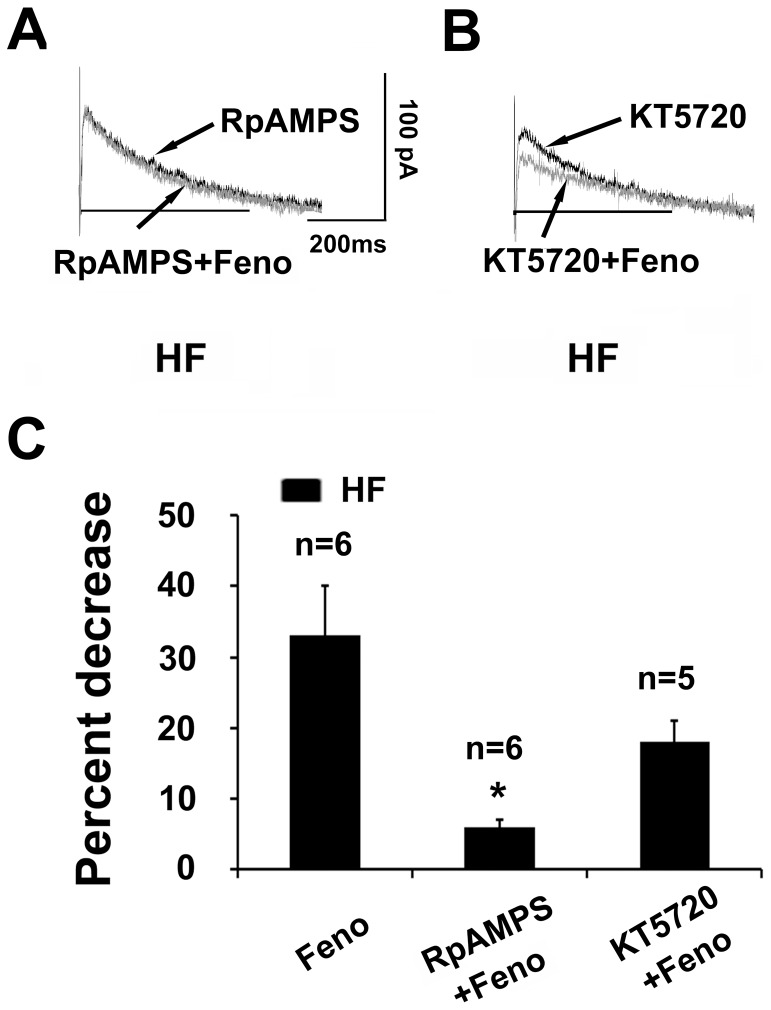
METHODOLOGY/PRINCIPAL FINDINGS: In the present study, we investigated the effects of fenoterol, a highly selective β(2)-AR agonist, on I(Kr) in left ventricular myocytes obtained from control and guinea pigs with HF induced by descending aortic banding. I(Kr) was measured by using whole cell patch clamp technique. In control myocytes, superfusion of fenoterol (10 µM) caused a 17% decrease in I(Kr). In HF myocytes, the same concentration of fenoterol produced a significantly greater decrease (33%) in I(Kr). These effects were not modified by the incubation of myocytes with CGP-20712A, a β(1)-AR antagonist, but were abolished by pretreatment of myocytes with ICI-118551, a β(2)-AR antagonist. An inhibitory cAMP analog, Rp-cAMPS and PKA inhibitor significantly attenuated fenoterol-induced inhibition of I(Kr) in HF myocytes. Moreover, fenoterol markedly prolonged action potential durations at 90% (APD(90)) repolarization in HF ventricular myocytes.
The results indicate that inhibition of I(Kr) induced by β(2)-AR stimulation is increased in HF. The inhibitory effect is likely to be mediated through a cAMP/PKA pathway in HF ventricular myocytes.
越来越多的证据表明,延迟整流钾电流(I(Kr))的快速成分受α-和β-肾上腺素能刺激调节。然而,通过β-2 肾上腺素能受体(β-AR)刺激调节 I(Kr)在心衰(HF)中的作用和机制尚不清楚。
方法/主要发现:本研究旨在探讨芬特罗(一种高度选择性的β-2-AR 激动剂)对左心室心肌细胞 I(Kr)的影响,该心肌细胞取自通过降主动脉结扎诱导 HF 的对照组和豚鼠。使用全细胞膜片钳技术测量 I(Kr)。在对照组心肌细胞中,芬特罗(10μM)的灌流导致 I(Kr)减少 17%。在 HF 心肌细胞中,相同浓度的芬特罗导致 I(Kr)明显减少(33%)。这些作用不受心肌细胞与 CGP-20712A(β-1-AR 拮抗剂)孵育的影响,但被心肌细胞用 ICI-118551(β-2-AR 拮抗剂)预处理所消除。抑制性 cAMP 类似物 Rp-cAMPS 和 PKA 抑制剂显著减弱了 HF 心肌细胞中芬特罗诱导的 I(Kr)抑制作用。此外,芬特罗显著延长了 HF 心室肌细胞中 90%复极化时的动作电位时程(APD(90))。
结果表明,β-2-AR 刺激诱导的 I(Kr)抑制在 HF 中增加。抑制作用可能通过 HF 心室肌细胞中的 cAMP/PKA 途径介导。