MRC Centre for Regenerative Medicine, Institute for Stem Cell Research, School of Biological Sciences, University of Edinburgh, 5 Little France Drive, Edinburgh EH16 4UU, Scotland.
Cell Stem Cell. 2012 Oct 5;11(4):477-90. doi: 10.1016/j.stem.2012.08.002.
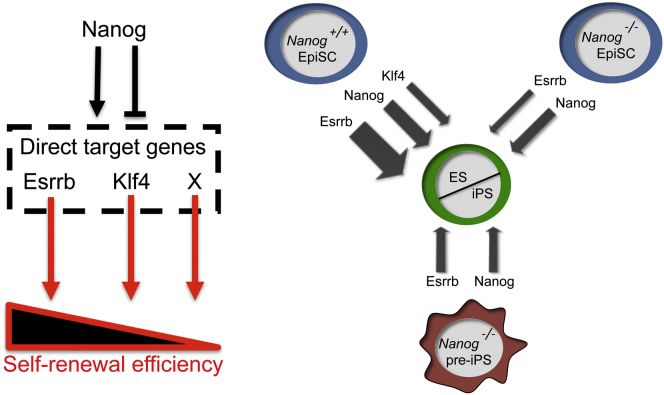
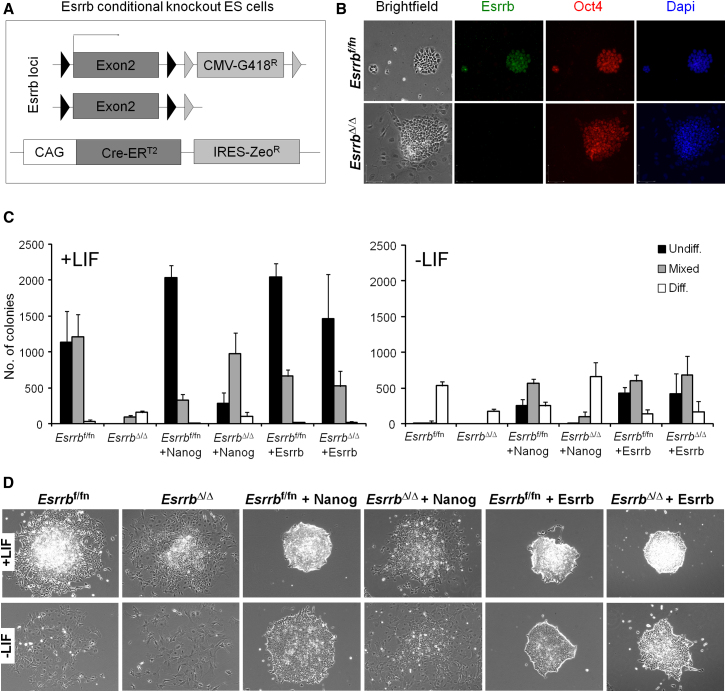
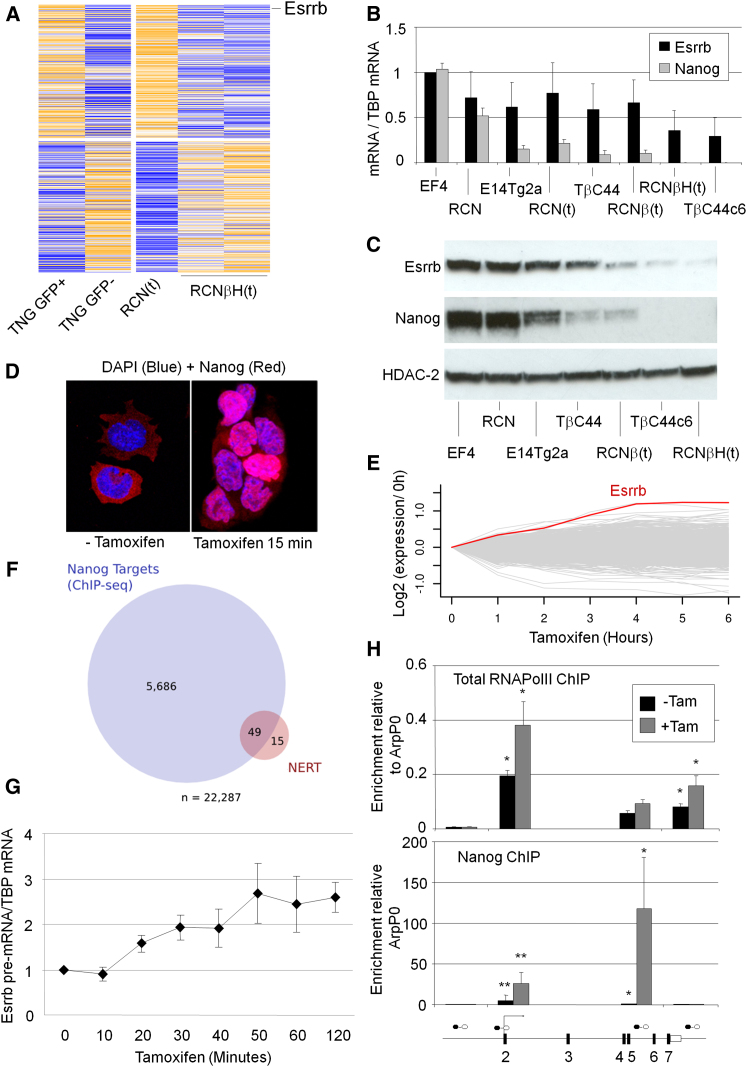
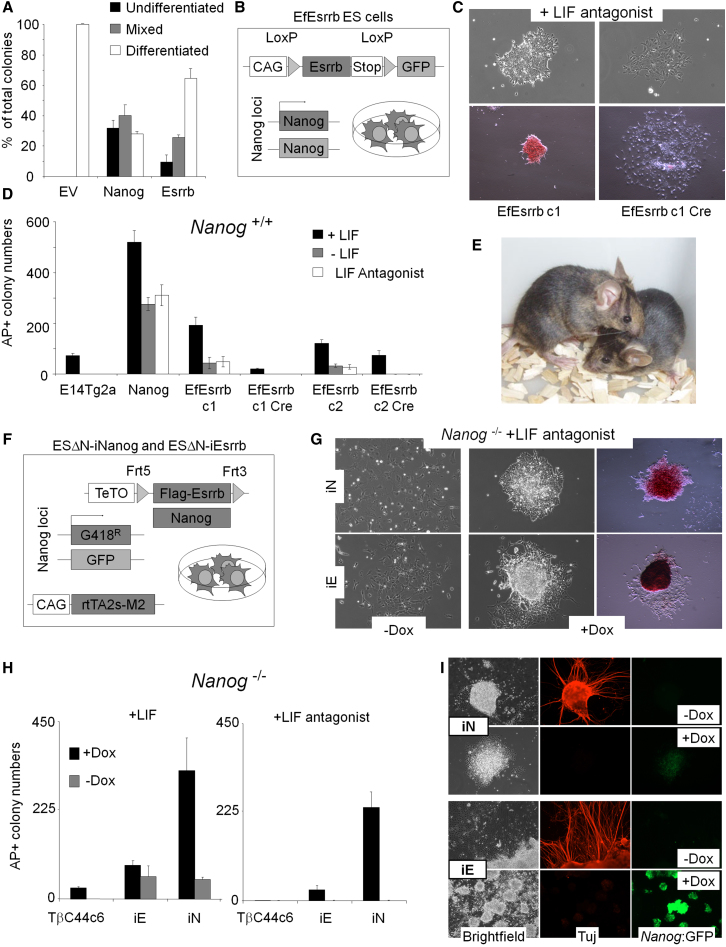
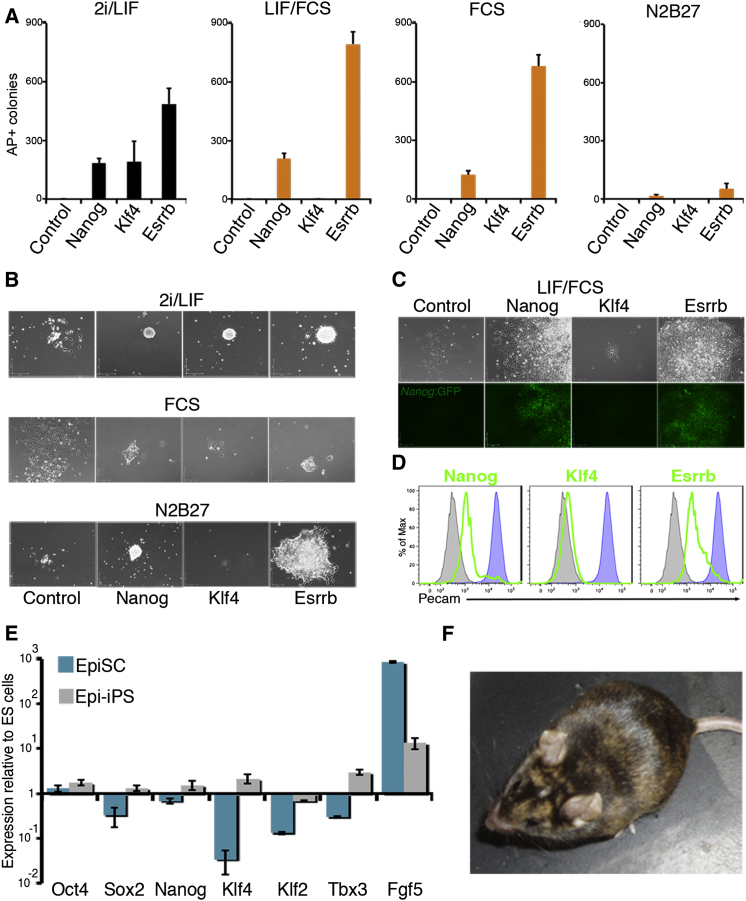
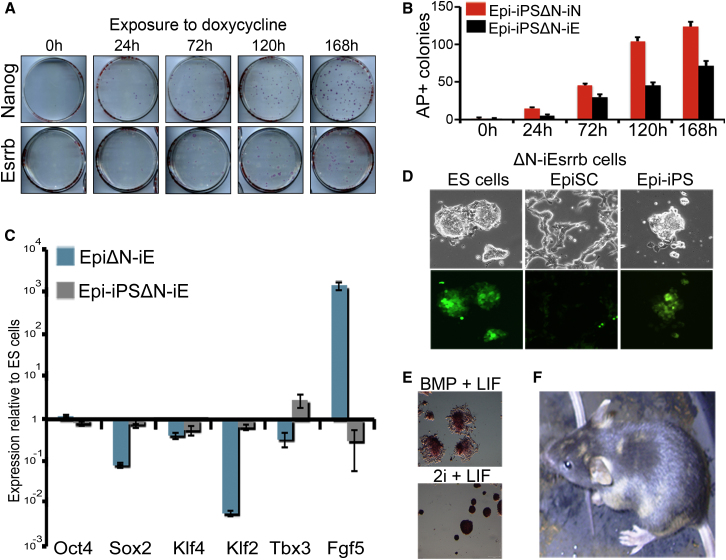
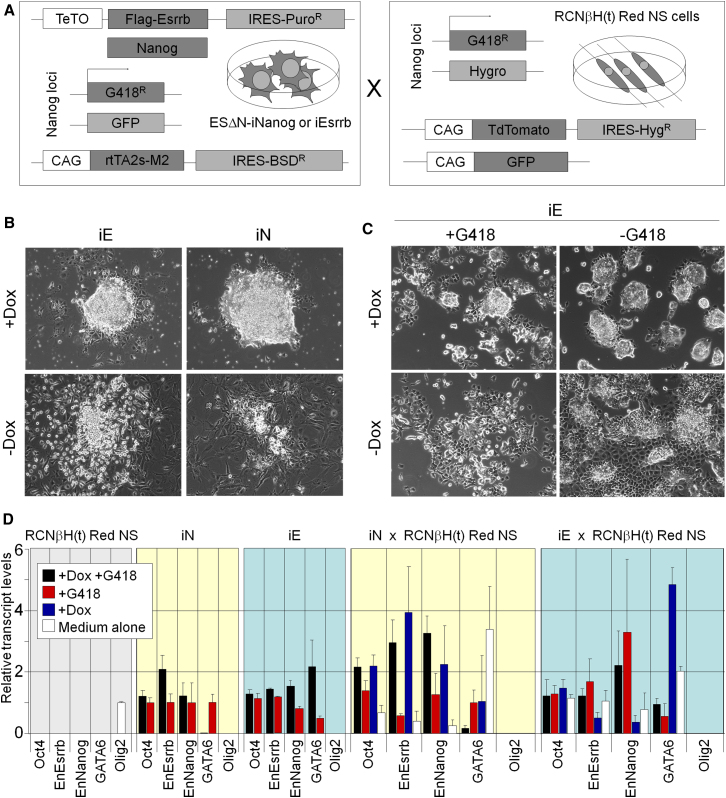
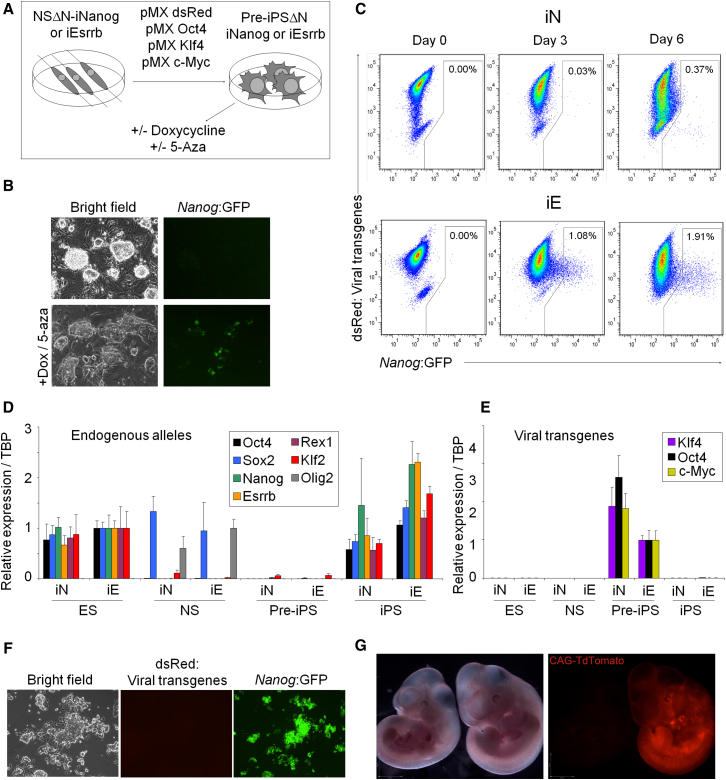
Embryonic stem cell (ESC) self-renewal efficiency is determined by the level of Nanog expression. However, the mechanisms by which Nanog functions remain unclear, and in particular, direct Nanog target genes are uncharacterized. Here we investigate ESCs expressing different Nanog levels and Nanog(-/-) cells with distinct functionally inducible Nanog proteins to identify Nanog-responsive genes. Surprisingly, these constitute a minor fraction of genes that Nanog binds. Prominent among Nanog-reponsive genes is Estrogen-related receptor b (Esrrb). Nanog binds directly to Esrrb, enhances binding of RNAPolII, and stimulates Esrrb transcription. Overexpression of Esrrb in ESCs maintains cytokine-independent self-renewal and pluripotency. Remarkably, this activity is retained in Nanog(-/-) ESCs. Moreover, Esrrb can reprogram Nanog(-/-) EpiSCs and can rescue stalled reprogramming in Nanog(-/-) pre-iPSCs. Finally, Esrrb deletion abolishes the defining ability of Nanog to confer LIF-independent ESC self-renewal. These findings are consistent with the functional placement of Esrrb downstream of Nanog.
胚胎干细胞 (ESC) 的自我更新效率由 Nanog 表达水平决定。然而,Nanog 发挥作用的机制仍不清楚,特别是直接的 Nanog 靶基因尚未确定。在这里,我们研究了表达不同 Nanog 水平的 ESCs 和具有不同功能可诱导 Nanog 蛋白的 Nanog(-/-)细胞,以鉴定 Nanog 反应基因。令人惊讶的是,这些基因构成了 Nanog 结合的一小部分。在 Nanog 反应基因中,雌激素相关受体 b (Esrrb) 最为突出。Nanog 直接与 Esrrb 结合,增强了 RNAPolII 的结合,并刺激 Esrrb 转录。在 ESCs 中过表达 Esrrb 可维持细胞因子非依赖性自我更新和多能性。值得注意的是,这种活性在 Nanog(-/-) ESCs 中得以保留。此外,Esrrb 可以重编程 Nanog(-/-) EpiSCs ,并可以挽救 Nanog(-/-) pre-iPSCs 中的停滞重编程。最后,Esrrb 缺失消除了 Nanog 赋予 LIF 非依赖性 ESC 自我更新的能力。这些发现与 Esrrb 在 Nanog 下游的功能定位一致。