Department of Haematology, Cambridge Institute for Medical Research, Wellcome Trust-Medical Research Council Stem Cell Institute, University of Cambridge, Cambridge CB2 0XY, UK.
Cell Stem Cell. 2012 Oct 5;11(4):554-66. doi: 10.1016/j.stem.2012.07.002.
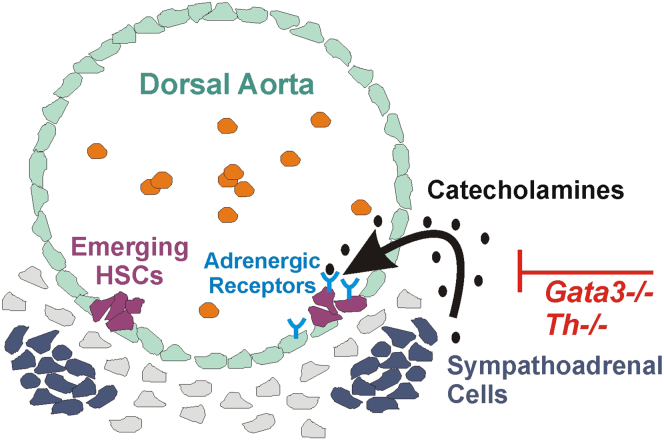
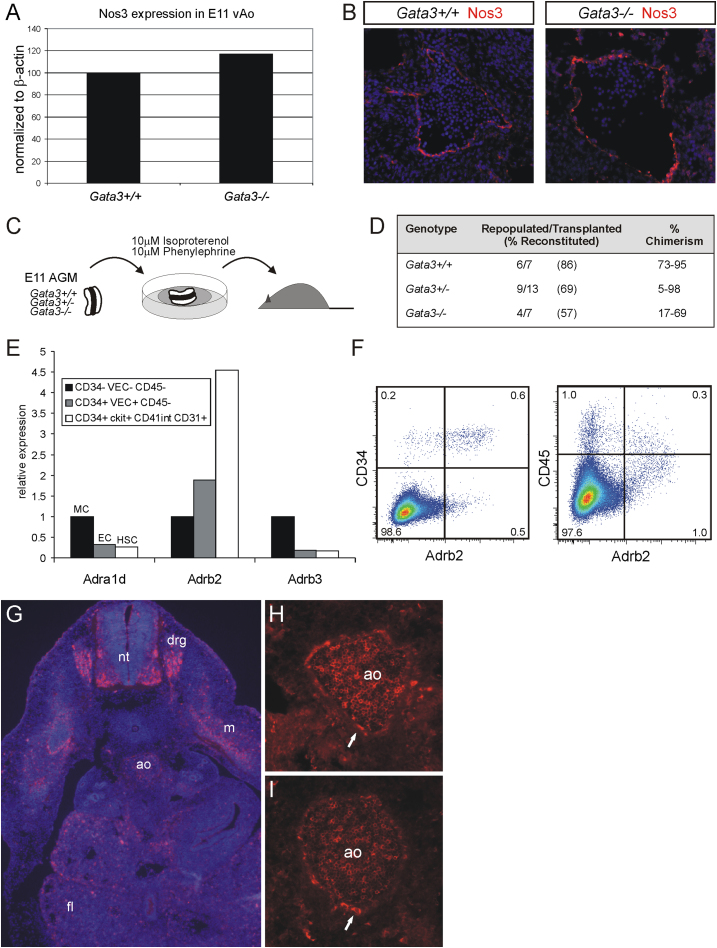
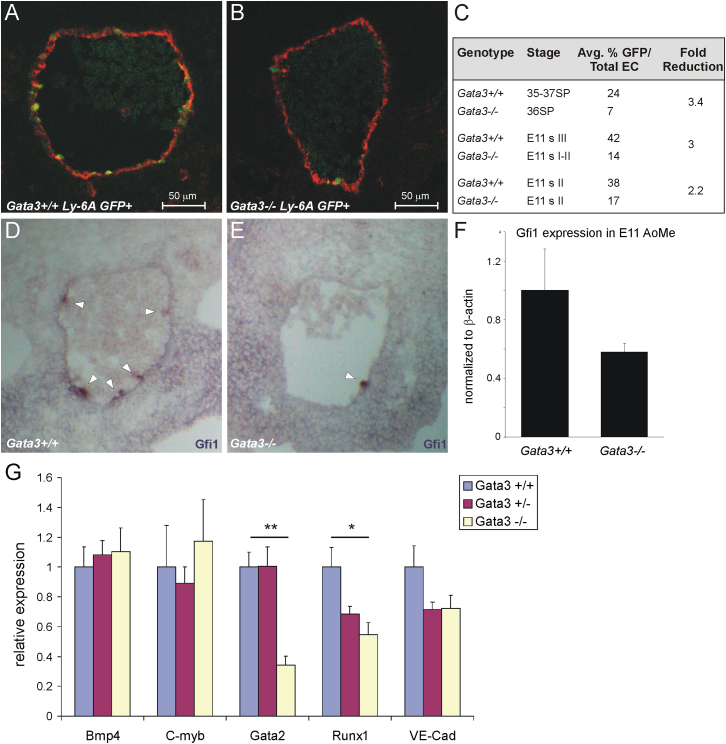
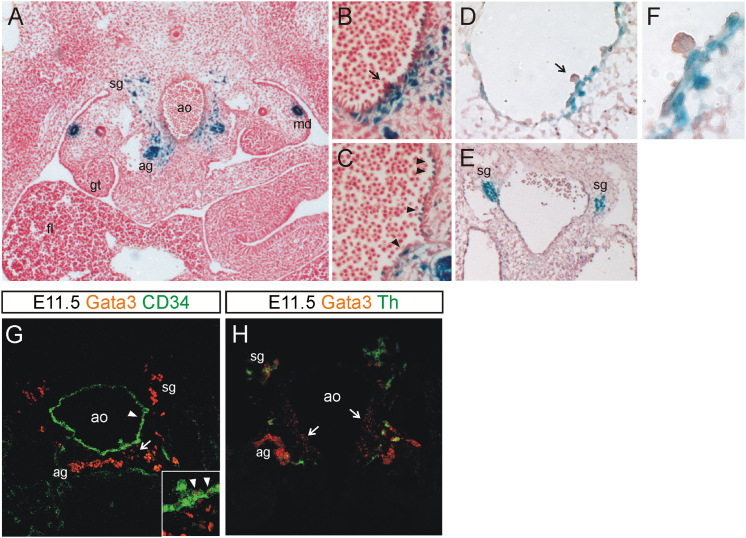
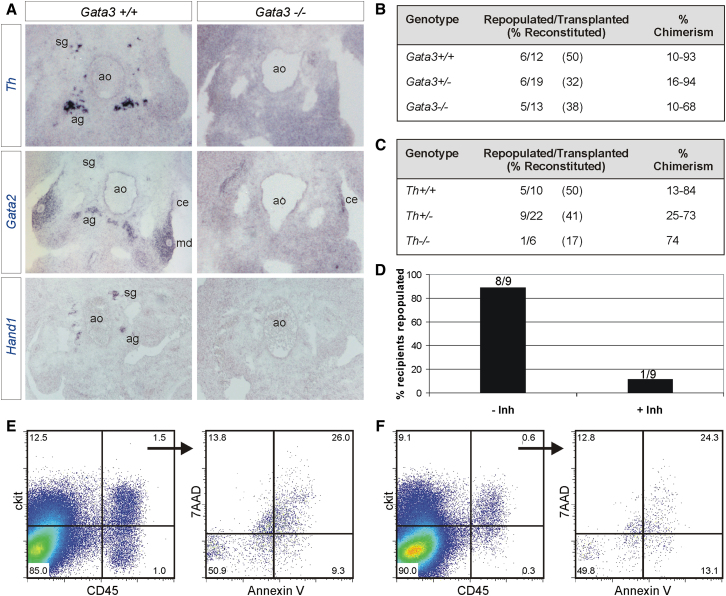
The first adult-repopulating hematopoietic stem cells (HSCs) emerge in the aorta-gonads-mesonephros (AGM) region of the embryo. We have recently identified the transcription factor Gata3 as being upregulated in this tissue specifically at the time of HSC emergence. We now demonstrate that the production of functional and phenotypic HSCs in the AGM is impaired in the absence of Gata3. Furthermore, we show that this effect on HSC generation is secondary to the role of Gata3 in the production of catecholamines, the mediators of the sympathetic nervous system (SNS), thus making these molecules key components of the AGM HSC niche. These findings demonstrate that the recently described functional interplay between the hematopoietic system and the SNS extends to the earliest stages of their codevelopment and highlight the fact that HSC development needs to be viewed in the context of the development of other organs.
最初的成体造血干细胞(HSCs)出现在胚胎的主动脉-性腺-中肾(AGM)区域。我们最近发现,转录因子 Gata3 在 HSC 出现时特异性地上调,特别是在这个组织中。我们现在证明,在 Gata3 缺失的情况下,AGM 中功能性和表型 HSCs 的产生受损。此外,我们还表明,这种对 HSC 生成的影响是 Gata3 在儿茶酚胺(交感神经系统(SNS)的介质)产生中的作用的次要结果,因此这些分子是 AGM HSC 龛位的关键组成部分。这些发现表明,造血系统和 SNS 之间最近描述的功能相互作用扩展到它们共同发育的最早阶段,并强调了 HSC 发育需要在其他器官发育的背景下进行观察的事实。