Department of Infectious Diseases & Immunity, Imperial College London, London, United Kingdom.
PLoS One. 2012;7(10):e46376. doi: 10.1371/journal.pone.0046376. Epub 2012 Oct 1.
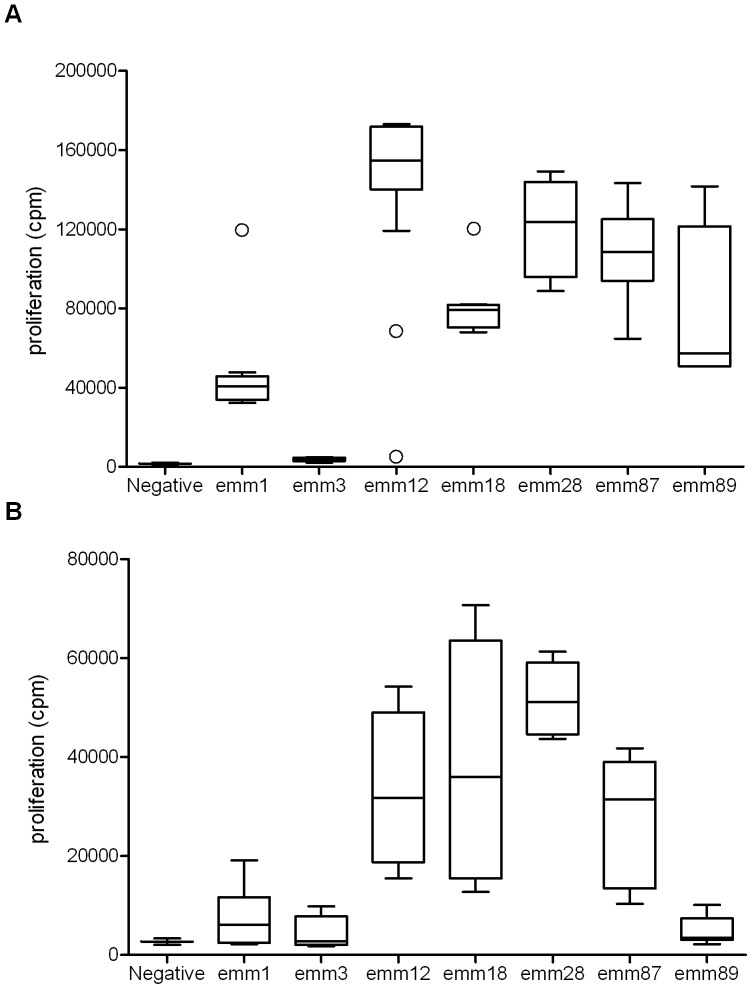
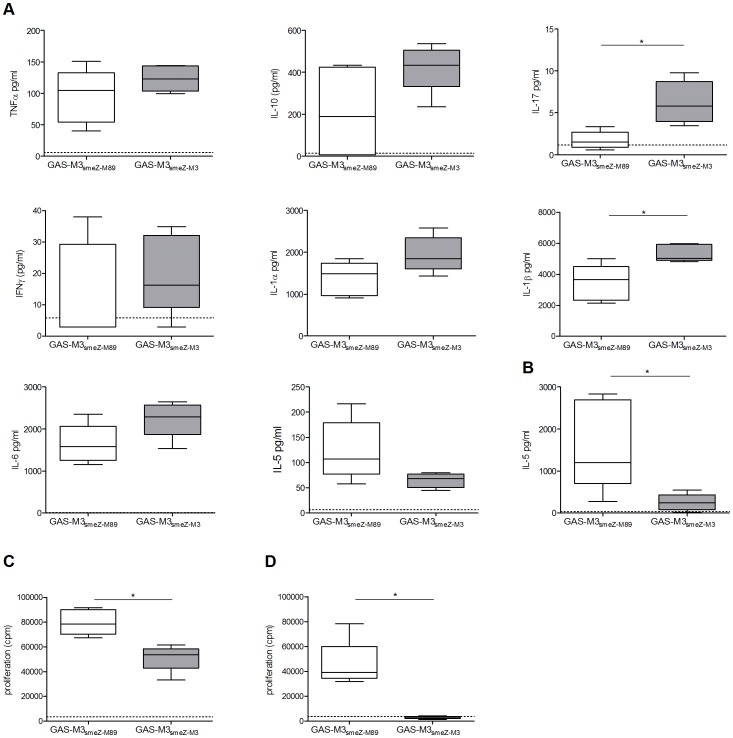
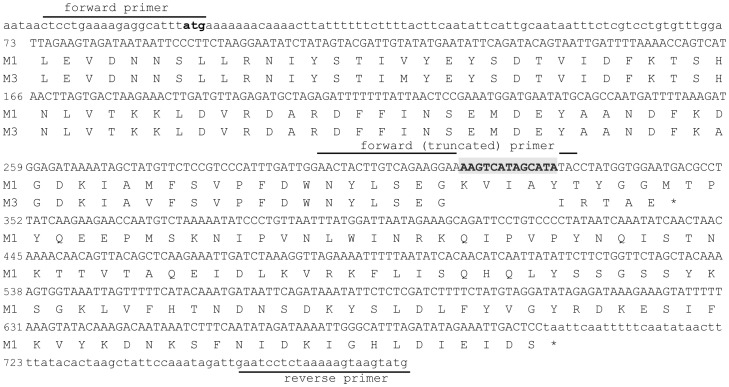
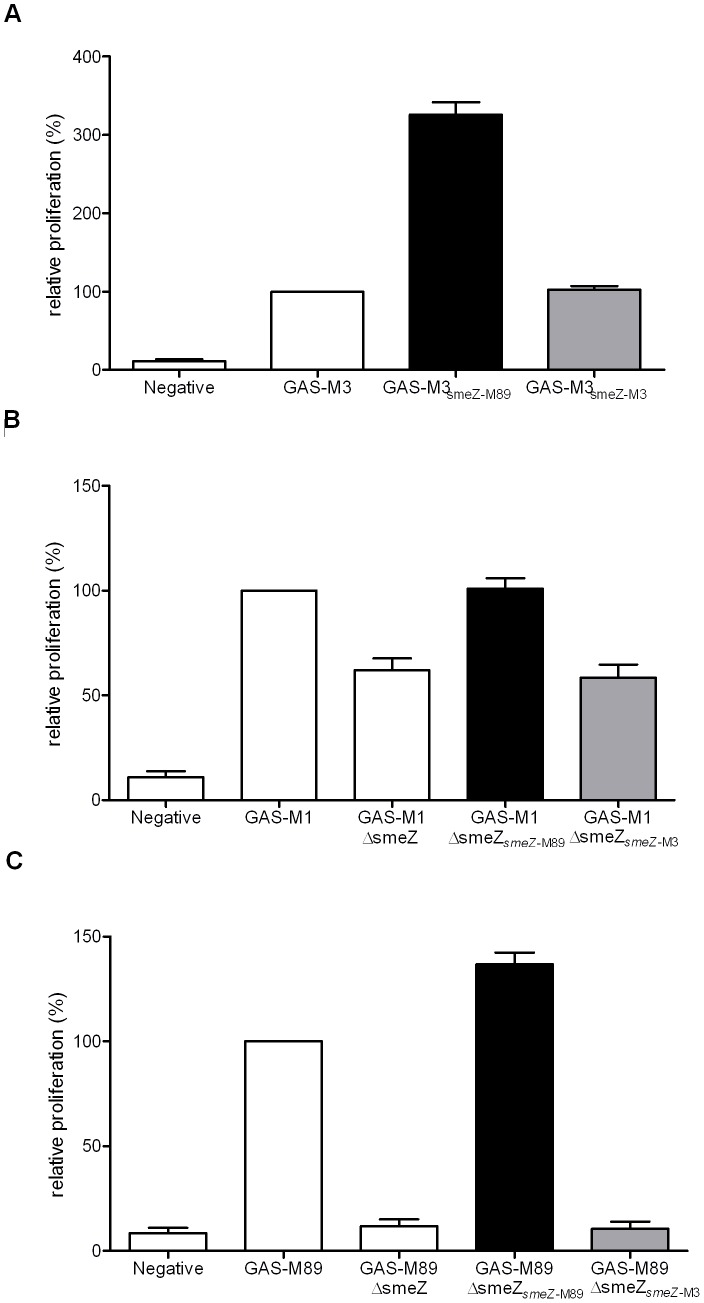
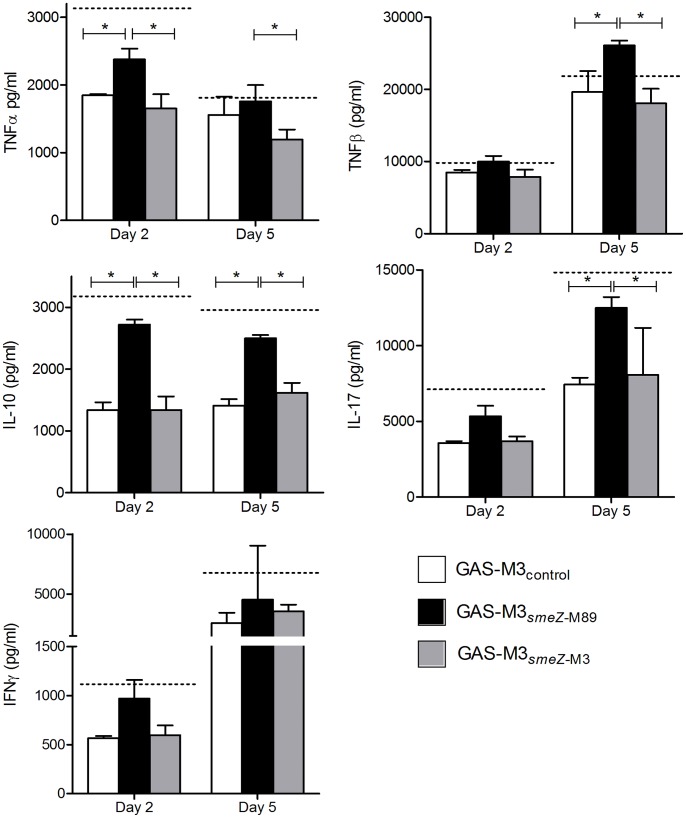
Streptococcus pyogenes M/emm3 strains have been epidemiologically linked with enhanced infection severity and risk of streptococcal toxic shock syndrome (STSS), a syndrome triggered by superantigenic stimulation of T cells. Comparison of S. pyogenes strains causing STSS demonstrated that emm3 strains were surprisingly less mitogenic than other emm-types (emm1, emm12, emm18, emm28, emm87, emm89) both in vitro and in vivo, indicating poor superantigenic activity. We identified a 13 bp deletion in the superantigen smeZ gene of all emm3 strains tested. The deletion led to a premature stop codon in smeZ, and was not present in other major emm-types tested. Expression of a functional non-M3-smeZ gene successfully enhanced mitogenic activity in emm3 S. pyogenes and also restored mitogenic activity to emm1 and emm89 S. pyogenes strains where the smeZ gene had been disrupted. In contrast, the M3-smeZ gene with the 13 bp deletion could not enhance or restore mitogenicity in any of these S. pyogenes strains, confirming that M3-smeZ is non-functional regardless of strain background. The mutation in M3-smeZ reduced the potential for M3 S. pyogenes to induce cytokines in human tonsil, but not during invasive infection of superantigen-sensitive mice. Notwithstanding epidemiological associations with STSS and disease severity, emm3 strains have inherently poor superantigenicity that is explained by a conserved mutation in smeZ.
化脓性链球菌 M/emm3 菌株与感染严重程度增加和链球菌中毒性休克综合征(STSS)风险相关,STSS 是由 T 细胞的超抗原刺激引发的综合征。对引起 STSS 的化脓性链球菌菌株的比较表明,emm3 菌株在体外和体内的致有丝分裂能力均明显低于其他 emm 型(emm1、emm12、emm18、emm28、emm87、emm89),表明其超抗原活性较差。我们在所有测试的 emm3 菌株的 smeZ 超抗原基因中发现了 13 个碱基对缺失。该缺失导致 smeZ 中出现过早的终止密码子,而在其他主要测试的 emm 型中不存在。表达功能性非-M3-smeZ 基因可成功增强 emm3 化脓性链球菌的致有丝分裂活性,并且还恢复了 smeZ 基因已被破坏的 emm1 和 emm89 化脓性链球菌的致有丝分裂活性。相比之下,具有 13 个碱基对缺失的 M3-smeZ 基因无法增强或恢复这些任何一种化脓性链球菌的致有丝分裂活性,这证实了 M3-smeZ 无论菌株背景如何都是无功能的。M3-smeZ 中的突变降低了 M3 化脓性链球菌在人扁桃体中诱导细胞因子的潜力,但在超抗原敏感小鼠的侵袭性感染中则不然。尽管与 STSS 和疾病严重程度存在流行病学关联,但 emm3 菌株固有的超抗原性较差,这可由 smeZ 中的保守突变来解释。