Orthopaedic Service of the Department of Surgery, affiliated with Weill Medical College of Cornell University, Memorial Sloan-Kettering Cancer Center, 1275 York Avenue, New York, NY 10065, USA.
Clin Orthop Relat Res. 2013 Mar;471(3):774-83. doi: 10.1007/s11999-012-2635-6.
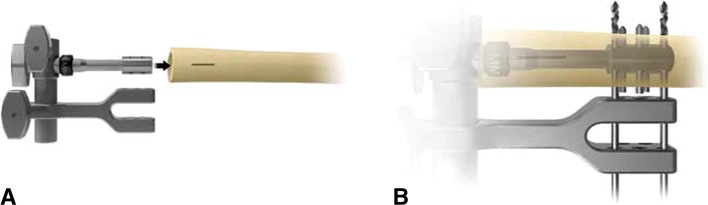
Compliant, self-adjusting compression technology is a novel approach for durable prosthetic fixation of the knee. However, the long-term survival of these constructs is unknown.
QUESTIONS/PURPOSES: We therefore determined the survival of the Compress prosthesis (Biomet Inc, Warsaw, IN, USA) at 5 and 10 actuarial years and identified the failure modes for this form of prosthetic fixation.
We retrospectively reviewed clinical and radiographic records for all 82 patients who underwent Compress knee arthroplasty from 1998 to 2008, as well as one patient who received the device elsewhere but was followed at our institution. Prosthesis survivorship and modes of failure were determined. Followup was for a minimum of 12 months or until implant removal (median, 43 months; range, 6-131 months); 28 patients were followed for more than 5 years.
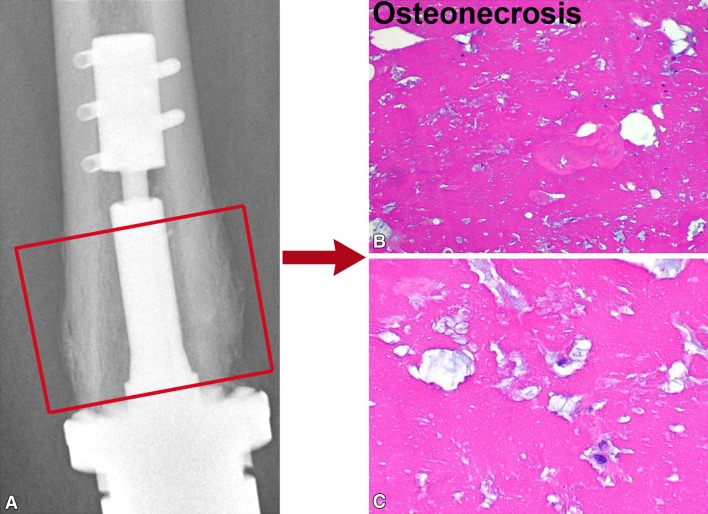
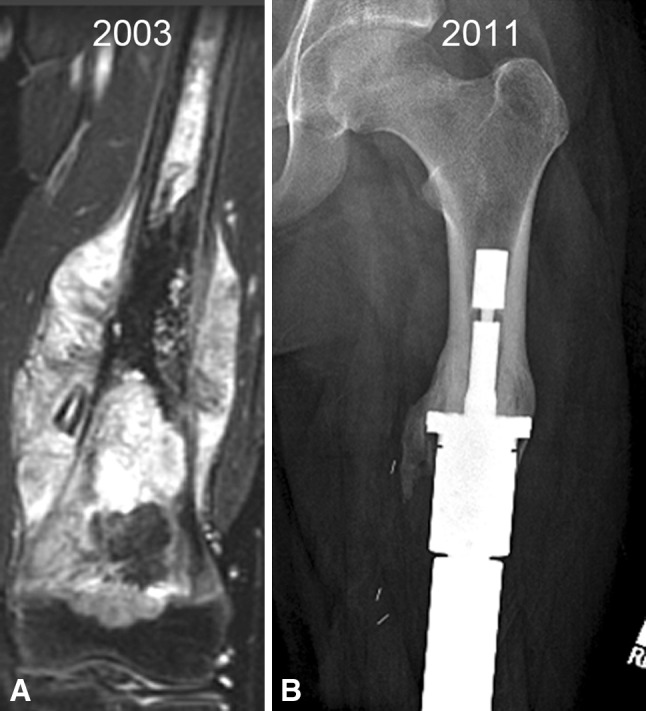
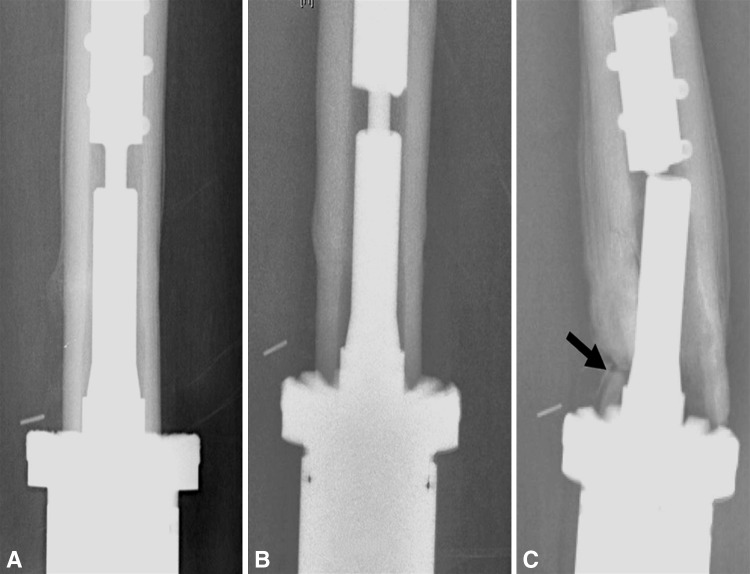
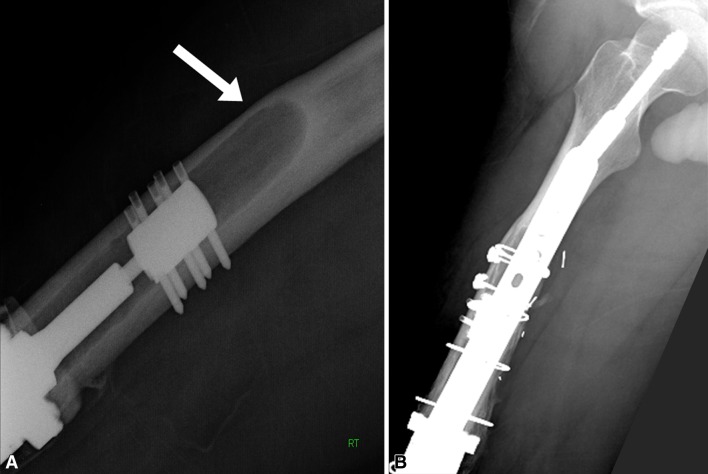
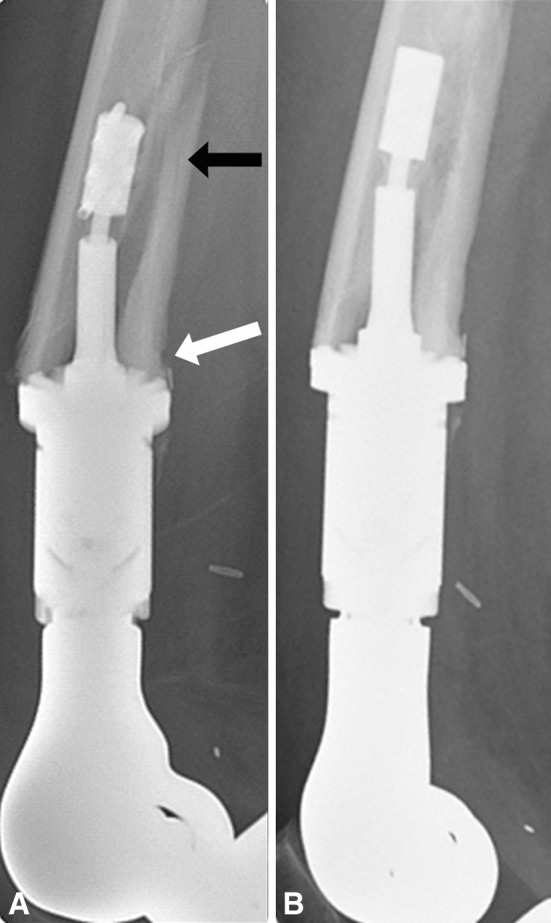
We found a survivorship of 85% at 5 years and 80% at 10 years. Eight patients required prosthetic revision after interface failure due to aseptic loosening alone (n = 3) or aseptic loosening with periprosthetic fracture (n = 5). Additionally, five periprosthetic bone failures occurred that did not require revision: three patients had periprosthetic bone failure without fixation compromise and two exhibited irregular prosthetic osteointegration patterns with concomitant fracture due to mechanical insufficiency.
Compress prosthetic fixation after distal femoral tumor resection exhibits long-term survivorship. Implant failure was associated with patient nonadherence to the recommended weightbearing proscription or with bone necrosis and fracture. We conclude this is the most durable FDA-approved fixation method for distal femoral megaprostheses.
Level IV, therapeutic study. See Instructions for Authors for a complete description of levels of evidence.
顺应性、自调节压缩技术是一种用于膝关节持久假体固定的新方法。然而,这些结构的长期存活率尚不清楚。
问题/目的:因此,我们确定了 Compress 假体(Biomet Inc,印第安纳州华沙)在 5 年和 10 年实际生存率,并确定了这种假体固定形式的失效模式。
我们回顾性地审查了 1998 年至 2008 年间接受 Compress 膝关节置换术的 82 名患者(包括一名在其他地方接受该设备但在我们机构接受随访的患者)的临床和影像学记录。确定了假体存活率和失效模式。随访时间至少为 12 个月或直至植入物取出(中位数为 43 个月;范围为 6-131 个月);28 名患者随访时间超过 5 年。
我们发现 5 年时的存活率为 85%,10 年时为 80%。8 名患者因单纯无菌性松动(n = 3)或无菌性松动伴假体周围骨折(n = 5)导致界面失败需要进行假体翻修。此外,发生了 5 例假体周围骨失败,无需翻修:3 例患者存在假体周围骨失败但固定无损坏,2 例表现为不规则假体骨整合模式伴因机械不足导致的骨折。
股骨远端肿瘤切除后使用 Compress 假体固定具有长期存活率。植入物失效与患者不遵守建议的负重禁忌或骨坏死和骨折有关。我们得出结论,这是 FDA 批准的用于股骨远端假体最耐用的固定方法。
IV 级,治疗研究。请参阅作者说明,以获取完整的证据水平描述。