• 文献检索
  • 文档翻译
  • 深度研究
  • 学术资讯
  • Suppr Zotero 插件Zotero 插件
  • 邀请有礼
  • 套餐&价格
  • 历史记录
应用&插件
Suppr Zotero 插件Zotero 插件浏览器插件Mac 客户端Windows 客户端微信小程序
定价
高级版会员购买积分包购买API积分包
服务
文献检索文档翻译深度研究API 文档MCP 服务
关于我们
关于 Suppr公司介绍联系我们用户协议隐私条款
关注我们

Suppr 超能文献

核心技术专利:CN118964589B侵权必究
粤ICP备2023148730 号-1Suppr @ 2026

文献检索

告别复杂PubMed语法,用中文像聊天一样搜索,搜遍4000万医学文献。AI智能推荐,让科研检索更轻松。

立即免费搜索

文件翻译

保留排版,准确专业,支持PDF/Word/PPT等文件格式,支持 12+语言互译。

免费翻译文档

深度研究

AI帮你快速写综述,25分钟生成高质量综述,智能提取关键信息,辅助科研写作。

立即免费体验

在没有护理人员的地方:萨奇戈湖荒野紧急反应教育计划。

Where there is no paramedic: the Sachigo Lake Wilderness Emergency Response Education Initiative.

机构信息

Division of Clinical Sciences, Northern Ontario School of Medicine, Thunder Bay, Canada.

出版信息

PLoS Med. 2012;9(10):e1001322. doi: 10.1371/journal.pmed.1001322. Epub 2012 Oct 2.

DOI:10.1371/journal.pmed.1001322
PMID:23055835
原文链接:https://pmc.ncbi.nlm.nih.gov/articles/PMC3462771/
Abstract

Aaron Orkin and colleague describe their collaboration that developed, delivered, and studied a community-based first response training program in a remote indigenous community in northern Canada.

摘要

艾伦·奥金(Aaron Orkin)及其同事描述了他们在加拿大北部偏远的原住民社区开展、实施和研究一项基于社区的第一响应者培训计划的合作。
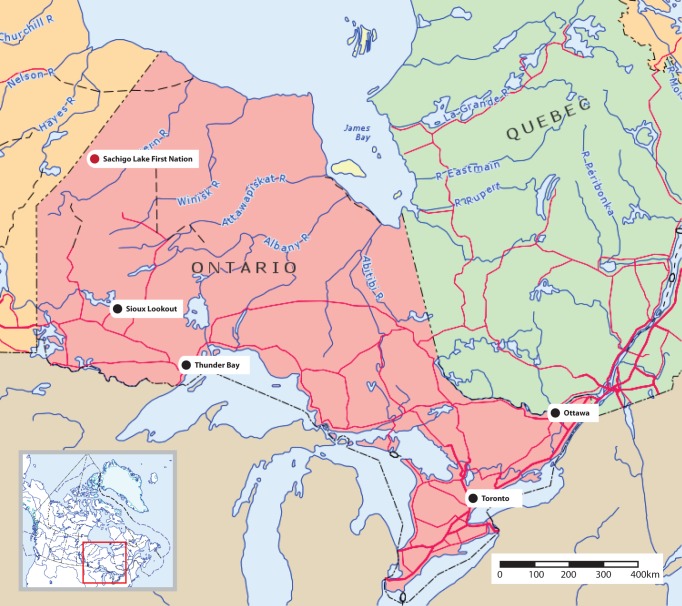
https://cdn.ncbi.nlm.nih.gov/pmc/blobs/68d4/3462771/7fec16b2ba2a/pmed.1001322.g002.jpg
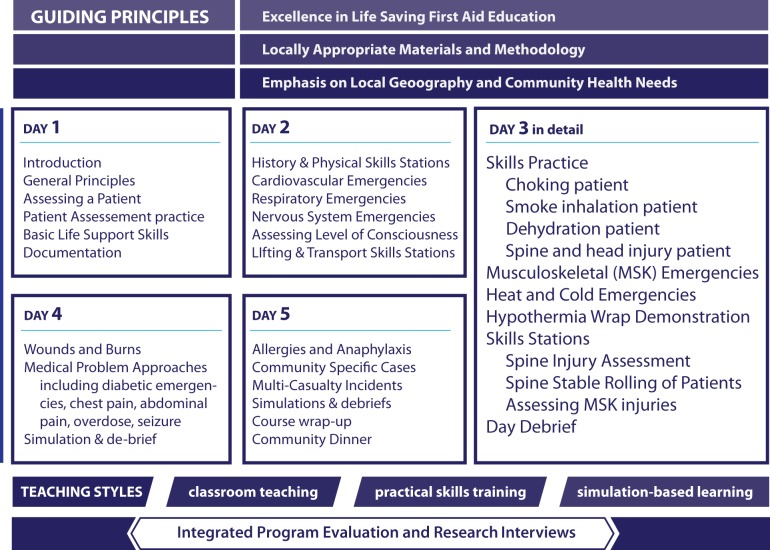
https://cdn.ncbi.nlm.nih.gov/pmc/blobs/68d4/3462771/d7fe9ceb8a81/pmed.1001322.g001.jpg
https://cdn.ncbi.nlm.nih.gov/pmc/blobs/68d4/3462771/7fec16b2ba2a/pmed.1001322.g002.jpg
https://cdn.ncbi.nlm.nih.gov/pmc/blobs/68d4/3462771/d7fe9ceb8a81/pmed.1001322.g001.jpg
https://cdn.ncbi.nlm.nih.gov/pmc/blobs/68d4/3462771/7fec16b2ba2a/pmed.1001322.g002.jpg

相似文献

1
Where there is no paramedic: the Sachigo Lake Wilderness Emergency Response Education Initiative.在没有护理人员的地方:萨奇戈湖荒野紧急反应教育计划。
PLoS Med. 2012;9(10):e1001322. doi: 10.1371/journal.pmed.1001322. Epub 2012 Oct 2.
2
Teaching wilderness first aid in a remote First Nations community: the story of the Sachigo Lake Wilderness Emergency Response Education Initiative.在一个偏远的原住民社区教授野外急救:萨奇戈湖野外应急响应教育倡议的故事。
Int J Circumpolar Health. 2012;71. doi: 10.3402/ijch.v71i0.19002. Epub 2012 Oct 26.
3
Educating to improve population health outcomes in chronic disease: an innovative workforce initiative across remote, rural and Indigenous communities in northern Australia.开展教育以改善慢性病患者的群体健康状况:澳大利亚北部偏远、农村和原住民社区的一项创新型劳动力计划。
Rural Remote Health. 2006 Jul-Sep;6(3):606. Epub 2006 Aug 15.
4
Conceptualizing and Managing Medical Emergencies Where No Formal Paramedical System Exists: Perspectives from a Remote Indigenous Community in Canada.在没有正规辅助医疗体系的情况下处理和管理医疗急症:来自加拿大偏远原住民社区的观点。
Int J Environ Res Public Health. 2018 Feb 4;15(2):267. doi: 10.3390/ijerph15020267.
5
Community-based first aid: a program report on the intersection of community-based participatory research and first aid education in a remote Canadian Aboriginal community.基于社区的急救:关于加拿大一个偏远原住民社区中基于社区的参与式研究与急救教育交叉点的项目报告。
Rural Remote Health. 2014;14:2537. Epub 2014 Apr 15.
6
An environmental scan of emergency response systems and services in remote First Nations communities in Northern Ontario.安大略省北部偏远原住民社区应急响应系统与服务的环境扫描。
Int J Circumpolar Health. 2017;76(1):1320208. doi: 10.1080/22423982.2017.1320208.
7
Establishment of an innovative specialist cardiac indigenous outreach service in rural and remote Queensland.在昆士兰州农村和偏远地区建立创新的专科心脏本土外展服务。
Heart Lung Circ. 2010 May-Jun;19(5-6):361-6. doi: 10.1016/j.hlc.2010.02.023. Epub 2010 Apr 8.
8
The Northern Territory Medical Program - growing our own in the NT.北领地医疗项目——在北领地培养本土人才。
Rural Remote Health. 2019 May;19(2):4671. doi: 10.22605/RRH4671. Epub 2019 May 27.
9
Development of 'rural week' for medical students: impact and quality report.医学生“乡村周”活动的开展:影响与质量报告
Rural Remote Health. 2005 Jul-Sep;5(3):432. Epub 2005 Aug 19.
10
Innovative model of cardiac care reaches out to remote Queensland. The Indigenous Outreach Program.创新的心脏护理模式惠及昆士兰偏远地区。原住民外展项目。
Qld Nurse. 2008 Apr;27(2):10-1.

引用本文的文献

1
Awareness of first aid among adults in Al-Ahsa City, Saudi Arabia: A cross-sectional study.沙特阿拉伯艾哈萨市成年人的急救意识:一项横断面研究。
J Family Med Prim Care. 2024 Sep;13(9):3658-3664. doi: 10.4103/jfmpc.jfmpc_1952_23. Epub 2024 Sep 11.
2
Identifying Features of a System of Practice to Inform a Contemporary Competency Framework for Paramedics in Canada.确定一种实践体系的特征,以为加拿大护理人员的当代能力框架提供信息。
Healthcare (Basel). 2024 May 5;12(9):946. doi: 10.3390/healthcare12090946.
3
The availability and delivery of culturally responsive Australian Aboriginal infant resuscitation education programmes: a structured literature review.

本文引用的文献

1
The effectiveness of ultrabrief and brief educational videos for training lay responders in hands-only cardiopulmonary resuscitation: implications for the future of citizen cardiopulmonary resuscitation training.超短和简短教育视频用于培训非专业急救人员进行徒手心肺复苏的效果:对公民心肺复苏培训未来的启示
Circ Cardiovasc Qual Outcomes. 2011 Mar;4(2):220-6. doi: 10.1161/CIRCOUTCOMES.110.959353. Epub 2011 Mar 8.
2
Part 16: education, implementation, and teams: 2010 American Heart Association Guidelines for Cardiopulmonary Resuscitation and Emergency Cardiovascular Care.第十六部分:教育、实施和团队:2010 年美国心脏协会心肺复苏和紧急心血管护理指南。
Circulation. 2010 Nov 2;122(18 Suppl 3):S920-33. doi: 10.1161/CIRCULATIONAHA.110.971135.
3
提供和实施具有文化回应性的澳大利亚原住民婴儿复苏教育计划:系统文献回顾。
Prim Health Care Res Dev. 2023 Aug 7;24:e51. doi: 10.1017/S1463423623000373.
4
The adaptation of the beyond cold water bootcamp course for Inuvialuit communities in Northwest Territories, Canada.为加拿大西北地区因纽维亚特社区改编的冷水训练营课程。
Int J Circumpolar Health. 2021 Dec;80(1):1969744. doi: 10.1080/22423982.2021.1969744.
5
Epidemiology of prehospital trauma deaths in Malawi: A retrospective cohort study.马拉维院前创伤死亡的流行病学:一项回顾性队列研究。
Afr J Emerg Med. 2021 Jun;11(2):258-262. doi: 10.1016/j.afjem.2021.03.011. Epub 2021 Apr 5.
6
Community first response and out-of-hospital cardiac arrest: a qualitative study of the views and experiences of international experts.社区第一反应和院外心脏骤停:国际专家观点和经验的定性研究。
BMJ Open. 2021 Mar 23;11(3):e042307. doi: 10.1136/bmjopen-2020-042307.
7
Conceptualizing and Managing Medical Emergencies Where No Formal Paramedical System Exists: Perspectives from a Remote Indigenous Community in Canada.在没有正规辅助医疗体系的情况下处理和管理医疗急症:来自加拿大偏远原住民社区的观点。
Int J Environ Res Public Health. 2018 Feb 4;15(2):267. doi: 10.3390/ijerph15020267.
8
Primary health care accessibility challenges in remote indigenous communities in Canada's North.加拿大北部偏远原住民社区的初级卫生保健可及性挑战。
Int J Circumpolar Health. 2015 Oct 26;74:29576. doi: 10.3402/ijch.v74.29576. eCollection 2015.
9
Teaching wilderness first aid in a remote First Nations community: the story of the Sachigo Lake Wilderness Emergency Response Education Initiative.在一个偏远的原住民社区教授野外急救:萨奇戈湖野外应急响应教育倡议的故事。
Int J Circumpolar Health. 2012;71. doi: 10.3402/ijch.v71i0.19002. Epub 2012 Oct 26.
Chest-compression-only versus standard cardiopulmonary resuscitation: a meta-analysis.单纯胸外按压心肺复苏与标准心肺复苏的比较:一项荟萃分析。
Lancet. 2010 Nov 6;376(9752):1552-7. doi: 10.1016/S0140-6736(10)61454-7. Epub 2010 Oct 14.
4
The global burden of unintentional injuries and an agenda for progress.全球非故意性伤害负担和推进议程。
Epidemiol Rev. 2010;32(1):110-20. doi: 10.1093/epirev/mxq009. Epub 2010 Jun 22.
5
First things first: effectiveness and scalability of a basic prehospital trauma care program for lay first-responders in Kampala, Uganda.首先:乌干达坎帕拉的基础院外创伤急救方案对非专业急救人员的效果和可扩展性。
PLoS One. 2009 Sep 11;4(9):e6955. doi: 10.1371/journal.pone.0006955.
6
Injury in First Nations communities in Ontario.安大略省第一民族社区的伤害。
Can J Public Health. 2009 Jul-Aug;100(4):258-62. doi: 10.1007/BF03403943.
7
Health disparities in Canada today: some evidence and a theoretical framework.当今加拿大的健康差异:一些证据和一个理论框架。
Health Policy. 2006 Dec;79(2-3):132-43. doi: 10.1016/j.healthpol.2005.12.010. Epub 2006 Mar 7.
8
Getting to the root of trauma in Canada's Aboriginal population.探寻加拿大原住民群体创伤的根源。
CMAJ. 2005 Apr 12;172(8):1023-4. doi: 10.1503/cmaj.050304.
9
Epidemiology of severe trauma among status Aboriginal Canadians: a population-based study.加拿大原住民严重创伤的流行病学:一项基于人群的研究。
CMAJ. 2005 Apr 12;172(8):1007-11. doi: 10.1503/cmaj.1040432.
10
Community based participatory research: a promising approach for increasing epidemiology's relevance in the 21st century.基于社区的参与性研究:一种提升流行病学在21世纪相关性的有前景的方法。
Int J Epidemiol. 2004 Jun;33(3):499-506. doi: 10.1093/ije/dyh010. Epub 2004 May 20.