Dinh Quynh N, Arumugam Thiruma V, Young Morag J, Drummond Grant R, Sobey Christopher G, Chrissobolis Sophocles
Department of Pharmacology, Monash University Wellington Road, Clayton, Victoria, 3800, Australia.
Exp Transl Stroke Med. 2012 Oct 30;4(1):21. doi: 10.1186/2040-7378-4-21.
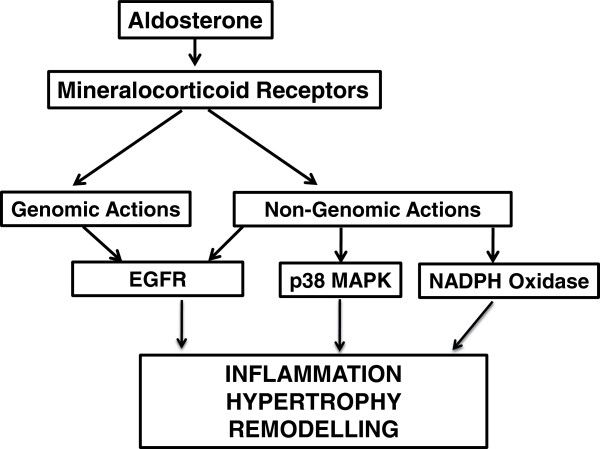
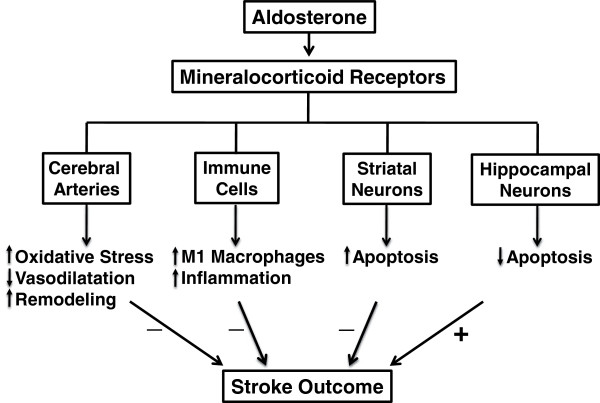
Ischemic stroke is a leading cause of morbidity and mortality worldwide. Elevated plasma aldosterone levels are an independent cardiovascular risk factor and are thought to contribute to hypertension, a major risk factor for stroke. Evidence from both experimental and human studies supports a role for aldosterone and/or the mineralocorticoid receptor (MR) in contributing to detrimental effects in the cerebral vasculature and to the incidence and outcome of ischemic stroke. This article reviews the evidence, including the protective effects of MR antagonism. Specifically, the effects of aldosterone and/or MR activation on cerebral vascular structure and on immune cells will be reviewed. The existing evidence suggests that aldosterone and the MR contribute to cerebral vascular pathology and to the incidence and outcome of stroke. We suggest that further research into the signaling mechanisms underlying the effects of aldosterone and MR activation in the brain and its vasculature, especially with regard to cell-specific actions, will provide important insight into causes and potential treatments for cerebrovascular disease and stroke.
缺血性中风是全球发病和死亡的主要原因。血浆醛固酮水平升高是一个独立的心血管危险因素,被认为与高血压有关,而高血压是中风的主要危险因素。实验研究和人体研究的证据均支持醛固酮和/或盐皮质激素受体(MR)在导致脑血管有害影响以及缺血性中风的发生和转归方面发挥作用。本文综述了相关证据,包括MR拮抗的保护作用。具体而言,将综述醛固酮和/或MR激活对脑血管结构和免疫细胞的影响。现有证据表明,醛固酮和MR与脑血管病理以及中风的发生和转归有关。我们建议,进一步研究醛固酮和MR激活在脑及其血管中的作用所涉及的信号传导机制,特别是关于细胞特异性作用的机制,将为脑血管疾病和中风的病因及潜在治疗方法提供重要见解。