Graduate School of Pharmaceutical Sciences, Chiba University Chiba, Japan.
Front Plant Sci. 2012 Oct 26;3:239. doi: 10.3389/fpls.2012.00239. eCollection 2012.
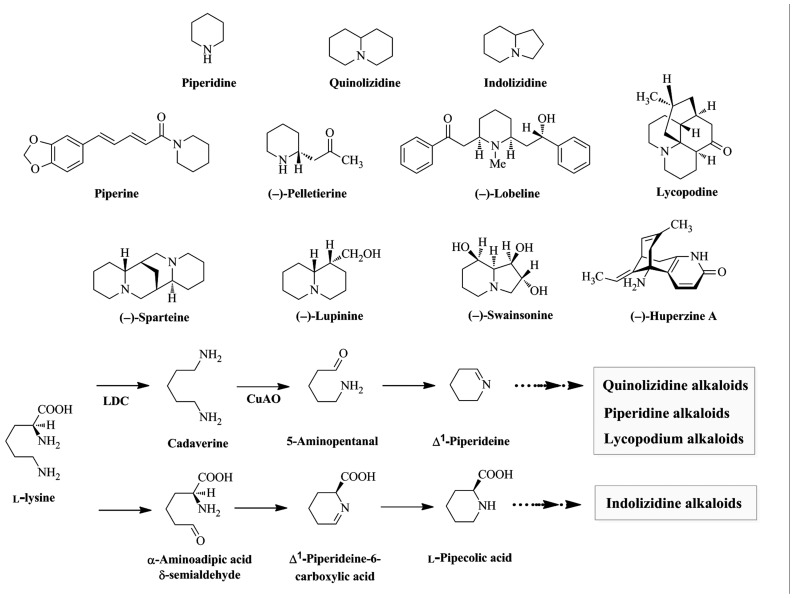
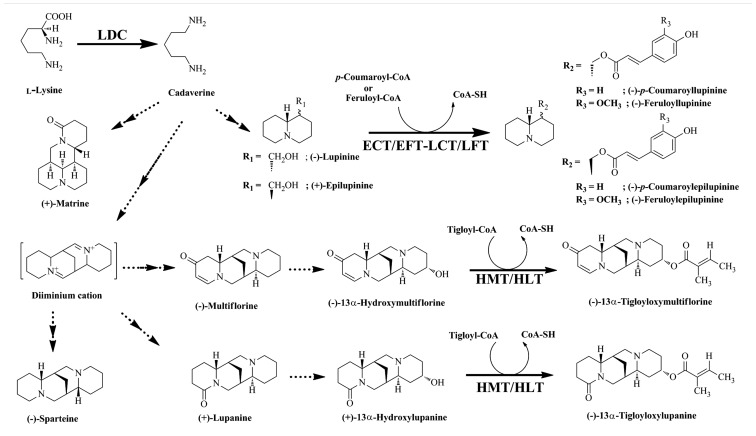
Lys-derived alkaloids, including piperidine, quinolizidine, indolizidine, and lycopodium alkaloids, are widely distributed throughout the plant kingdom. Several of these alkaloids have beneficial properties for humans and have been used in medicine. However, the molecular mechanisms underlying the biosynthesis of these alkaloids are not well understood. In the present article, we discuss recent advances in our understanding of Lys-derived alkaloids, especially the biochemistry, molecular biology, and biotechnology of quinolizidine alkaloid (QA) biosynthesis. We have also highlighted Lys decarboxylase (LDC), the enzyme that catalyzes the first committed step of QA biosynthesis and answers a longstanding question about the molecular entity of LDC activity in plants. Further prospects using current advanced technologies, such as next-generation sequencing, in medicinal plants have also been discussed.
赖氨酸衍生生物碱,包括哌啶、喹诺里西啶、吲哚里西啶和石松生物碱,广泛分布于植物界。其中一些生物碱对人类具有有益的特性,并已被用于医学。然而,这些生物碱生物合成的分子机制还不是很清楚。在本文中,我们讨论了我们对赖氨酸衍生生物碱的理解的最新进展,特别是喹诺里西啶生物碱(QA)生物合成的生物化学、分子生物学和生物技术。我们还强调了赖氨酸脱羧酶(LDC),它催化 QA 生物合成的第一步,回答了长期以来关于植物中 LDC 活性的分子实体的问题。还讨论了利用当前先进技术,如下一代测序,在药用植物中的进一步前景。