Departamento de Biología Funcional e Instituto Universitario de Oncología del Principado de Asturias (I.U.O.P.A), Universidad de Oviedo, Oviedo, Spain.
Instituto de Investigación Sanitaria de Asturias (ISPA), Oviedo, Spain.
Microb Biotechnol. 2022 Dec;15(12):2905-2916. doi: 10.1111/1751-7915.14167. Epub 2022 Nov 8.
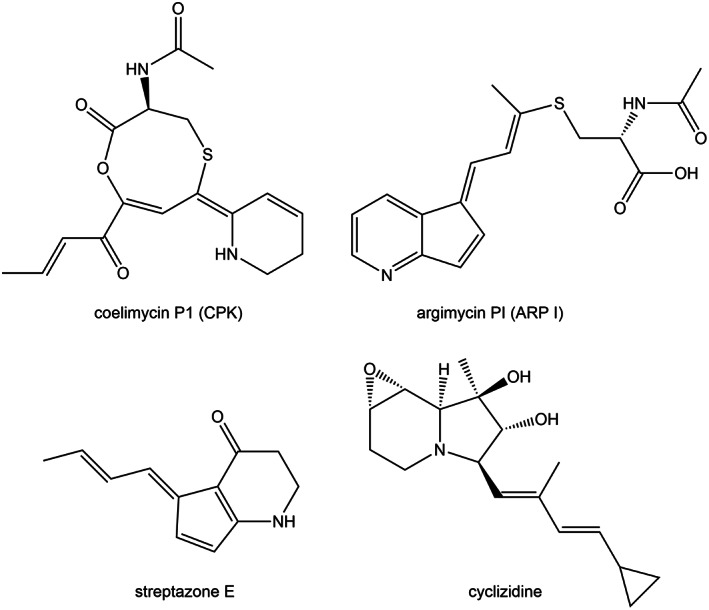
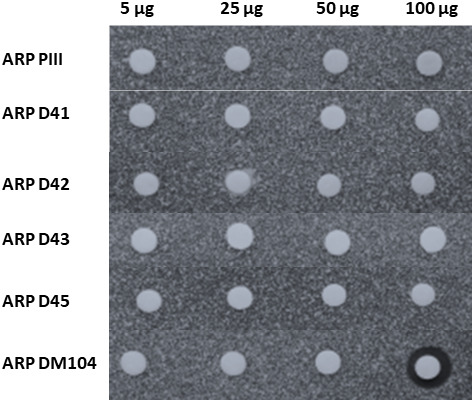
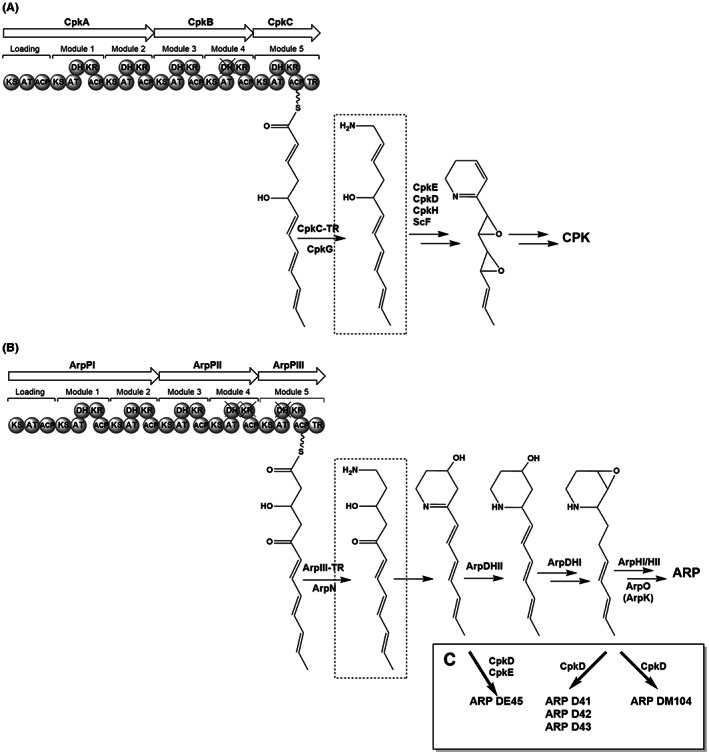
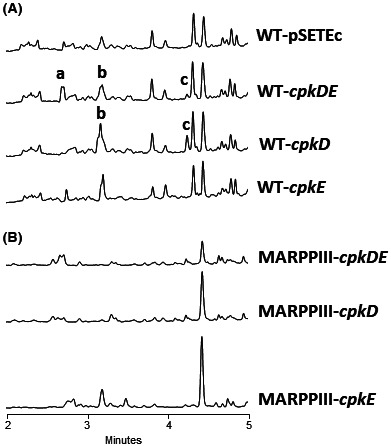
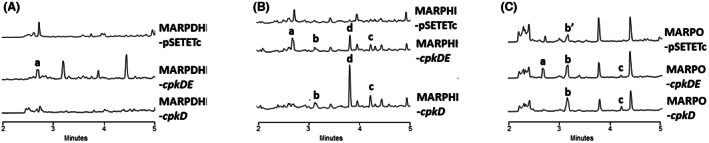
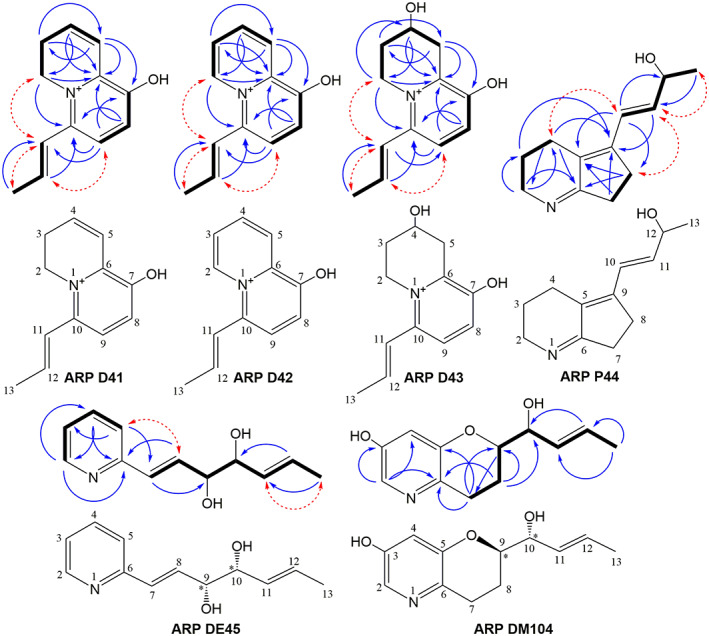
Coelimycin P1 and argimycins P are two types of polyketide alkaloids produced by Streptomyces coelicolor and Streptomyces argillaceus, respectively. Their biosynthesis pathways share some early steps that render very similar aminated polyketide chains, diverging the pathways afterwards. By expressing the putative isomerase cpkE and/or the putative epoxidase/dehydrogenase cpkD from the coelimycin P1 gene cluster into S. argillaceus wild type and in argimycin mutant strains, five novel hybrid argimycins were generated. Chemical characterization of those compounds revealed that four of them show unprecedented scaffolds (quinolizidine and pyranopyridine) never found before in the argimycin family of compounds. One of these compounds (argimycin DM104) shows improved antibiotic activity. Noticeable, biosynthesis of these quinolizidine argimycins results from a hybrid pathway created by combining enzymes from two different pathways, which utilizes an aminated polyketide chain as precursor instead of lysine as it occurs for other quinolizidines.
科利霉素 P1 和 argimycins P 是分别由链霉菌和链霉菌产生的两种聚酮类生物碱。它们的生物合成途径有一些早期步骤,产生非常相似的氨基化聚酮链,随后途径分歧。通过将来自科利霉素 P1 基因簇的假定异构酶 cpkE 和/或假定环氧化物酶/脱氢酶 cpkD 表达到链霉菌野生型和 argimycins 突变株中,生成了五种新型混合 argimycins。这些化合物的化学表征表明,其中四种化合物具有以前在 argimycins 化合物家族中从未发现过的前所未有的支架(喹啉和吡喃吡啶)。其中一种化合物(argimycin DM104)表现出改善的抗生素活性。值得注意的是,这些喹啉 argimycins 的生物合成是由来自两种不同途径的酶组合而成的混合途径产生的,该途径利用氨基化聚酮链作为前体,而不是像其他喹啉那样利用赖氨酸。