Department of Veterinary Disease Biology, Copenhagen University, Frederiksberg, Denmark.
PLoS One. 2012;7(10):e47878. doi: 10.1371/journal.pone.0047878. Epub 2012 Oct 30.
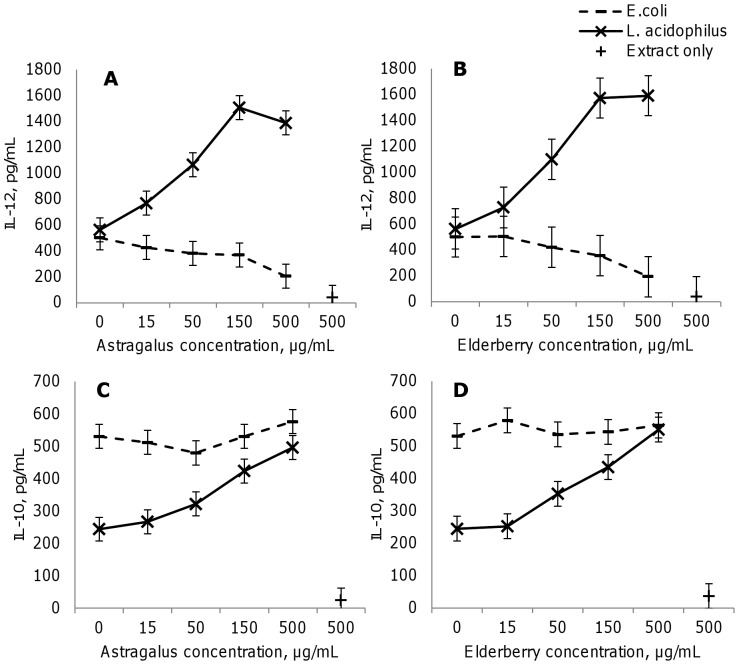
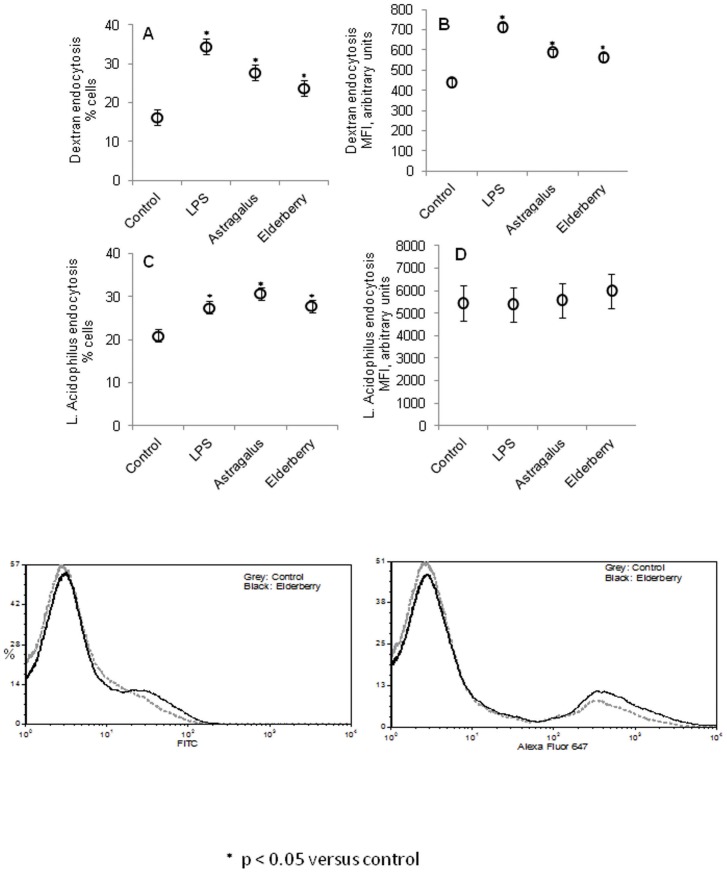
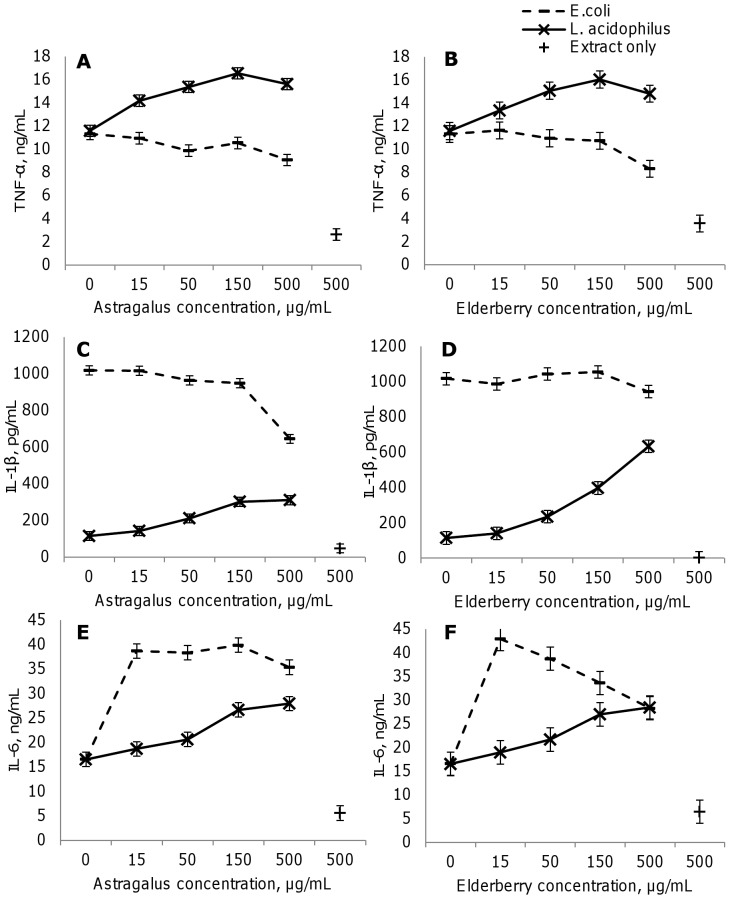
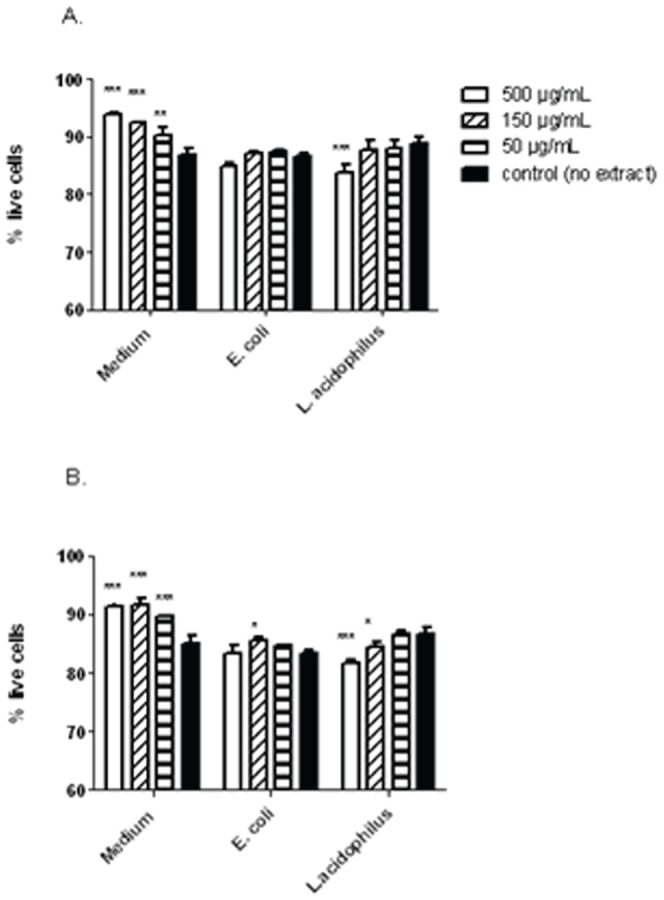
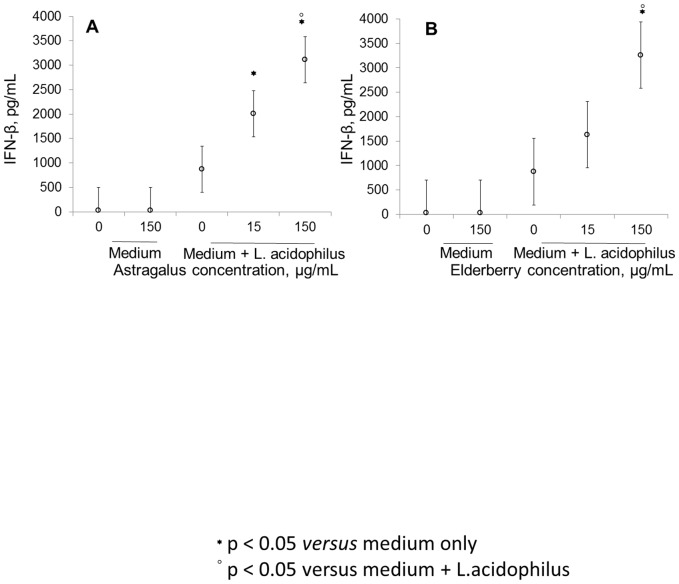
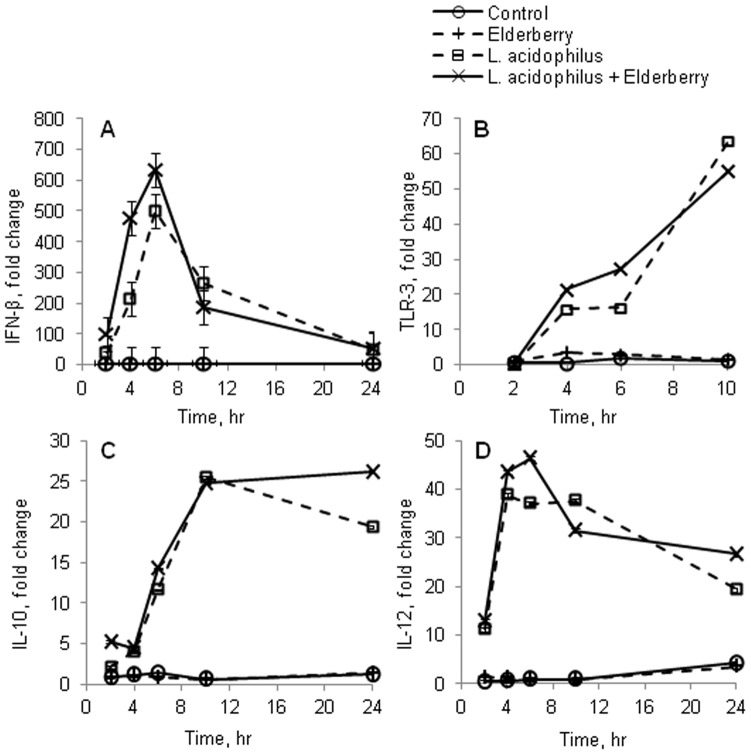
Many foods and food components boost the immune system, but little data are available regarding the mechanisms by which they do. Bacterial strains have disparate effects in stimulating the immune system. In dendritic cells, the gram-negative bacteria Escherichia coli upregulates proinflammatory cytokines, whereas gram-positive Lactobacillus acidophilus induces a robust interferon (IFN)-β response. The immune-modulating effects of astragalus root and elderberry fruit extracts were examined in bone marrow-derived murine dendritic cells that were stimulated with L. acidophilus or E. coli. IFN-β and other cytokines were measured by ELISA and RT-PCR. Endocytosis of fluorescence-labeled dextran and L. acidophilus in the presence of elderberry fruit or astragalus root extract was evaluated in dendritic cells. Our results show that both extracts enhanced L. acidophilus-induced IFN-β production and slightly decreased the proinflammatory response to E. coli. The enhanced IFN-β production was associated with upregulation of toll-like receptor 3 and to a varying degree, the cytokines IL-12, IL-6, IL-1β and TNF-α. Both extracts increased endocytosis in immature dendritic cells, and only slightly influenced the viability of the cells. In conclusion, astragalus root and elderberry fruit extracts increase the IFN-β inducing activity of L. acidophilus in dendritic cells, suggesting that they may exert antiviral and immune-enhancing activity.
许多食物和食物成分都能增强免疫系统,但关于它们的作用机制的数据却很少。细菌菌株对免疫系统的刺激作用有很大的差异。在树突状细胞中,革兰氏阴性细菌大肠杆菌上调促炎细胞因子,而革兰氏阳性嗜酸乳杆菌则诱导强烈的干扰素(IFN)-β反应。本研究检测了黄芪根和接骨木果提取物对用嗜酸乳杆菌或大肠杆菌刺激的骨髓来源的鼠树突状细胞的免疫调节作用。通过 ELISA 和 RT-PCR 测定 IFN-β和其他细胞因子。在接骨木果或黄芪根提取物存在的情况下,评估了荧光标记的葡聚糖和嗜酸乳杆菌在树突状细胞中的内吞作用。我们的结果表明,两种提取物均增强了嗜酸乳杆菌诱导的 IFN-β产生,并轻微降低了对大肠杆菌的促炎反应。增强的 IFN-β产生与 Toll 样受体 3 的上调有关,并在不同程度上与细胞因子 IL-12、IL-6、IL-1β和 TNF-α有关。两种提取物均增加了未成熟树突状细胞的内吞作用,并且仅略微影响细胞的活力。总之,黄芪根和接骨木果提取物增加了嗜酸乳杆菌在树突状细胞中诱导 IFN-β的活性,表明它们可能具有抗病毒和增强免疫的活性。