Hospital Universitario Ramón y Cajal, IRYCIS, Madrid, Spain.
PLoS One. 2012;7(10):e48128. doi: 10.1371/journal.pone.0048128. Epub 2012 Oct 31.
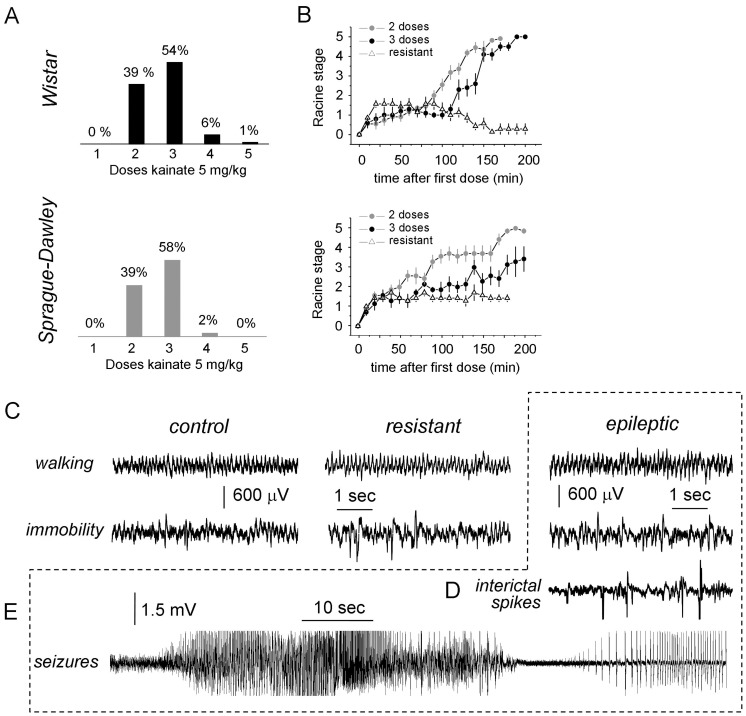
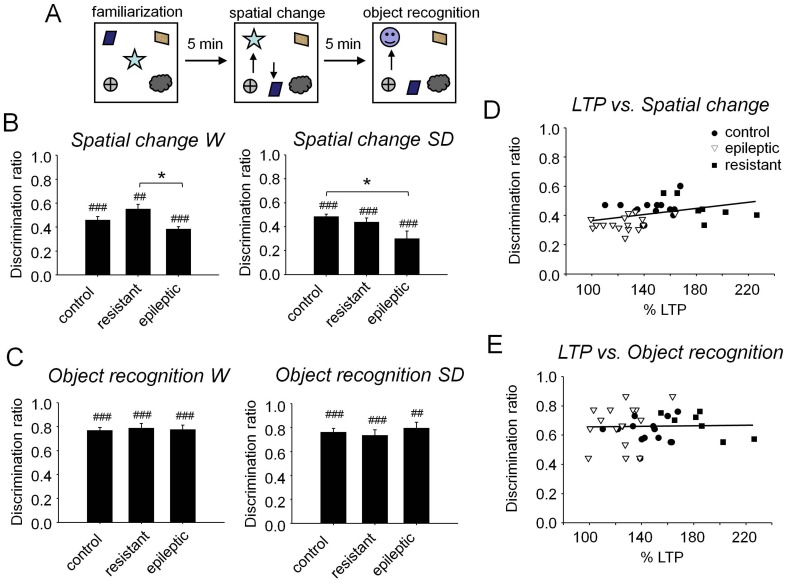
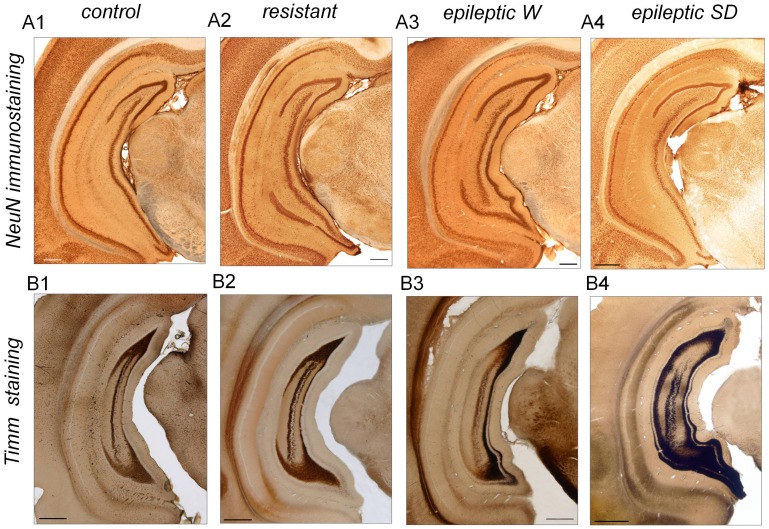
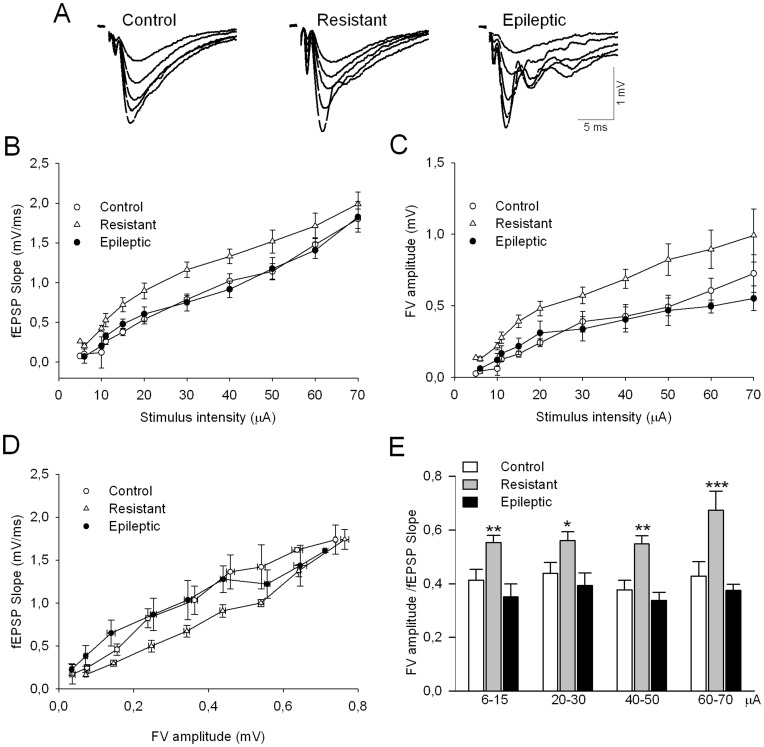
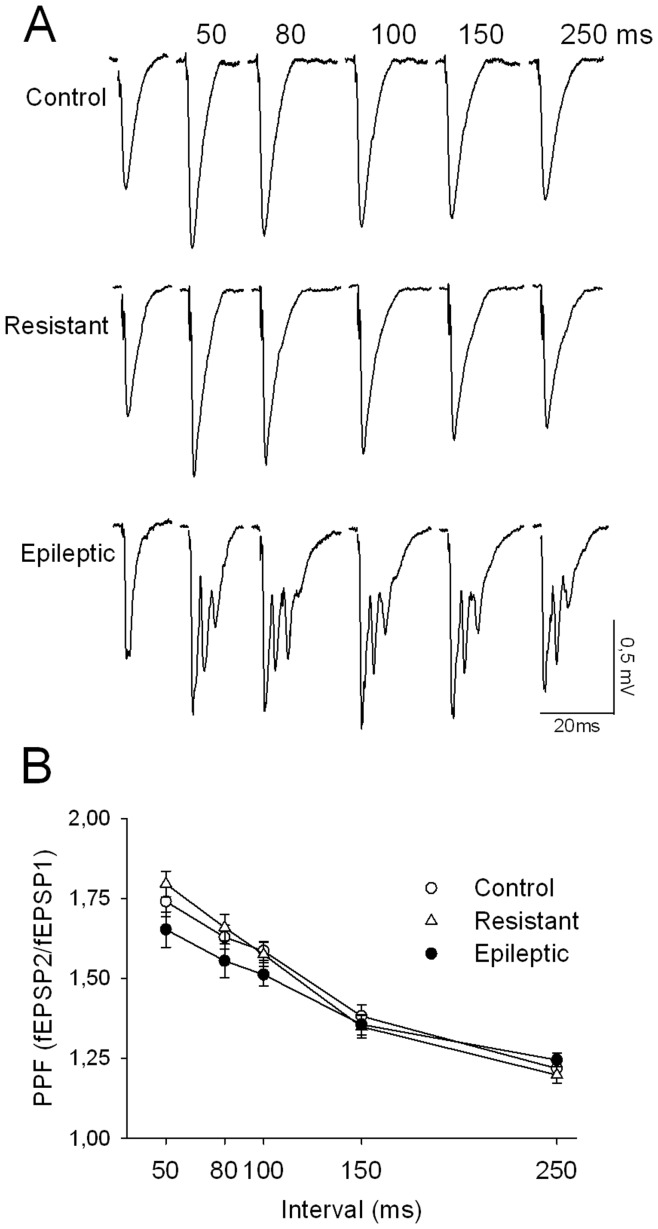
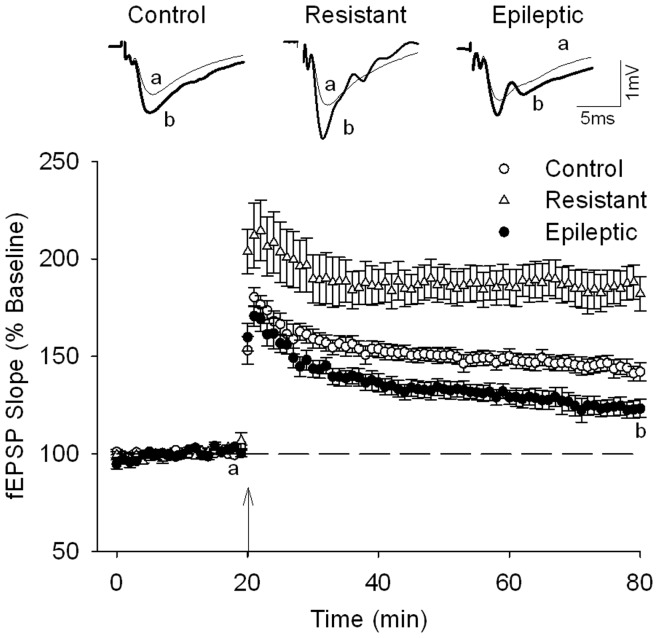
Seizures have profound impact on synaptic function and plasticity. While kainic acid is a popular method to induce seizures and to potentially affect synaptic plasticity, it can also produce physiological-like oscillations and trigger some forms of long-term potentiation (LTP). Here, we examine whether induction of LTP is altered in hippocampal slices prepared from rats with different sensitivity to develop status epilepticus (SE) by systemic injection of kainic acid. Rats were treated with multiple low doses of kainic acid (5 mg/kg; i.p.) to develop SE in a majority of animals (72-85% rats). A group of rats were resistant to develop SE (15-28%) after several accumulated doses. Animals were subsequently tested using chronic recordings and object recognition tasks before brain slices were prepared for histological studies and to examine basic features of hippocampal synaptic function and plasticity, including input/output curves, paired-pulse facilitation and theta-burst induced LTP. Consistent with previous reports in kindling and pilocapine models, LTP was reduced in rats that developed SE after kainic acid injection. These animals exhibited signs of hippocampal sclerosis and developed spontaneous seizures. In contrast, resistant rats did not become epileptic and had no signs of cell loss and mossy fiber sprouting. In slices from resistant rats, theta-burst stimulation induced LTP of higher magnitude when compared with control and epileptic rats. Variations on LTP magnitude correlate with animals' performance in a hippocampal-dependent spatial memory task. Our results suggest dissociable long-term effects of treatment with kainic acid on synaptic function and plasticity depending on its epileptogenic efficiency.
癫痫发作对突触功能和可塑性有深远的影响。虽然海人酸是诱导癫痫发作并可能影响突触可塑性的一种常用方法,但它也可以产生类似生理的振荡,并引发某些形式的长时程增强(LTP)。在这里,我们研究了在海马切片中,通过系统注射海人酸,是否会改变对癫痫发作敏感性不同的大鼠的 LTP 诱导。大鼠接受多次低剂量海人酸(5mg/kg;ip)注射以在大多数动物(72-85%的大鼠)中诱发癫痫发作。一组大鼠在多次累积剂量后对癫痫发作具有抗性(15-28%)。随后,在制备脑切片进行组织学研究以及检查海马突触功能和可塑性的基本特征(包括输入/输出曲线、成对脉冲易化和θ爆发诱导的 LTP)之前,使用慢性记录和物体识别任务对动物进行测试。与先前在点燃和毛果芸香碱模型中的报告一致,在海人酸注射后发展为癫痫发作的大鼠中,LTP 减少。这些动物表现出海马硬化的迹象,并出现自发性癫痫发作。相比之下,抗性大鼠没有癫痫发作,没有细胞丢失和苔藓纤维发芽的迹象。在抗性大鼠的切片中,与对照和癫痫大鼠相比,θ爆发刺激诱导的 LTP 幅度更大。LTP 幅度的变化与动物在海马依赖的空间记忆任务中的表现相关。我们的结果表明,海人酸处理对突触功能和可塑性的长期影响取决于其致癫痫效率。