School of Pharmacy and UW Carbone Cancer Center, University of Wisconsin Madison, Madison, WI, USA.
PLoS Genet. 2012;8(11):e1003034. doi: 10.1371/journal.pgen.1003034. Epub 2012 Nov 1.
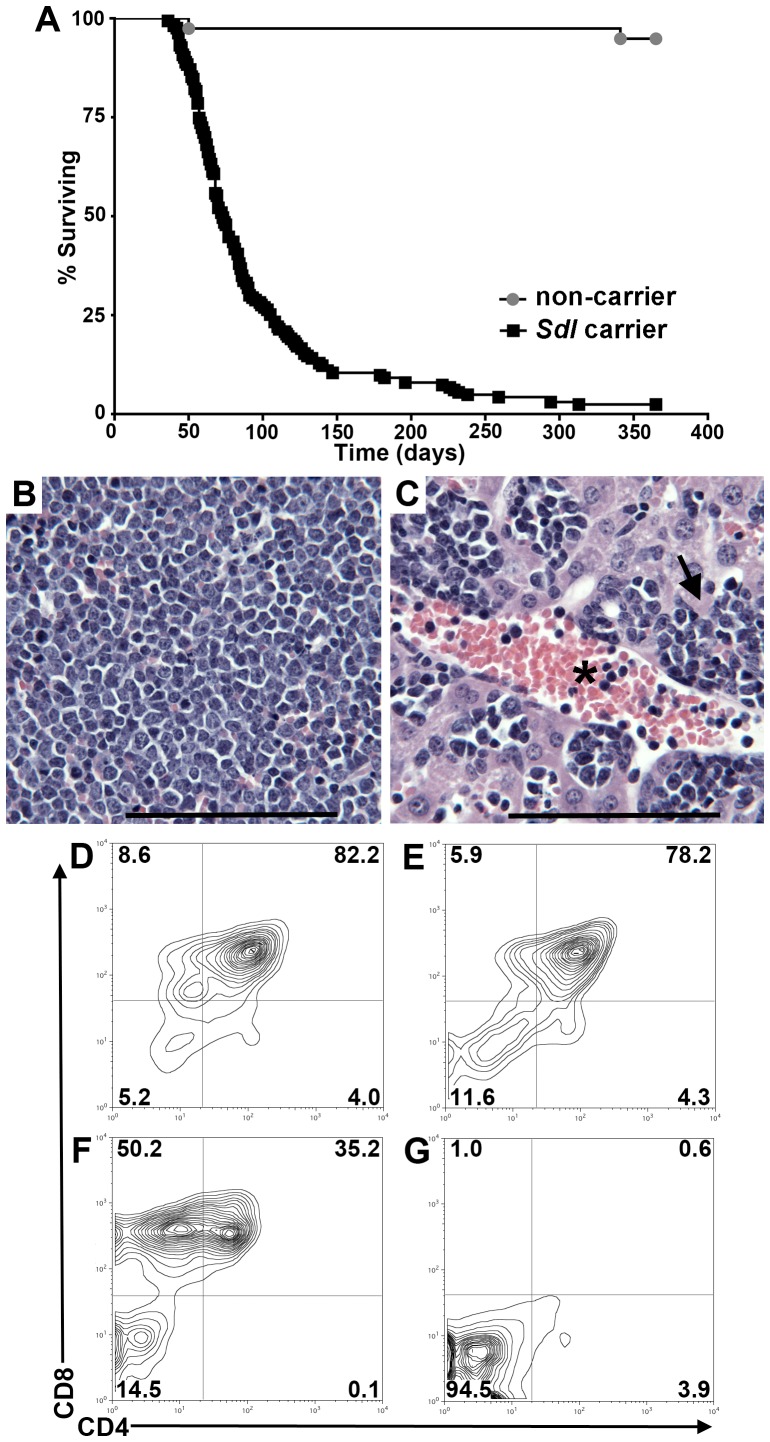
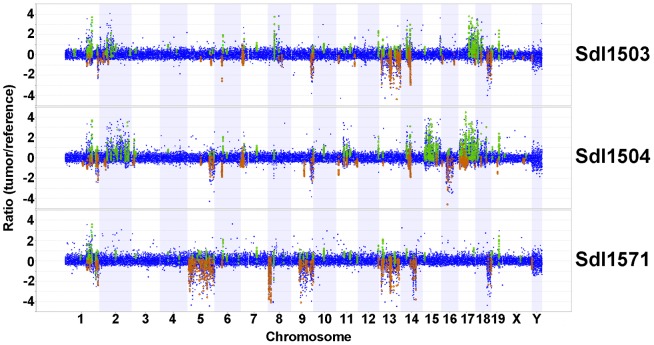
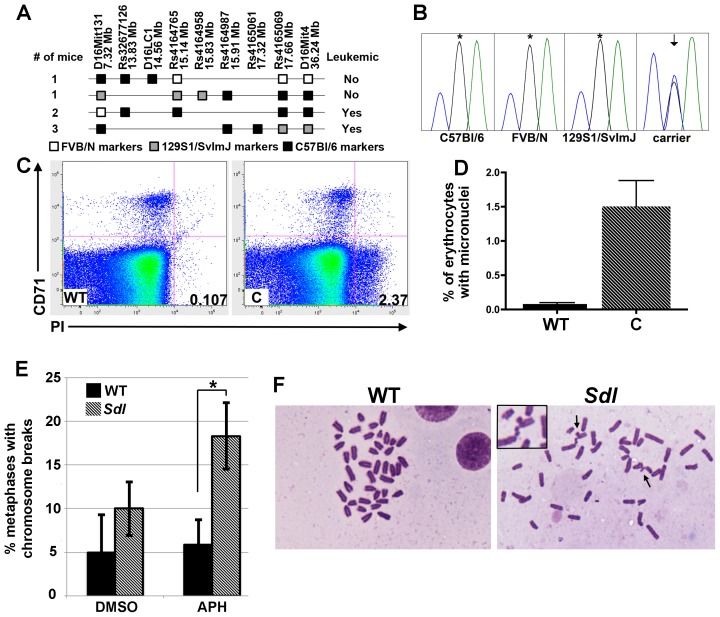
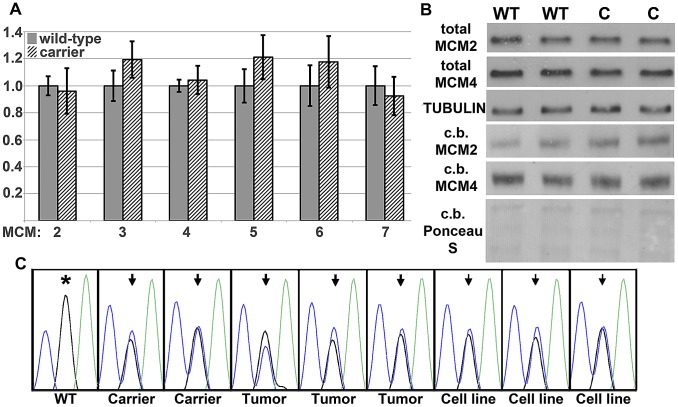
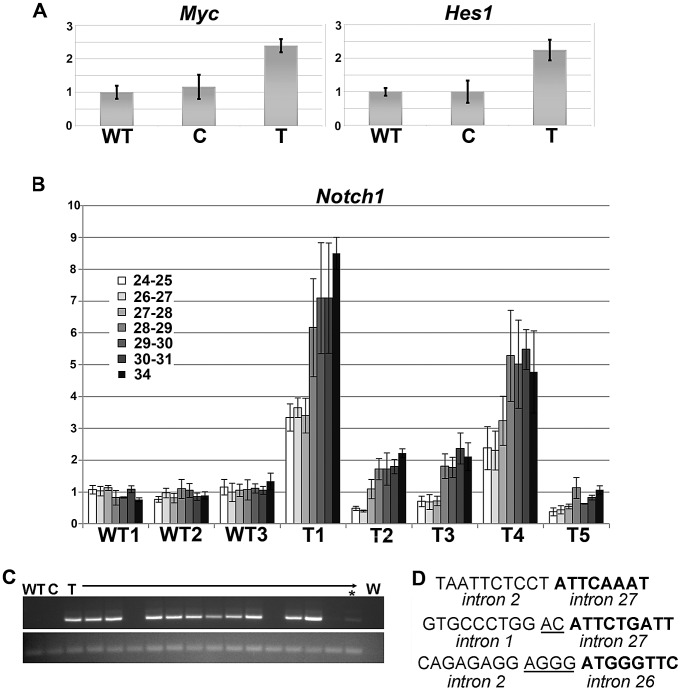
Here we report the isolation of a murine model for heritable T cell lymphoblastic leukemia/lymphoma (T-ALL) called Spontaneous dominant leukemia (Sdl). Sdl heterozygous mice develop disease with a short latency and high penetrance, while mice homozygous for the mutation die early during embryonic development. Sdl mice exhibit an increase in the frequency of micronucleated reticulocytes, and T-ALLs from Sdl mice harbor small amplifications and deletions, including activating deletions at the Notch1 locus. Using exome sequencing it was determined that Sdl mice harbor a spontaneously acquired mutation in Mcm4 (Mcm4(D573H)). MCM4 is part of the heterohexameric complex of MCM2-7 that is important for licensing of DNA origins prior to S phase and also serves as the core of the replicative helicase that unwinds DNA at replication forks. Previous studies in murine models have discovered that genetic reductions of MCM complex levels promote tumor formation by causing genomic instability. However, Sdl mice possess normal levels of Mcms, and there is no evidence for loss-of-heterozygosity at the Mcm4 locus in Sdl leukemias. Studies in Saccharomyces cerevisiae indicate that the Sdl mutation produces a biologically inactive helicase. Together, these data support a model in which chromosomal abnormalities in Sdl mice result from the ability of MCM4(D573H) to incorporate into MCM complexes and render them inactive. Our studies indicate that dominantly acting alleles of MCMs can be compatible with viability but have dramatic oncogenic consequences by causing chromosomal abnormalities.
我们在此报告一种称为自发性显性白血病(Sdl)的遗传性 T 细胞淋巴母细胞白血病/淋巴瘤(T-ALL)的小鼠模型的分离。Sdl 杂合子小鼠具有潜伏期短和高穿透率的疾病,而突变纯合子的小鼠在胚胎发育早期死亡。Sdl 小鼠表现出网织红细胞微核频率增加,并且来自 Sdl 小鼠的 T-ALL 具有小的扩增和缺失,包括 Notch1 基因座的激活缺失。通过外显子组测序确定 Sdl 小鼠携带 Mcm4(Mcm4(D573H))的自发获得性突变。MCM4 是 MCM2-7 异六聚体复合物的一部分,对于 S 期前 DNA 起始的许可很重要,并且也是复制解旋酶的核心,该酶在复制叉处解开 DNA。在小鼠模型中的先前研究发现,MCM 复合物水平的遗传降低通过引起基因组不稳定性促进肿瘤形成。然而,Sdl 小鼠具有正常水平的 Mcms,并且在 Sdl 白血病中没有 Mcm4 基因座的杂合性丢失的证据。酿酒酵母的研究表明,Sdl 突变产生了一种生物学上无活性的解旋酶。总之,这些数据支持这样一种模型,即 Sdl 小鼠中的染色体异常源自 MCM4(D573H)掺入 MCM 复合物并使其失活的能力。我们的研究表明,MCM 的显性等位基因可以与存活兼容,但通过引起染色体异常而具有显著的致癌后果。