Laboratório de Neurobiologia II, Programa de Neurobiologia, Instituto de Biofísica Carlos Chagas Filho, Universidade Federal do Rio de Janeiro Rio de Janeiro, Brazil ; Departamento de Fisiologia, Instituto de Ciências Biológicas, Universidade Federal de Juiz de Fora Juiz de Fora, Brazil.
Front Neural Circuits. 2012 Nov 6;6:57. doi: 10.3389/fncir.2012.00057. eCollection 2012.
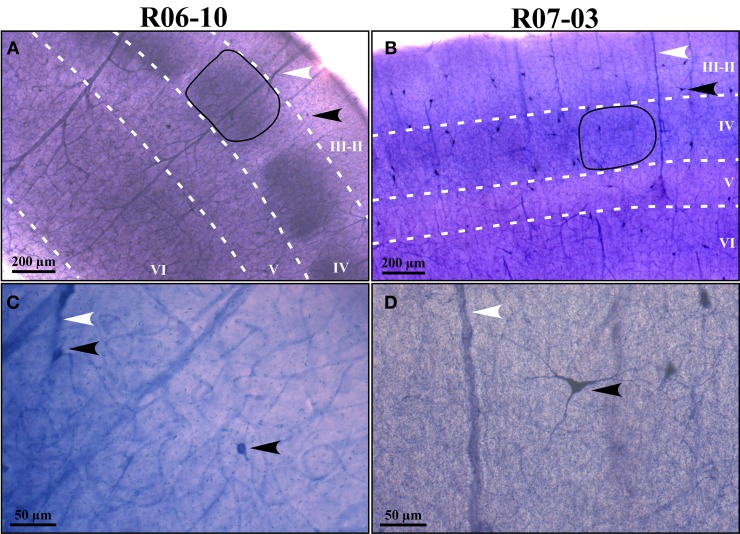
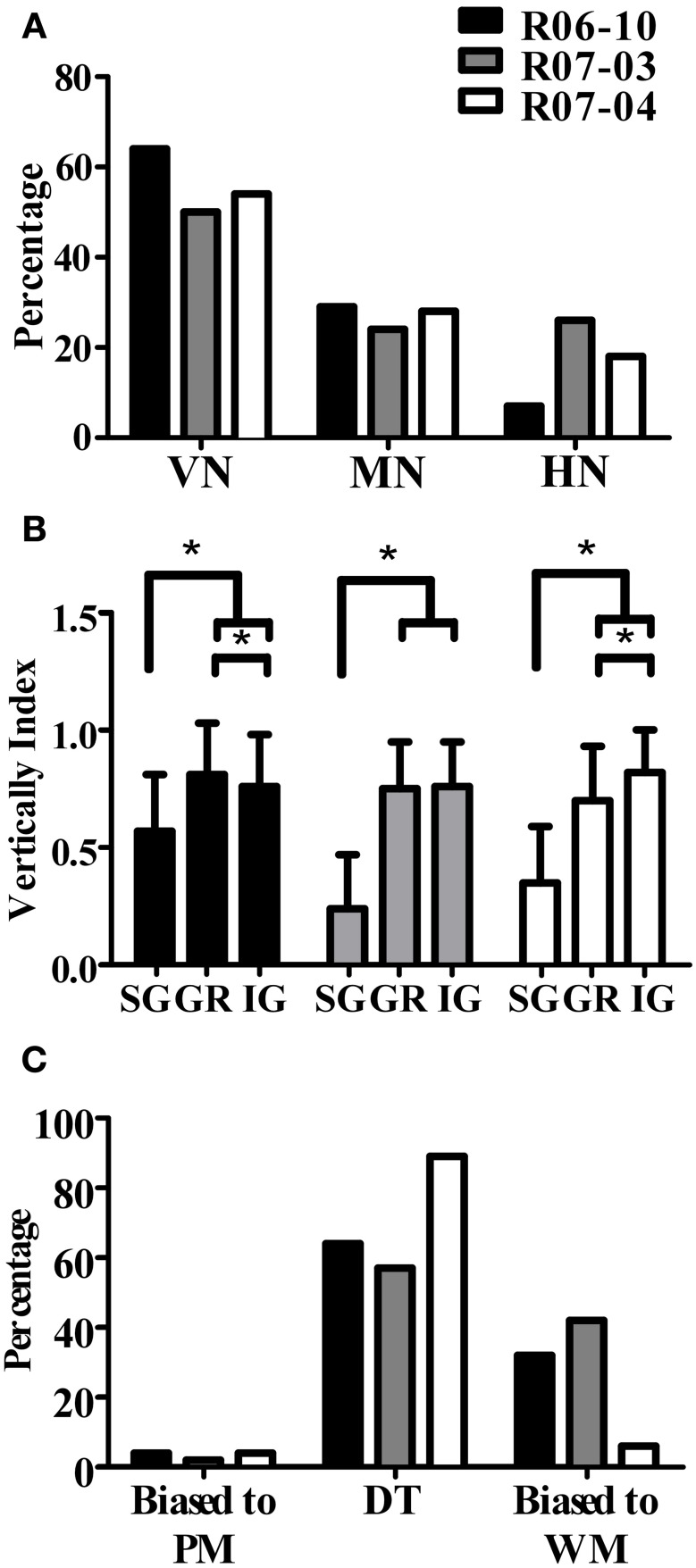
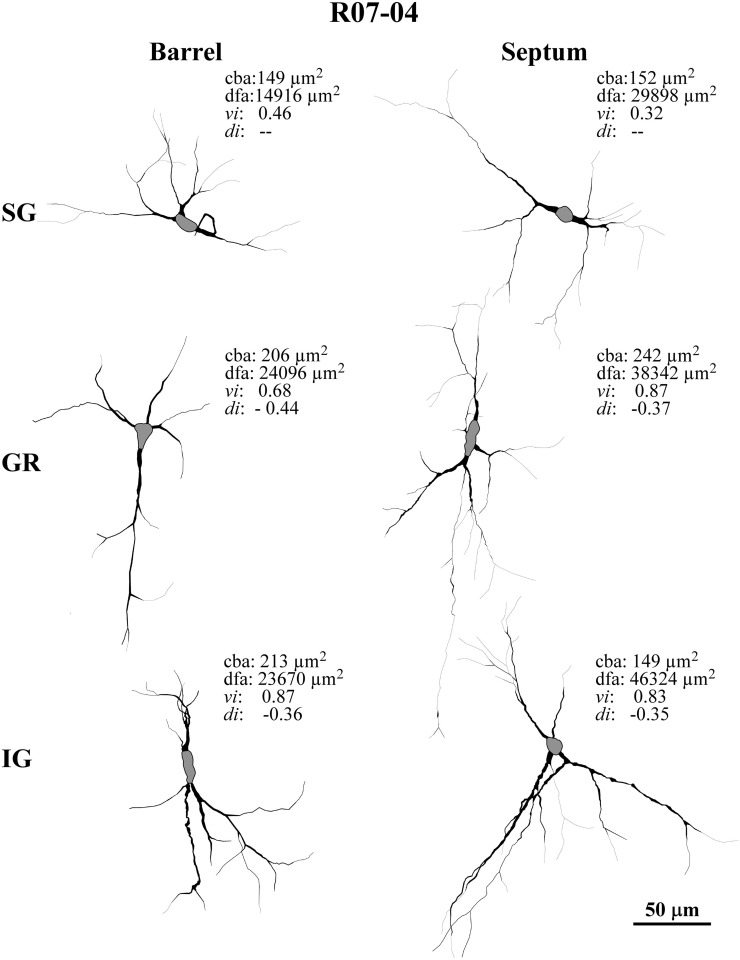
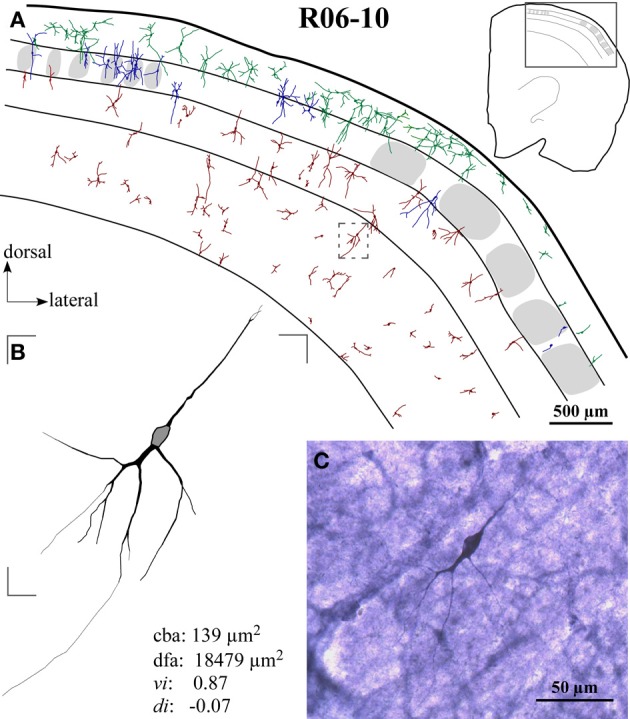
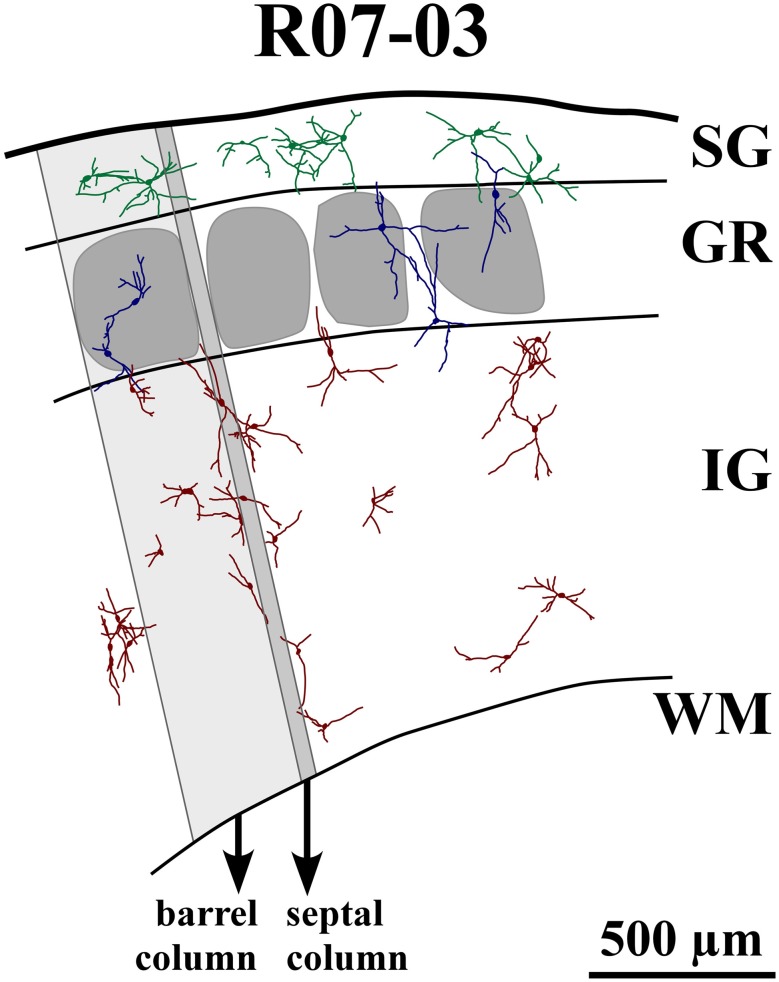
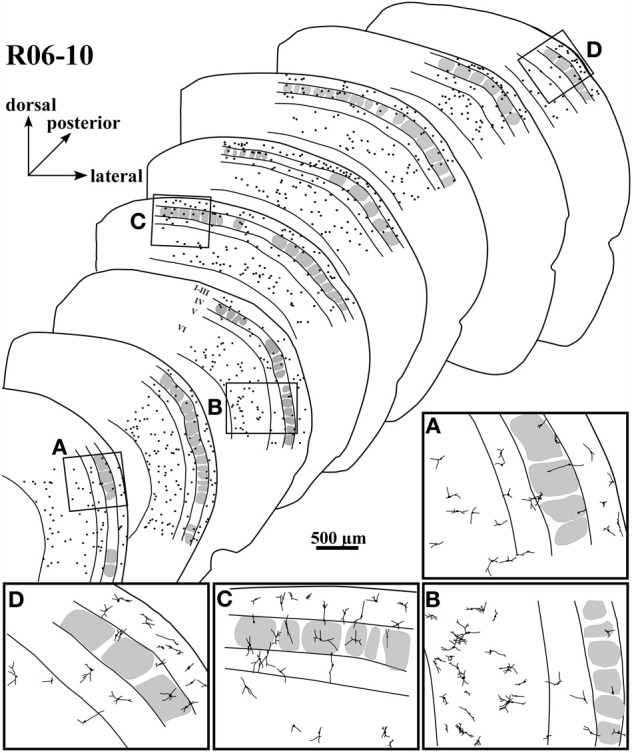
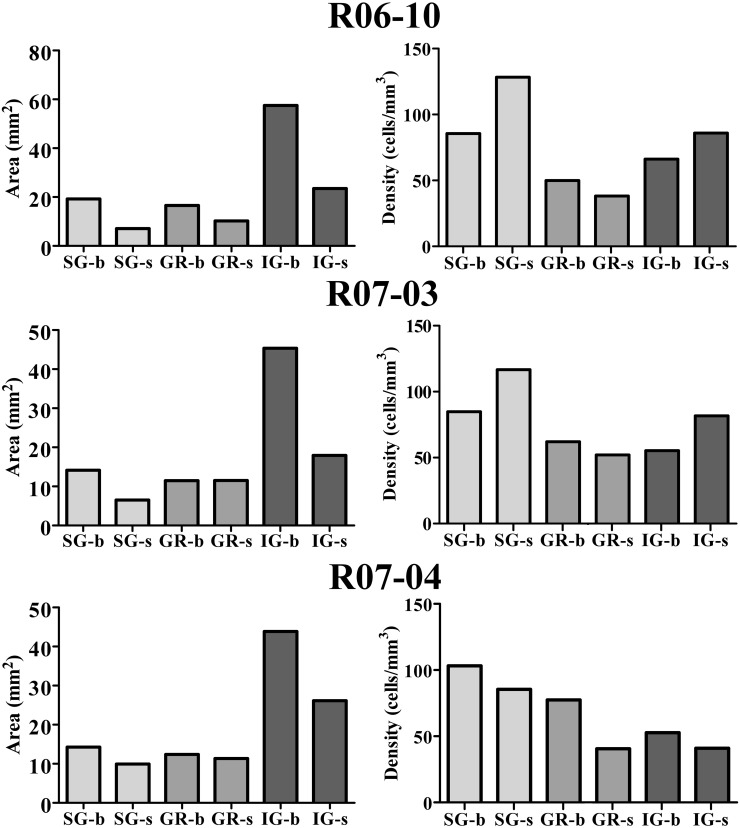
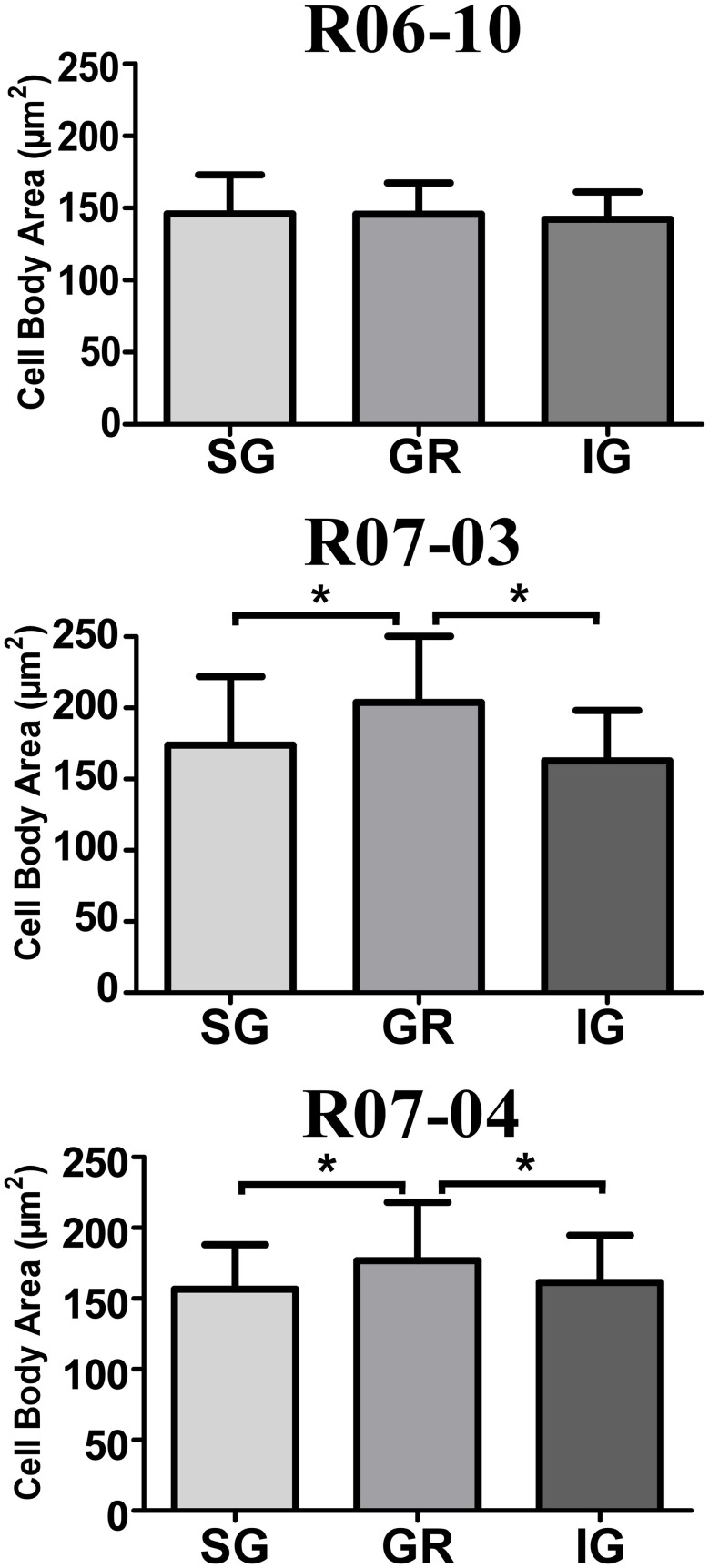
The rat primary somatosensory cortex (S1) is remarkable for its conspicuous vertical compartmentalization in barrels and septal columns, which are additionally stratified in horizontal layers. Whereas excitatory neurons from each of these compartments perform different types of processing, the role of interneurons is much less clear. Among the numerous types of GABAergic interneurons, those producing nitric oxide (NO) are especially puzzling, since this gaseous messenger can modulate neural activity, synaptic plasticity, and neurovascular coupling. We used a quantitative morphological approach to investigate whether nitrergic interneurons, which might therefore be considered both as NO volume diffusers and as elements of local circuitry, display features that could relate to barrel cortex architecture. In fixed brain sections, nitrergic interneurons can be revealed by histochemical processing for NADPH-diaphorase (NADPHd). Here, the dendritic arbors of nitrergic neurons from different compartments of area S1 were 3D reconstructed from serial 200 μm thick sections, using 100x objective and the Neurolucida system. Standard morphological parameters were extracted for all individual arbors and compared across columns and layers. Wedge analysis was used to compute dendritic orientation indices. Supragranular (SG) layers displayed the highest density of nitrergic neurons, whereas layer IV contained nitrergic neurons with largest soma area. The highest nitrergic neuronal density was found in septa, where dendrites were previously characterized as more extense and ramified than in barrels. Dendritic arbors were not confined to the boundaries of the column nor layer of their respective soma, being mostly double-tufted and vertically oriented, except in SG layers. These data strongly suggest that nitrergic interneurons adapt their morphology to the dynamics of processing performed by cortical compartments.
大鼠初级体感皮层(S1)因其在桶状和隔柱中的明显垂直分区化而引人注目,这些隔柱还进一步分层为水平层。虽然来自这些隔室的兴奋性神经元执行不同类型的处理,但中间神经元的作用则不太清楚。在众多 GABA 能中间神经元中,产生一氧化氮(NO)的神经元尤其令人费解,因为这种气态信使可以调节神经活动、突触可塑性和神经血管耦联。我们使用定量形态学方法来研究产生 NO 的中间神经元是否可能被视为既是 NO 体积扩散器,又是局部回路的元素,它们是否具有与桶状皮层结构相关的特征。在固定的脑切片中,可以通过 NADPH 黄递酶(NADPHd)的组织化学处理来揭示 nitrergic 中间神经元。在这里,使用 100x 物镜和 Neurolucida 系统,从连续的 200μm 厚切片中重建来自 S1 不同隔室的 nitrergic 神经元的树突分支。为所有单个树突分支提取标准形态参数,并在柱和层之间进行比较。楔形分析用于计算树突方向指数。颗粒上层(SG)层显示出最高密度的 nitrergic 神经元,而 IV 层包含具有最大胞体面积的 nitrergic 神经元。在隔区内发现了最高密度的 nitrergic 神经元,那里的树突以前被描述为比桶状区内的树突更广泛和分枝。树突分支不仅局限于各自胞体的柱或层的边界,而是主要呈双绒毛状和垂直取向,除了在 SG 层。这些数据强烈表明,nitrergic 中间神经元使它们的形态适应于皮质隔室执行的处理动态。