Department of Neuroscience, Karolinska Institutet, Stockholm, Sweden.
PLoS One. 2012;7(11):e47958. doi: 10.1371/journal.pone.0047958. Epub 2012 Nov 2.
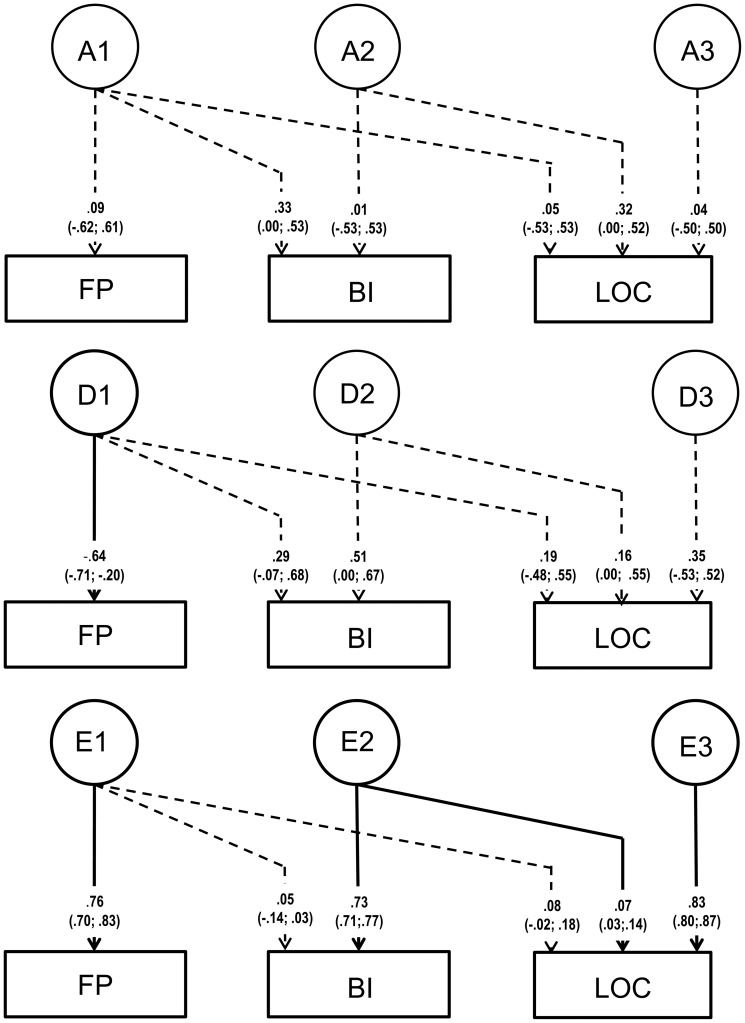
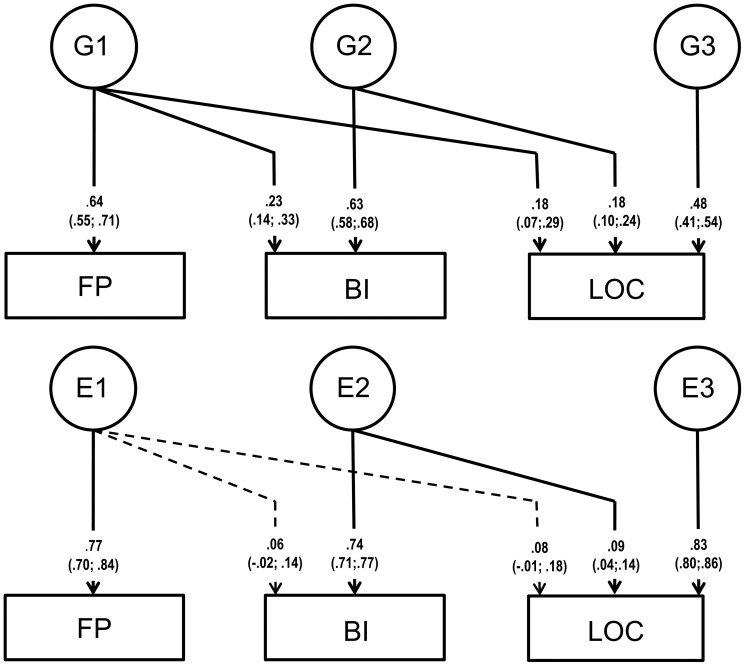
Flow is a psychological state of high but subjectively effortless attention that typically occurs during active performance of challenging tasks and is accompanied by a sense of automaticity, high control, low self-awareness, and enjoyment. Flow proneness is associated with traits and behaviors related to low neuroticism such as emotional stability, conscientiousness, active coping, self-esteem and life satisfaction. Little is known about the genetic architecture of flow proneness, behavioral inhibition and locus of control--traits also associated with neuroticism--and their interrelation. Here, we hypothesized that individuals low in behavioral inhibition and with an internal locus of control would be more likely to experience flow and explored the genetic and environmental architecture of the relationship between the three variables. Behavioral inhibition and locus of control was measured in a large population sample of 3,375 full twin pairs and 4,527 single twins, about 26% of whom also scored the flow proneness questionnaire. Findings revealed significant but relatively low correlations between the three traits and moderate heritability estimates of .41, .45, and .30 for flow proneness, behavioral inhibition, and locus of control, respectively, with some indication of non-additive genetic influences. For behavioral inhibition we found significant sex differences in heritability, with females showing a higher estimate including significant non-additive genetic influences, while in males the entire heritability was due to additive genetic variance. We also found a mainly genetically mediated relationship between the three traits, suggesting that individuals who are genetically predisposed to experience flow, show less behavioral inhibition (less anxious) and feel that they are in control of their own destiny (internal locus of control). We discuss that some of the genes underlying this relationship may include those influencing the function of dopaminergic neural systems.
流畅是一种心理状态,表现为高度但主观上毫不费力的注意力,通常发生在积极应对挑战性任务时,并伴随着自动化、高控制力、低自我意识和享受感。流畅倾向与与低神经质相关的特质和行为有关,如情绪稳定性、尽责性、积极应对、自尊和生活满意度。关于流畅倾向、行为抑制和控制源(与神经质相关的特质)的遗传结构及其相互关系,我们知之甚少。在这里,我们假设行为抑制程度低且具有内部控制源的个体更有可能体验到流畅,并探讨了这三个变量之间关系的遗传和环境结构。在一个由 3375 对全双胞胎和 4527 对单胞胎组成的大人群样本中,我们测量了行为抑制和控制源,其中约 26%的人还填写了流畅倾向问卷。研究结果显示,这三个特质之间存在显著但相对较低的相关性,流畅倾向、行为抑制和控制源的遗传度估计值分别为.41、.45 和.30,存在一定程度的非加性遗传影响。对于行为抑制,我们发现遗传度存在显著的性别差异,女性的遗传度估计值较高,包括显著的非加性遗传影响,而男性的整个遗传度归因于加性遗传方差。我们还发现这三个特质之间主要存在遗传介导的关系,这表明那些具有遗传倾向体验流畅的个体表现出较低的行为抑制(较少焦虑),并感到自己能够掌控自己的命运(内部控制源)。我们讨论了一些可能包括影响多巴胺能神经系统功能的基因可能是导致这种关系的原因。