Department of Neurobiology, University of Pittsburgh, Pittsburgh, PA, USA.
Cell Adh Migr. 2013 Jan-Feb;7(1):64-71. doi: 10.4161/cam.22479. Epub 2012 Nov 15.
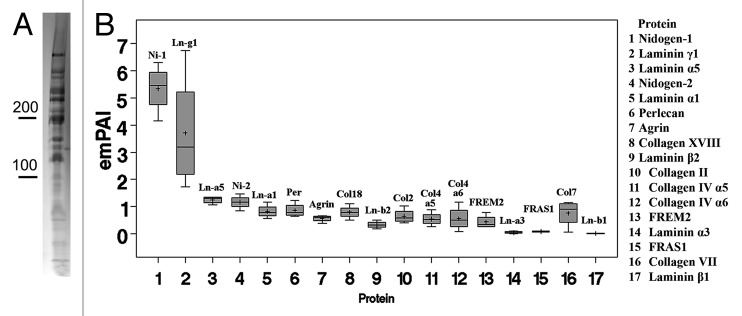
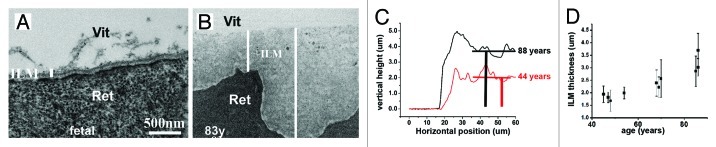
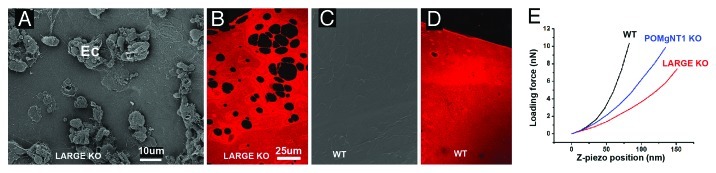
Basement membranes (BMs) evolved together with the first metazoan species approximately 500 million years ago. Main functions of BMs are stabilizing epithelial cell layers and connecting different types of tissues to functional, multicellular organisms. Mutations of BM proteins from worms to humans are either embryonic lethal or result in severe diseases, including muscular dystrophy, blindness, deafness, kidney defects, cardio-vascular abnormalities or retinal and cortical malformations. In vivo-derived BMs are difficult to come by; they are very thin and sticky and, therefore, difficult to handle and probe. In addition, BMs are difficult to solubilize complicating their biochemical analysis. For these reasons, most of our knowledge of BM biology is based on studies of the BM-like extracellular matrix (ECM) of mouse yolk sac tumors or from studies of the lens capsule, an unusually thick BM. Recently, isolation procedures for a variety of BMs have been described, and new techniques have been developed to directly analyze the protein compositions, the biomechanical properties and the biological functions of BMs. New findings show that native BMs consist of approximately 20 proteins. BMs are four times thicker than previously recorded, and proteoglycans are mainly responsible to determine the thickness of BMs by binding large quantities of water to the matrix. The mechanical stiffness of BMs is similar to that of articular cartilage. In mice with mutation of BM proteins, the stiffness of BMs is often reduced. As a consequence, these BMs rupture due to mechanical instability explaining many of the pathological phenotypes. Finally, the morphology and protein composition of human BMs changes with age, thus BMs are dynamic in their structure, composition and biomechanical properties.
基底层(BMs)大约在 5 亿年前与第一种后生动物物种一起进化。BMs 的主要功能是稳定上皮细胞层,并将不同类型的组织连接到具有功能的多细胞生物体上。从线虫到人类的 BM 蛋白突变要么是胚胎致死的,要么导致严重疾病,包括肌肉营养不良、失明、耳聋、肾脏缺陷、心血管异常或视网膜和皮质畸形。体内衍生的 BMs 很难获得;它们非常薄且粘性,因此难以处理和探测。此外,BMs 很难溶解,这使其生化分析变得复杂。由于这些原因,我们对 BM 生物学的大部分了解都是基于对鼠蛋黄囊肿瘤的 BM 样细胞外基质(ECM)的研究,或者是基于对晶状体囊的研究,晶状体囊是一种异常厚的 BM。最近,已经描述了各种 BMs 的分离程序,并且已经开发了新技术来直接分析 BM 的蛋白质组成、生物力学特性和生物学功能。新的发现表明,天然 BMs 由大约 20 种蛋白质组成。BMs 比以前记录的要厚四倍,而蛋白聚糖主要通过将大量水结合到基质中来决定 BMs 的厚度。BMs 的机械刚度与关节软骨的机械刚度相似。在 BM 蛋白突变的小鼠中,BMs 的刚度通常会降低。因此,由于机械不稳定性,这些 BMs 会破裂,这解释了许多病理表型。最后,人类 BMs 的形态和蛋白质组成会随着年龄的增长而变化,因此 BMs 在其结构、组成和生物力学特性方面是动态的。