Departamento de Genética, Universidad de Córdoba, Córdoba, Spain.
PLoS One. 2012;7(11):e49066. doi: 10.1371/journal.pone.0049066. Epub 2012 Nov 14.
American Creole cattle presumably descend from animals imported from the Iberian Peninsula during the period of colonization and settlement, through different migration routes, and may have also suffered the influence of cattle directly imported from Africa. The introduction of European cattle, which began in the 18th century, and later of Zebu from India, has threatened the survival of Creole populations, some of which have nearly disappeared or were admixed with exotic breeds. Assessment of the genetic status of Creole cattle is essential for the establishment of conservation programs of these historical resources.
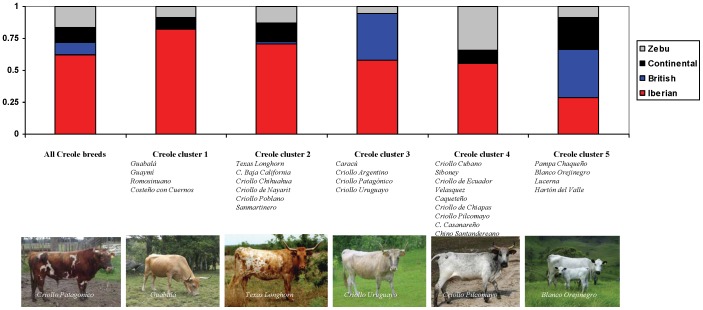
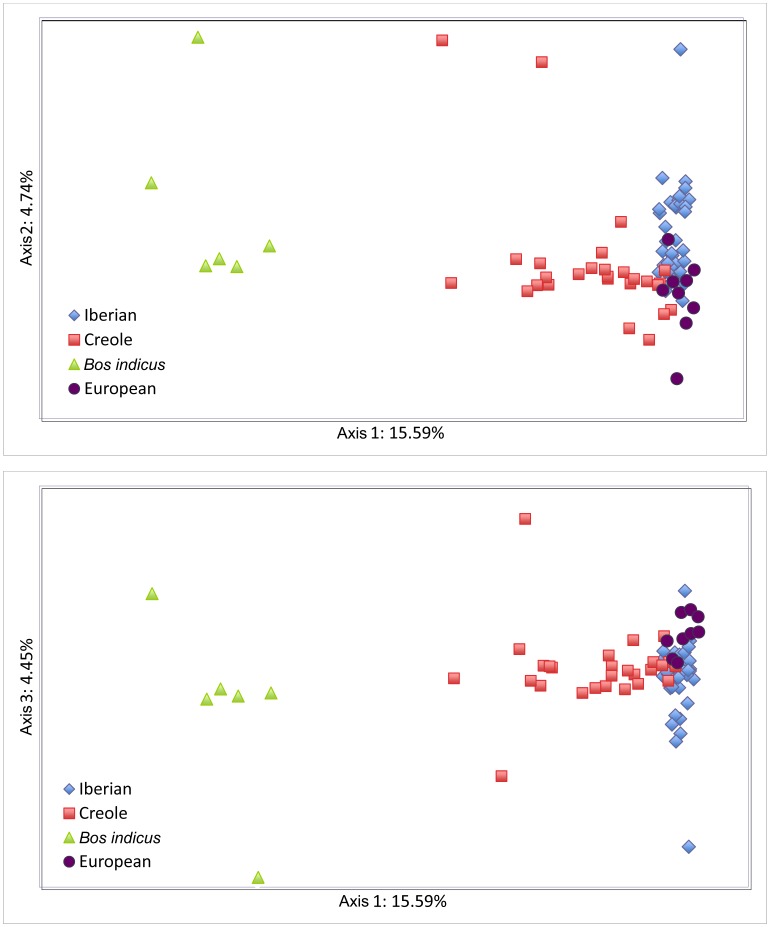
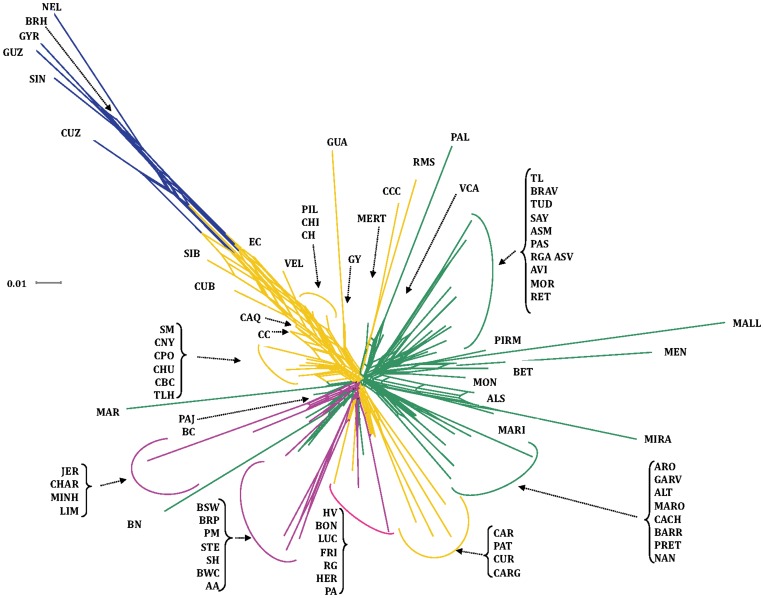
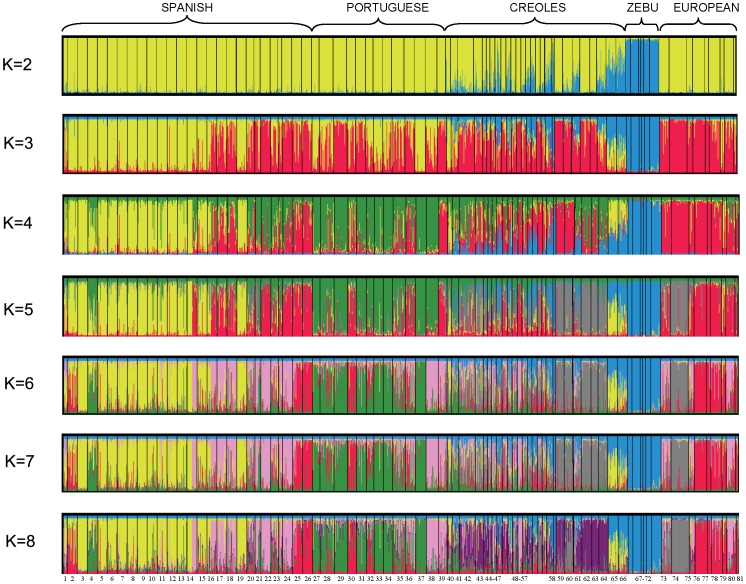
METHODOLOGY/PRINCIPAL FINDINGS: We sampled 27 Creole populations, 39 Iberian, 9 European and 6 Zebu breeds. We used microsatellite markers to assess the origins of Creole cattle, and to investigate the influence of different breeds on their genetic make-up. The major ancestral contributions are from breeds of southern Spain and Portugal, in agreement with the historical ports of departure of ships sailing towards the Western Hemisphere. This Iberian contribution to Creoles may also include some African influence, given the influential role that African cattle have had in the development of Iberian breeds, but the possibility of a direct influence on Creoles of African cattle imported to America can not be discarded. In addition to the Iberian influence, the admixture with other European breeds was minor. The Creoles from tropical areas, especially those from the Caribbean, show clear signs of admixture with Zebu.
CONCLUSIONS/SIGNIFICANCE: Nearly five centuries since cattle were first brought to the Americas, Creoles still show a strong and predominant signature of their Iberian ancestors. Creole breeds differ widely from each other, both in genetic structure and influences from other breeds. Efforts are needed to avoid their extinction or further genetic erosion, which would compromise centuries of selective adaptation to a wide range of environmental conditions.
美国克里奥尔牛可能是从殖民和定居时期从伊比利亚半岛进口的动物,通过不同的迁移路线,也可能受到直接从非洲进口的牛的影响。18 世纪开始引入欧洲牛,后来又从印度引入瘤牛,这威胁到克里奥尔牛种群的生存,其中一些种群几乎消失或与外来品种混合。评估克里奥尔牛的遗传状况对于建立这些历史资源的保护计划至关重要。
方法/主要发现:我们对 27 个克里奥尔牛种群、39 个伊比利亚牛种群、9 个欧洲牛种群和 6 个瘤牛种群进行了采样。我们使用微卫星标记来评估克里奥尔牛的起源,并研究不同品种对其遗传结构的影响。主要的祖先贡献来自西班牙南部和葡萄牙的品种,这与驶向西半球的船只的历史出发港口一致。考虑到非洲牛对伊比利亚品种的发展产生了重要影响,因此这种对克里奥尔牛的伊比利亚贡献可能也包括一些非洲影响,但不能排除非洲牛直接对美国进口的克里奥尔牛产生影响的可能性。除了伊比利亚影响外,与其他欧洲品种的混合程度较小。热带地区的克里奥尔牛,特别是加勒比地区的克里奥尔牛,明显与瘤牛混合。
结论/意义:自牛首次被带到美洲以来,已经过去了将近五个世纪,克里奥尔牛仍然强烈且主要表现出它们伊比利亚祖先的特征。克里奥尔牛品种之间在遗传结构和其他品种的影响方面存在很大差异。需要努力避免它们灭绝或进一步遗传侵蚀,这将危及几个世纪以来对广泛环境条件的选择性适应。