Wyres Kelly L, Lambertsen Lotte M, Croucher Nicholas J, McGee Lesley, von Gottberg Anne, Liñares Josefina, Jacobs Michael R, Kristinsson Karl G, Beall Bernard W, Klugman Keith P, Parkhill Julian, Hakenbeck Regine, Bentley Stephen D, Brueggemann Angela B
Genome Biol. 2012 Nov 16;13(11):R103. doi: 10.1186/gb-2012-13-11-r103.
Streptococcus pneumoniae, also called the pneumococcus, is a major bacterial pathogen. Since its introduction in the 1940s, penicillin has been the primary treatment for pneumococcal diseases. Penicillin resistance rapidly increased among pneumococci over the past 30 years, and one particular multidrug-resistant clone, PMEN1, became highly prevalent globally. We studied a collection of 426 pneumococci isolated between 1937 and 2007 to better understand the evolution of penicillin resistance within this species.
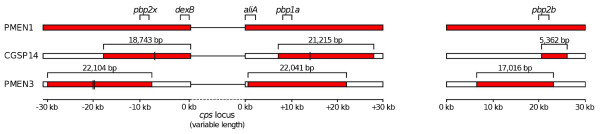
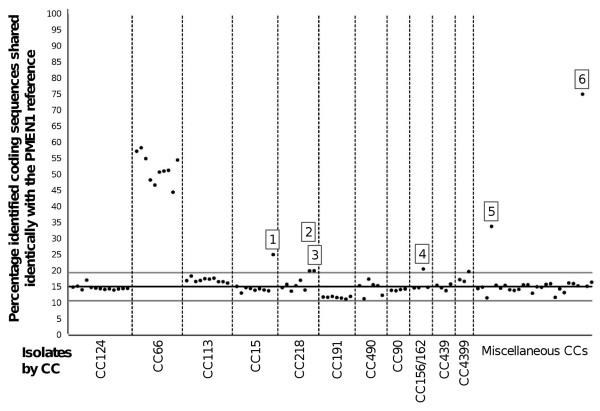
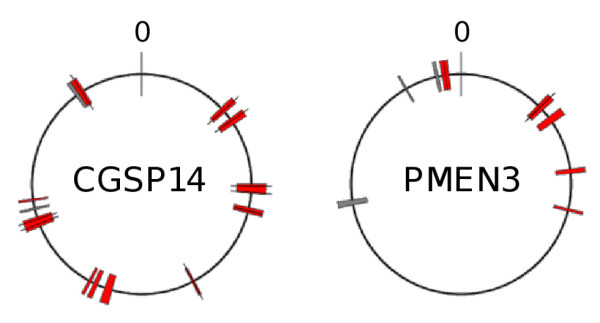
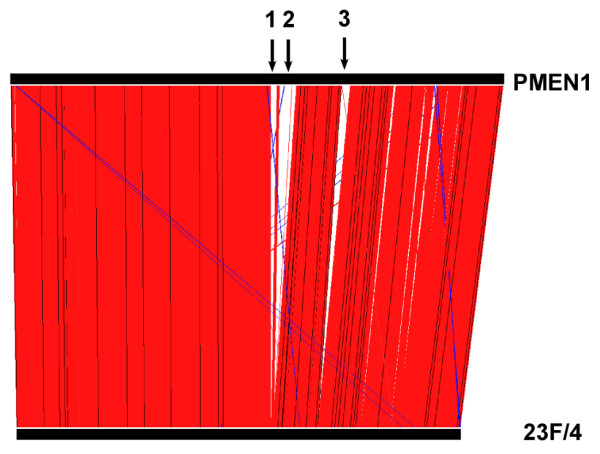
We discovered that one of the earliest known penicillin-nonsusceptible pneumococci, recovered in 1967 from Australia, was the likely ancestor of PMEN1, since approximately 95% of coding sequences identified within its genome were highly similar to those of PMEN1. The regions of the PMEN1 genome that differed from the ancestor contained genes associated with antibiotic resistance, transmission and virulence. We also revealed that PMEN1 was uniquely promiscuous with its DNA, donating penicillin-resistance genes and sometimes many other genes associated with antibiotic resistance, virulence and cell adherence to many genotypically diverse pneumococci. In particular, we describe two strains in which up to 10% of the PMEN1 genome was acquired in multiple fragments, some as long as 32 kb, distributed around the recipient genomes. This type of directional genetic promiscuity from a single clone to numerous unrelated clones has, to our knowledge, never before been described.
These findings suggest that PMEN1 is a paradigm of genetic success both through its epidemiology and promiscuity. These findings also challenge the existing views about horizontal gene transfer among pneumococci.
肺炎链球菌,也被称为肺炎球菌,是一种主要的细菌病原体。自20世纪40年代青霉素问世以来,它一直是治疗肺炎球菌疾病的主要药物。在过去30年中,肺炎球菌对青霉素的耐药性迅速增加,一种特定的多重耐药克隆株PMEN1在全球范围内高度流行。我们研究了1937年至2007年间分离出的426株肺炎球菌,以更好地了解该物种内青霉素耐药性的演变。
我们发现,1967年从澳大利亚分离出的最早已知的对青霉素不敏感的肺炎球菌之一可能是PMEN1的祖先,因为在其基因组中鉴定出的约95%的编码序列与PMEN1的编码序列高度相似。PMEN1基因组中与祖先不同的区域包含与抗生素耐药性、传播和毒力相关的基因。我们还发现,PMEN1在其DNA方面具有独特的混杂性,它将青霉素耐药基因以及有时许多其他与抗生素耐药性、毒力和细胞黏附相关的基因捐赠给许多基因型不同的肺炎球菌。特别是,我们描述了两株菌株,其中PMEN1基因组的高达10%是通过多个片段获得的,有些片段长达32 kb,分布在受体基因组周围。据我们所知,这种从单个克隆到众多不相关克隆的定向基因混杂性以前从未被描述过。
这些发现表明,PMEN1无论是在流行病学还是混杂性方面都是基因成功的范例。这些发现也挑战了关于肺炎球菌之间水平基因转移的现有观点。