Department of Rheumatology, Translational Research Group, Dublin Academic Medical Centre, St Vincent's University Hospital, Dublin, Ireland.
Ann Rheum Dis. 2013 Jun;72(6):1080-8. doi: 10.1136/annrheumdis-2012-201978. Epub 2012 Nov 17.
Notch signalling pathways are critical for angiogenesis and endothelial cell (EC) fate; however the mechanisms regulating these processes in the inflamed joint remain to be elucidated. Here, we examine whether Notch signalling mediates vascular endothelial growth factor (VEGF) and angiopoietin 2 (Ang2)-induced vascular function.
Notch-1 intracellular domain (Notch-1 IC), Notch-4 IC, Delta-like-ligand 4, Hes-related transcriptional repressors-1 and 2 (Hrt-1, Hrt-2) mRNA and/or protein expression was measured by Real-time PCR and/or western blot. VEGF/Ang2 induced EC function was assessed using transwell invasion chambers, matrigel tube formation assays and wound repair scratch assays±Notch-1 siRNA or an γ-secretase inhibitor N-(N-(3,5-Difluorophenacetyl-L-alanly))-S-phenylglycine-t-Butyl Ester (DAPT) in RA synovial explants or human microvascular EC. Interleukin (IL)-6 and IL-8 were measured by ELISA and MMP2 and 9 by gelatine zymography.
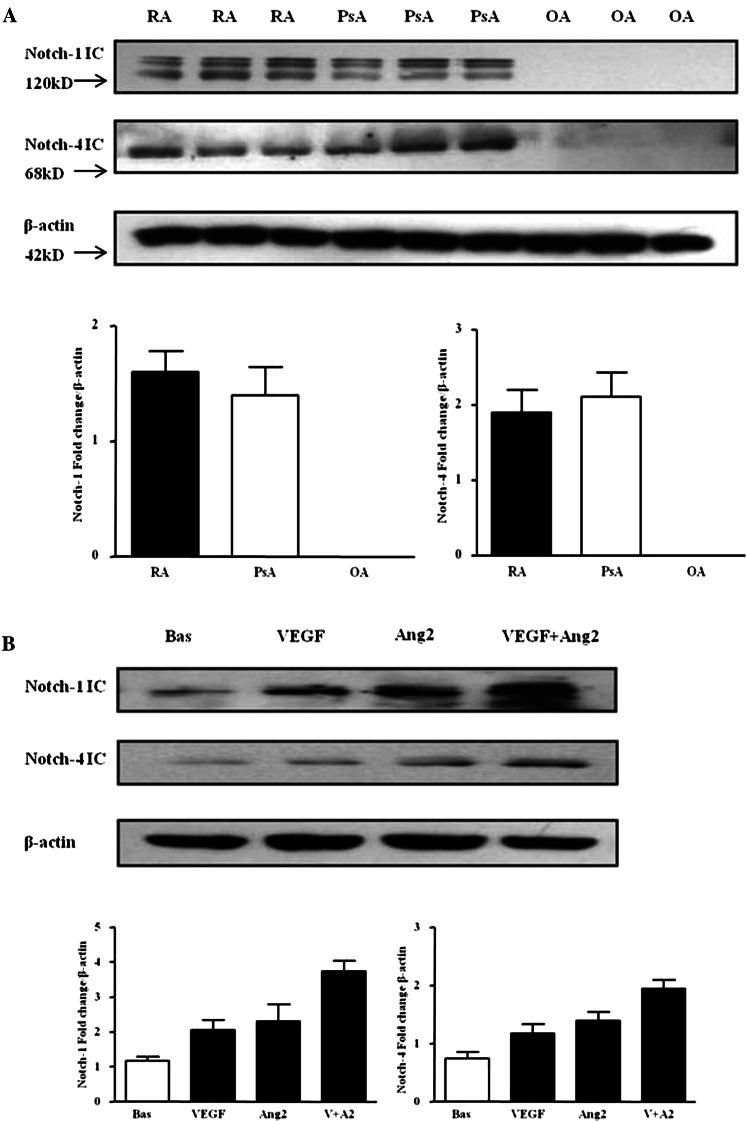
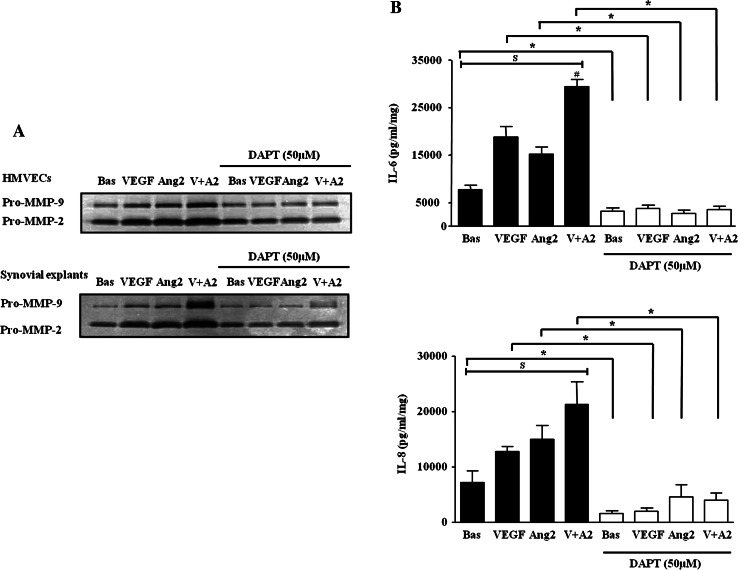
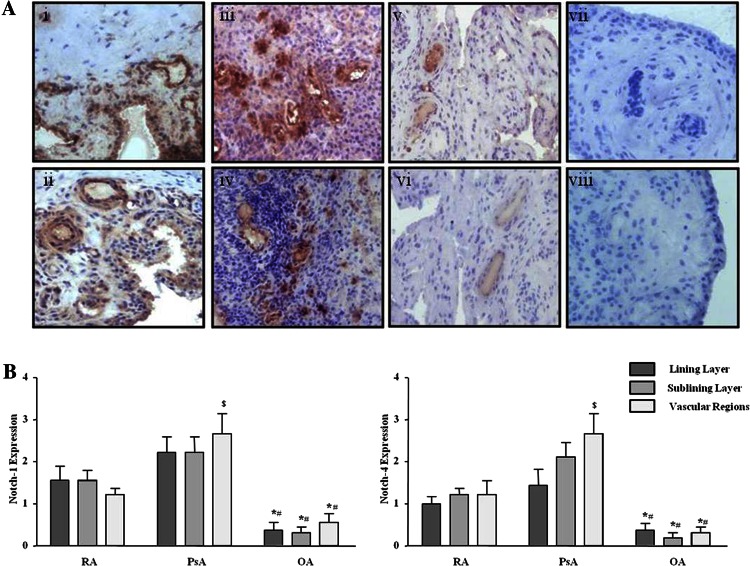
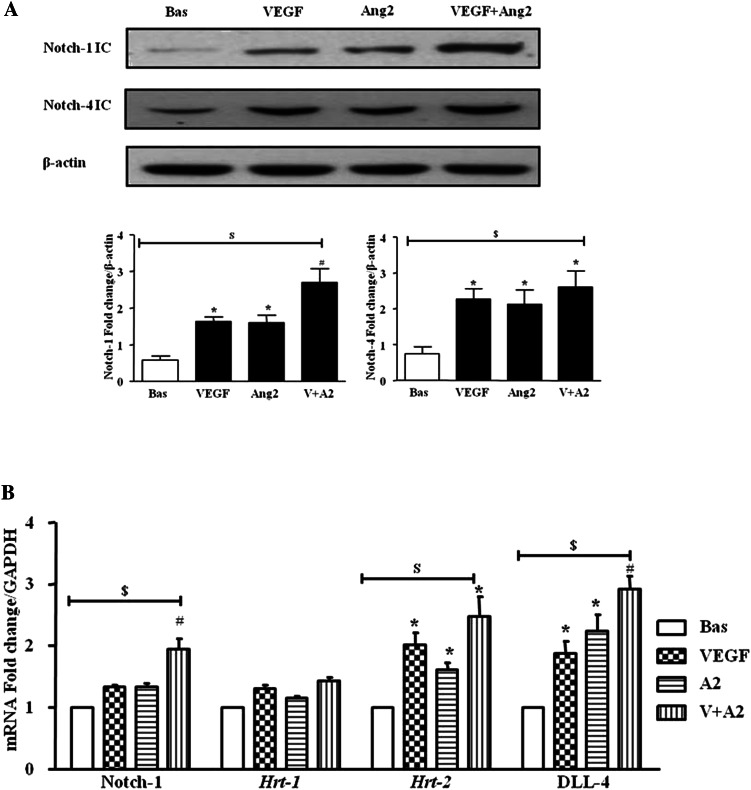
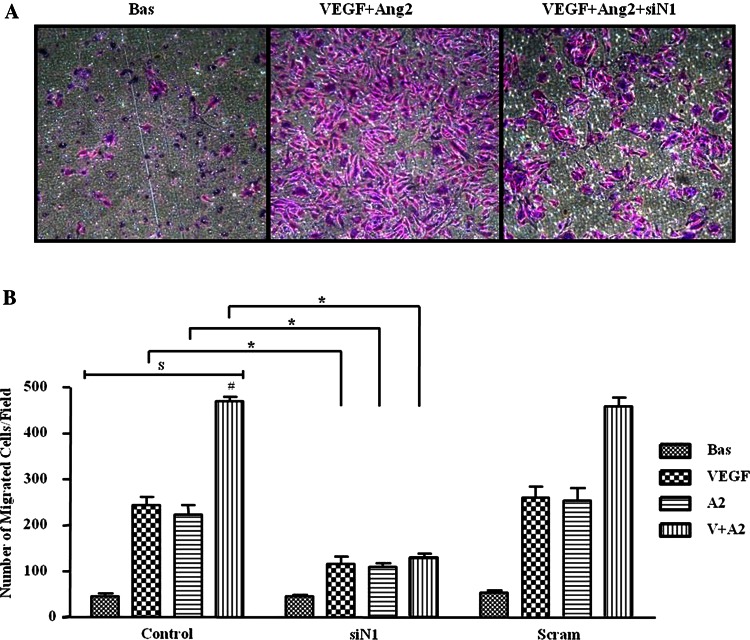
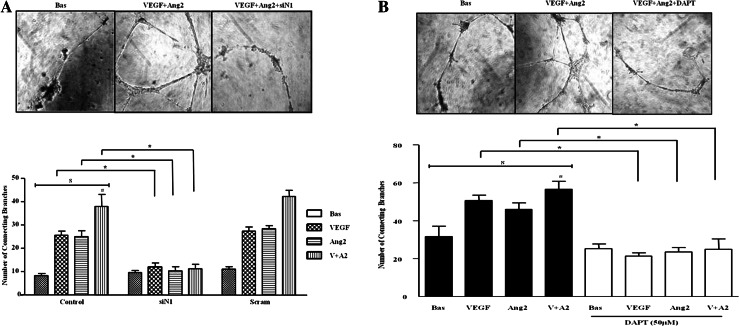
Notch-1 IC and Notch-4 IC protein expressions were demonstrated in RA and psoriatic arthritis synovial biopsies, with minimal expression observed in Osteoarthritis (OA). VEGF and Ang2 induced Notch-1 IC/ Notch-4 IC protein expression in synovial explant cultures and human microvascular EC levels were further potentiated by VEGF/Ang2 stimulation in combination. Notch-1, Delta-like-ligand 4, and Hrt-2 mRNA expression were significantly induced by VEGF and Ang2 alone and in combination. Furthermore VEGF/Ang2-induced EC invasion, angiogenesis and migration were inhibited by Notch-1 siRNA or DAPT. Conditioned media from VEGF/Ang2 stimulated RA synovial explants induced EC tube formation, an effect that was inhibited by DAPT. Finally, DAPT significantly decreased VEGF/Ang2 induced IL-6, IL-8, MMP2 and 9 expressions in RA synovial explants.
Notch-1 mediates VEGF/Ang2-induced angiogenesis and EC invasion in inflammatory arthritis.
Notch 信号通路对血管生成和内皮细胞(EC)命运至关重要;然而,在炎症关节中调节这些过程的机制仍有待阐明。在这里,我们研究了 Notch 信号是否介导血管内皮生长因子(VEGF)和血管生成素 2(Ang2)诱导的血管功能。
通过实时 PCR 和/或 Western blot 测量 Notch-1 细胞内结构域(Notch-1 IC)、Notch-4 IC、Delta-like 配体 4、Hes 相关转录抑制因子-1 和 2(Hrt-1、Hrt-2)mRNA 和/或蛋白表达。使用 Transwell 侵袭室、Matrigel 管形成测定和划痕修复划痕测定评估 VEGF/Ang2 诱导的 EC 功能,在 RA 滑膜外植体或人微血管 EC 中使用 Notch-1 siRNA 或 γ-分泌酶抑制剂 N-(N-(3、5-二氟苯乙酰-L-丙氨酸基))-S-苯甘氨酸-t-丁酯(DAPT)。通过 ELISA 测量白细胞介素(IL)-6 和 IL-8,通过凝胶酶谱法测量 MMP2 和 9。
在 RA 和银屑病关节炎滑膜活检中证实了 Notch-1 IC 和 Notch-4 IC 蛋白表达,在骨关节炎(OA)中观察到最小表达。VEGF 和 Ang2 在滑膜外植体培养物中诱导 Notch-1 IC/Notch-4 IC 蛋白表达,并且 VEGF/Ang2 刺激的组合进一步增强了人类微血管 EC 的水平。VEGF 和 Ang2 单独和组合诱导 Notch-1、Delta-like 配体 4 和 Hrt-2 mRNA 表达显著增加。此外,Notch-1 siRNA 或 DAPT 抑制 VEGF/Ang2 诱导的 EC 侵袭、血管生成和迁移。来自 VEGF/Ang2 刺激的 RA 滑膜外植体的条件培养基诱导 EC 管形成,DAPT 抑制了这种作用。最后,DAPT 显著降低了 RA 滑膜外植体中 VEGF/Ang2 诱导的 IL-6、IL-8、MMP2 和 9 的表达。
Notch-1 介导血管生成和炎症性关节炎中 EC 侵袭的 VEGF/Ang2 诱导。