Jiao Zhijun, Wang Wenhong, Ma Jie, Wang Shengjun, Su Zhaoliang, Xu Huaxi
Key Laboratory of Medical Immunology and Department of Laboratory Medicine, Affiliated Hospital of Jiangsu University, Zhenjiang, China.
Clin Dev Immunol. 2012;2012:350209. doi: 10.1155/2012/350209. Epub 2011 Dec 8.
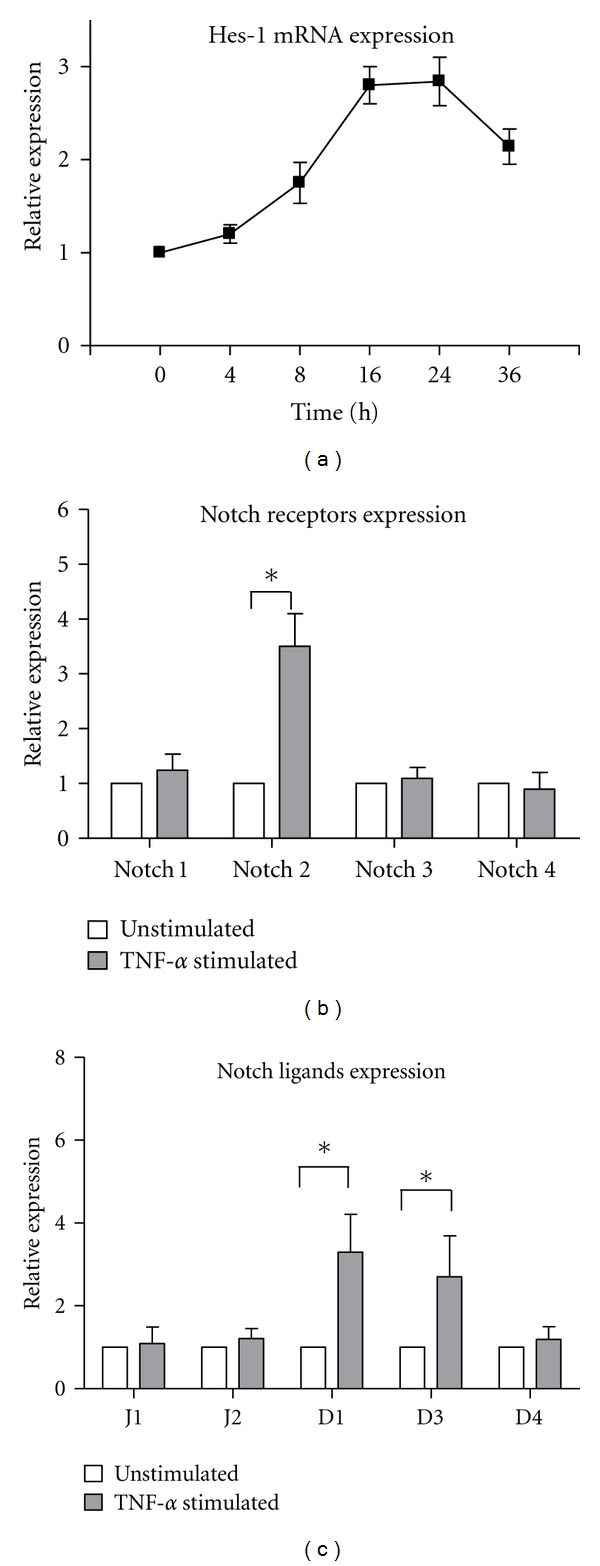
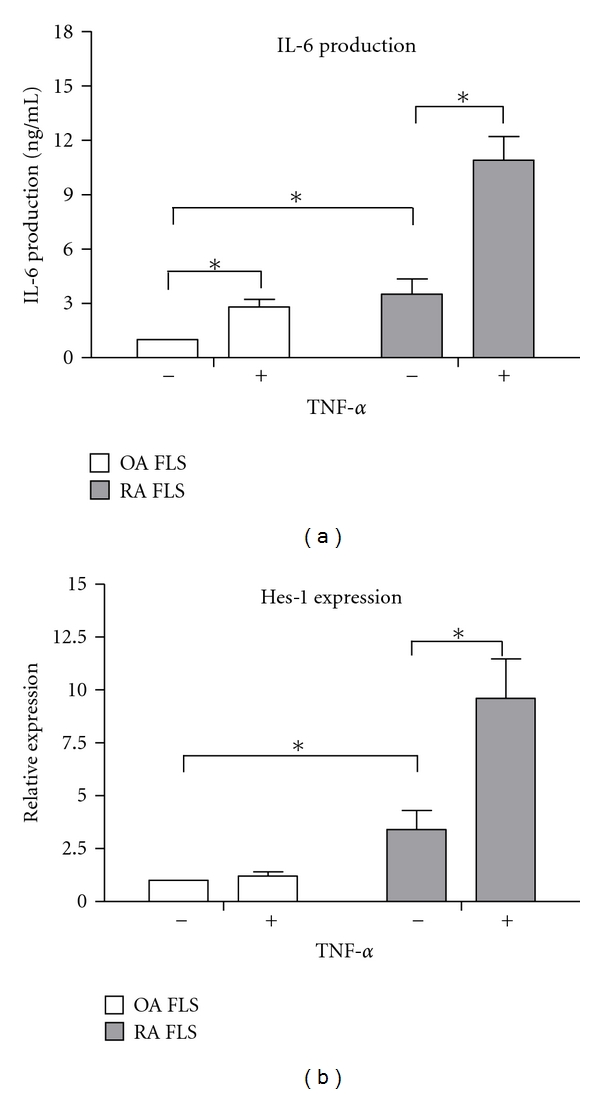
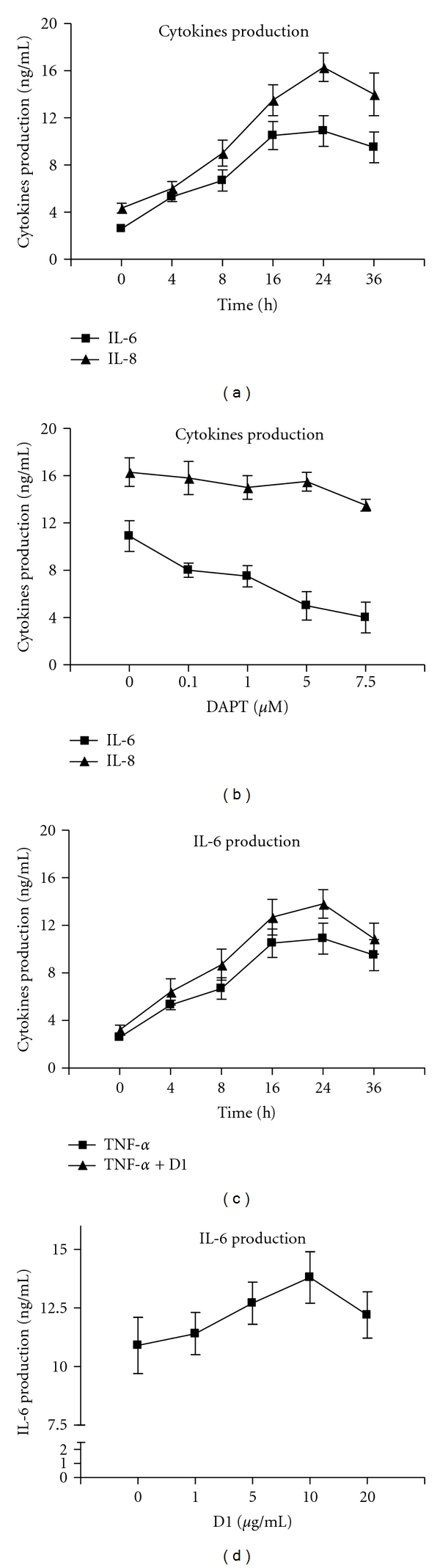
It has been reported that Notch family proteins are expressed in synovium tissue and involved in the proliferation of synoviocyte from rheumatoid arthritis (RA). The aim of this paper was to investigate whether Notch signaling mediated TNF-α-induced cytokine production of cultured fibroblast-like synoviocytes (FLSs) from RA. Exposure of RA FLSs to TNF-α (10 ng/ml) led to increase of Hes-1, a target gene of Notch signaling, and a marked upregulation of Notch 2, Delta-like 1, and Delta-like 3 mRNA levels. Blockage of Notch signaling by a γ-secretase inhibitor (DAPT) inhibited IL-6 secretion of RA FLSs in response to TNF-α while treatment with recombinant fusion protein of Notch ligand Delta-like 1 promoted such response. TNF-α stimulation also induced IL-6 secretion in OA FLSs; however, the Hes-1 level remained unaffected. Our data confirm the functional involvement of Notch pathway in the pathophysiology of RA FLSs which may provide a new target for RA therapy.
据报道,Notch家族蛋白在滑膜组织中表达,并参与类风湿关节炎(RA)滑膜细胞的增殖。本文旨在研究Notch信号通路是否介导肿瘤坏死因子-α(TNF-α)诱导的RA培养的成纤维样滑膜细胞(FLSs)产生细胞因子。将RA FLSs暴露于TNF-α(10 ng/ml)导致Notch信号通路的靶基因Hes-1增加,以及Notch 2、Delta样1和Delta样3 mRNA水平显著上调。γ-分泌酶抑制剂(DAPT)阻断Notch信号通路可抑制RA FLSs对TNF-α的反应中白细胞介素-6(IL-6)的分泌,而用Notch配体Delta样1的重组融合蛋白处理则促进这种反应。TNF-α刺激也诱导骨关节炎(OA)FLSs分泌IL-6;然而,Hes-1水平未受影响。我们的数据证实了Notch通路在RA FLSs病理生理学中的功能参与,这可能为RA治疗提供一个新靶点。