Brown Matthew D, van der Most Robbert, Vivian Justin B, Lake Richard A, Larma Irma, Robinson Bruce W S, Currie Andrew J
Urological Research Centre/University Department of Surgery; Sir Charles Gairdner Hospital; Perth, WA.
Oncoimmunology. 2012 Oct 1;1(7):1084-1094. doi: 10.4161/onci.20924.
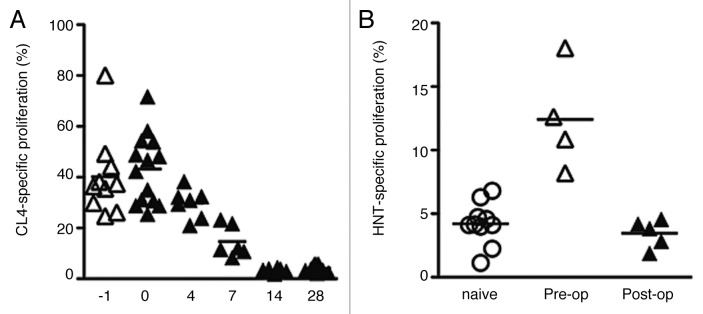
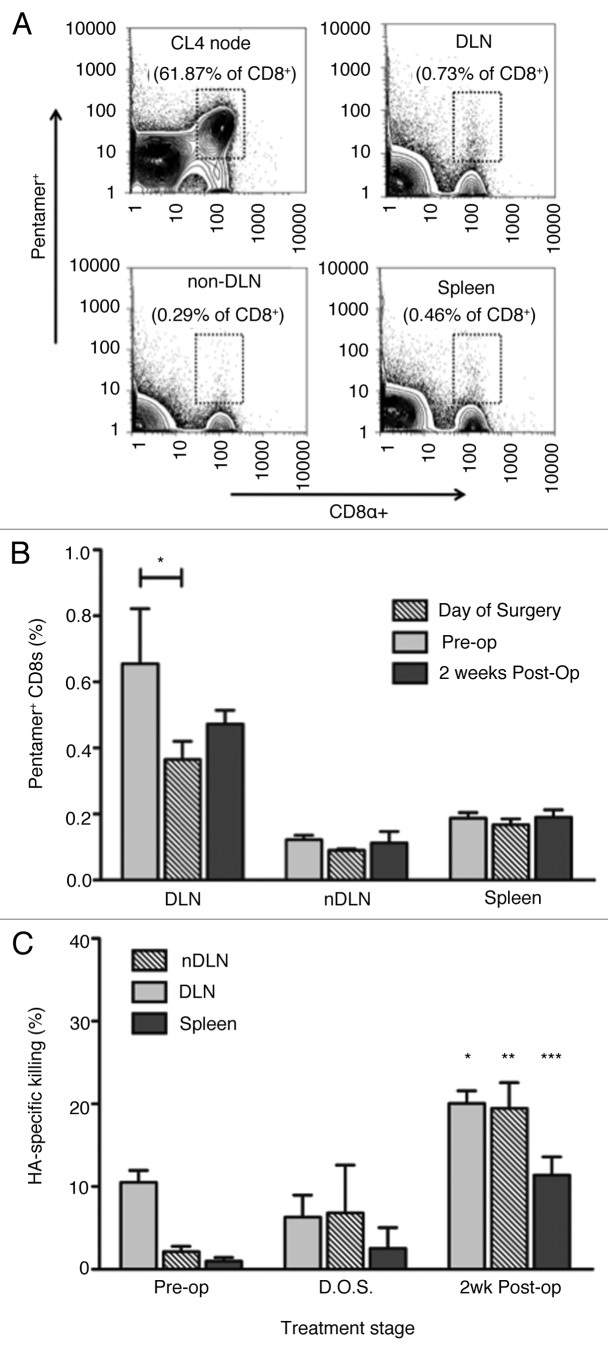
An incomplete understanding on the effect of surgery on tumor-specific immunity continues to hamper efforts to combine surgery with immunotherapy in the clinic. Herein, we describe the impact of tumor resection on the tumor-specific T-cell response, showing that complete tumor resection is associated with (1) a decline in the amount of cross-presented tumor antigens, (2) a decline of cytolytic tumor-specific CD8(+) T cell activity, and (3) the development of systemic CD8(+) T cell-mediated protective immunity. Our findings are consistent with a model whereby tumor resection releases antitumor CD8(+) T cells from chronic antigen exposure, allowing a gradual differentiation toward functional antitumor memory T cells. This process depends on sentinel lymph nodes, as their removal at the time of surgery was associated with a strong negative effect on survival. We conclude that complete tumor resection provides a unique environment that boosts protective immunological memory and might provide a powerful platform for immunotherapy. Our findings also carry important implications for the design and timing of post-surgery immunotherapeutic regimens.
对手术对肿瘤特异性免疫影响的不完全理解,持续阻碍着临床上将手术与免疫疗法相结合的努力。在此,我们描述了肿瘤切除对肿瘤特异性T细胞反应的影响,表明完整的肿瘤切除与以下情况相关:(1)交叉呈递的肿瘤抗原数量下降;(2)细胞溶解性肿瘤特异性CD8(+) T细胞活性下降;(3)全身性CD8(+) T细胞介导的保护性免疫的发展。我们的研究结果与一种模型一致,即肿瘤切除使抗肿瘤CD8(+) T细胞从慢性抗原暴露中释放出来,使其逐渐分化为功能性抗肿瘤记忆T细胞。这一过程依赖于哨兵淋巴结,因为手术时切除哨兵淋巴结对生存有强烈的负面影响。我们得出结论,完整的肿瘤切除提供了一个独特的环境,可增强保护性免疫记忆,并可能为免疫疗法提供一个强大的平台。我们的研究结果对术后免疫治疗方案的设计和时机也具有重要意义。