Ma Shaokang, Chee Jonathan, Fear Vanessa S, Forbes Catherine A, Boon Louis, Dick Ian M, Robinson Bruce W S, Creaney Jenette
National Centre for Asbestos Related Diseases, University of Western Australia, Nedlands, Australia.
Bioceros B.V., Utrecht, Netherlands.
Oncoimmunology. 2019 Nov 7;9(1):1684714. doi: 10.1080/2162402X.2019.1684714. eCollection 2020.
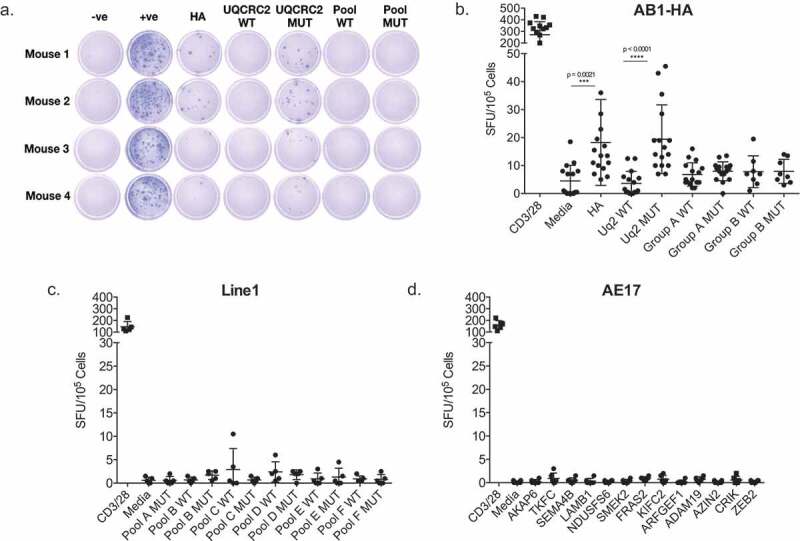
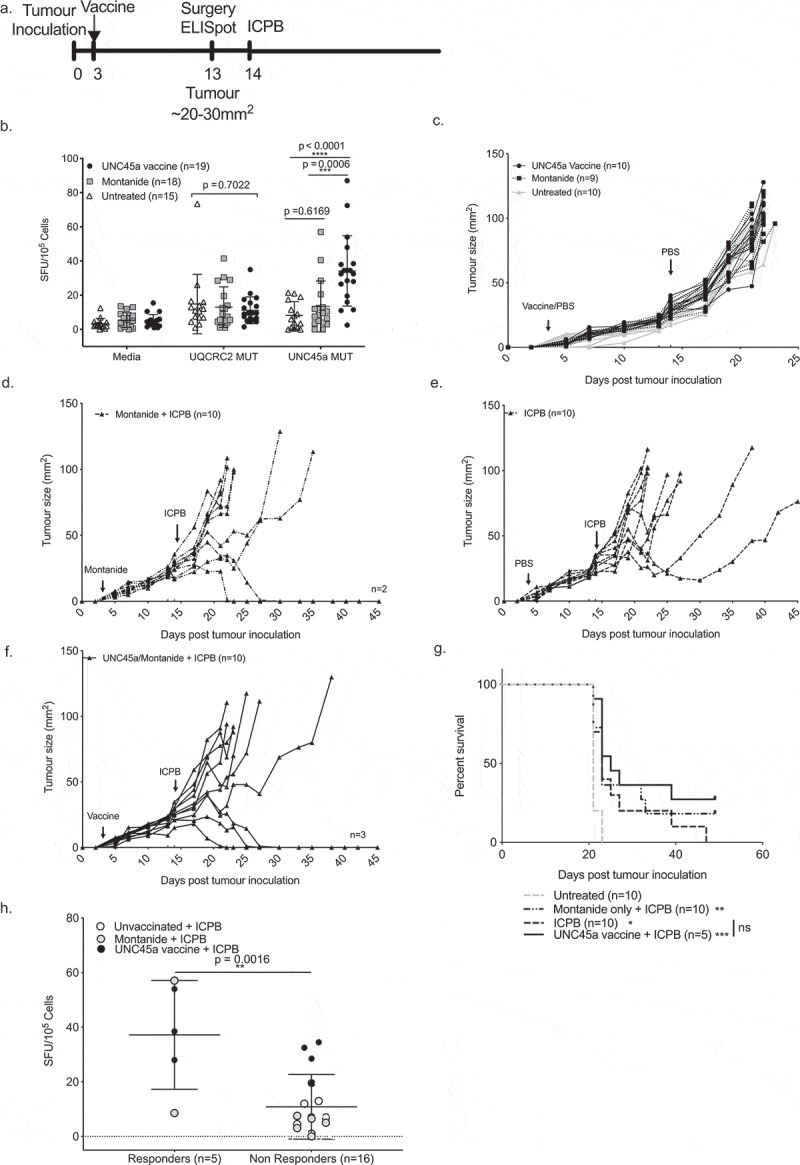
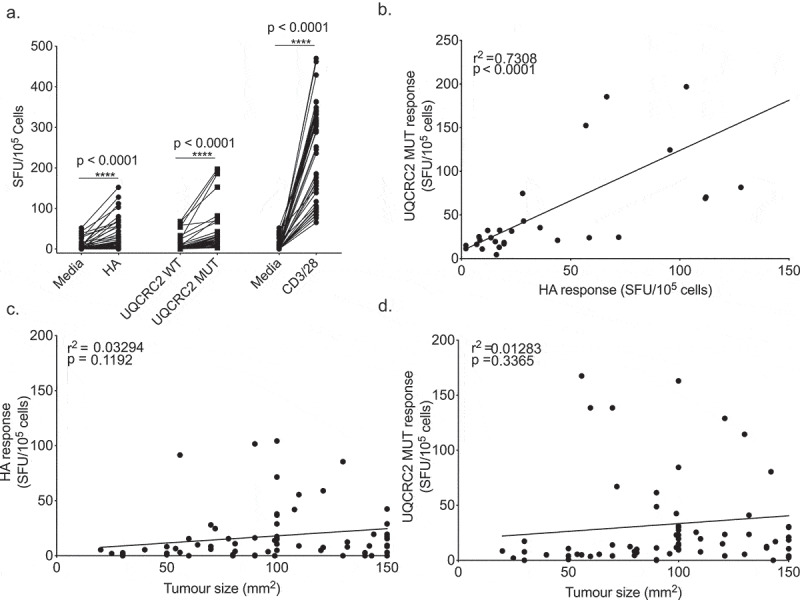
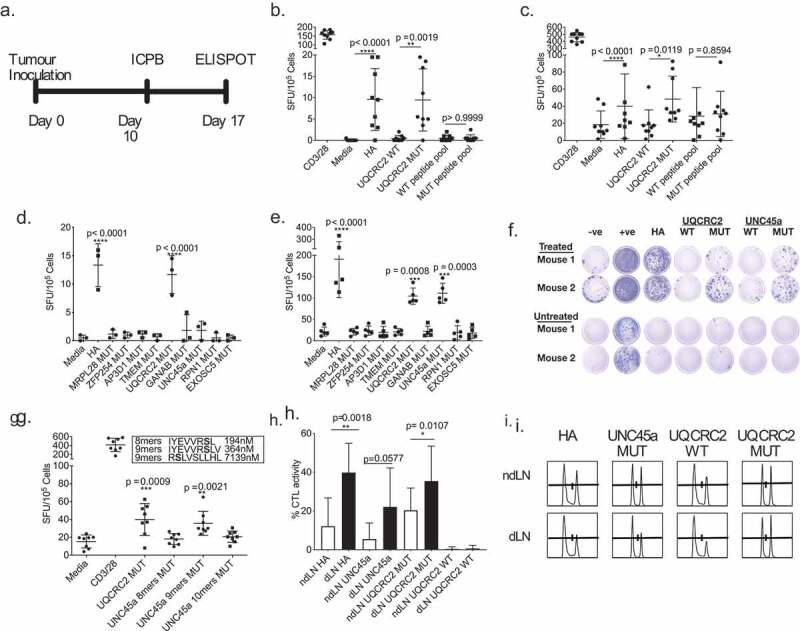
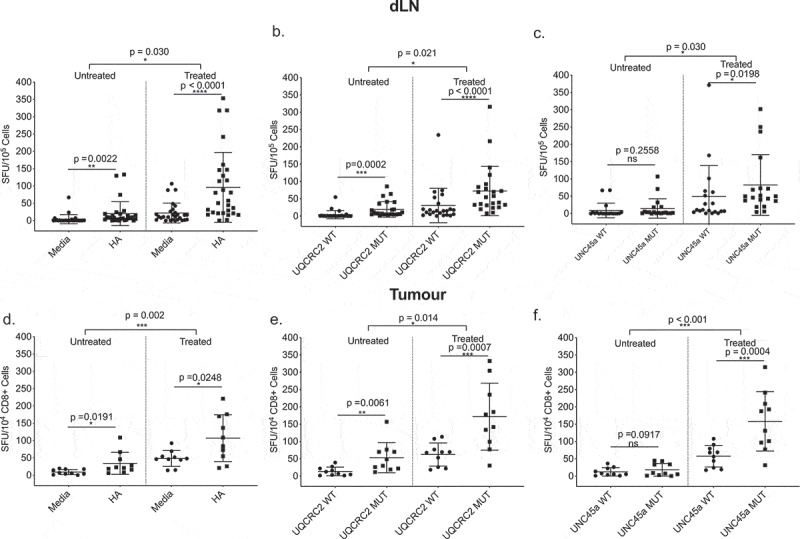
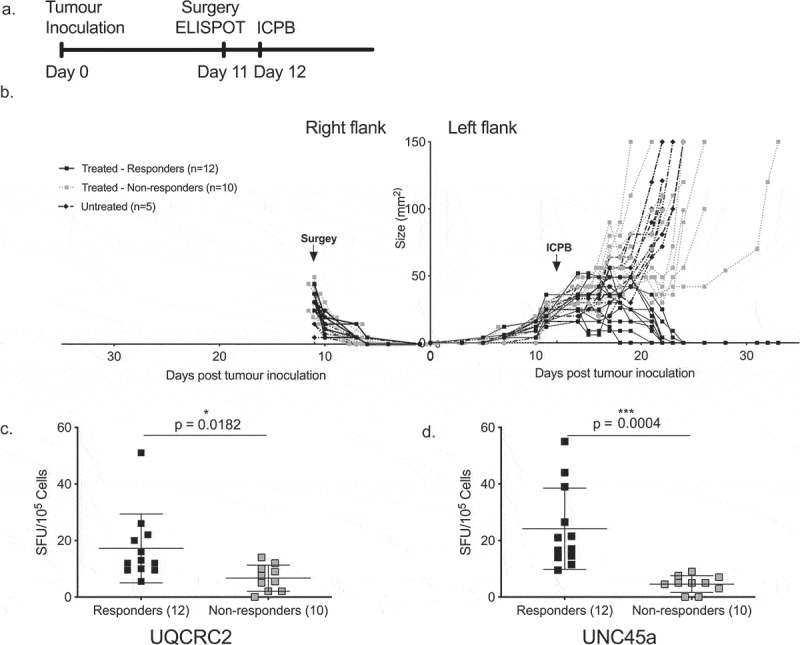
Immune checkpoint blockade (ICPB) is a powerfully effective cancer therapy in some patients. Tumor neo-antigens are likely main targets for attack but it is not clear which and how many tumor mutations in individual cancers are actually antigenic, with or without ICPB therapy and their role as neo-antigen vaccines or as predictors of ICPB responses. To examine this, we interrogated the immune response to tumor neo-antigens in a murine model in which the tumor is induced by a natural human carcinogen (i.e. asbestos) and mimics its human counterpart (i.e. mesothelioma). We identified and screened 33 candidate neo-antigens, and found T cell responses against one candidate in tumor-bearing animals, mutant UQCRC2. Interestingly, we found a high degree of inter-animal variation in the magnitude of neo-antigen responses in otherwise identical mice. ICPB therapy with Cytotoxic T-lymphocyte-associated protein (CTLA-4) and α-glucocorticoid-induced TNFR family related gene (GITR) in doses that induced tumor regression, increased the magnitude of responses and unmasked functional T cell responses against another neo-antigen, UNC45a. Importantly, the magnitude of the pre-treatment draining lymph node (dLN) response to UNC45a closely corresponded to ICPB therapy outcomes. Surprisingly however, boosting pre-treatment UNC45a-specific T cell numbers did not improve response rates to ICPB. These observations suggest a novel biomarker approach to the clinical prediction of ICPB response and have important implications for the development of neo-antigen vaccines.
免疫检查点阻断(ICPB)对某些患者来说是一种非常有效的癌症治疗方法。肿瘤新抗原可能是主要攻击目标,但尚不清楚在个体癌症中,无论是否接受ICPB治疗,哪些肿瘤突变以及有多少肿瘤突变实际上具有抗原性,以及它们作为新抗原疫苗或ICPB反应预测指标的作用。为了研究这一点,我们在一个小鼠模型中研究了对肿瘤新抗原的免疫反应,该模型中的肿瘤由天然人类致癌物(即石棉)诱导产生,并模拟其人类对应物(即间皮瘤)。我们鉴定并筛选了33种候选新抗原,在荷瘤动物中发现了针对一种候选抗原(突变型UQCRC2)的T细胞反应。有趣的是,我们发现在其他方面相同的小鼠中,新抗原反应的强度存在高度的动物间差异。用细胞毒性T淋巴细胞相关蛋白(CTLA-4)和α-糖皮质激素诱导的TNFR家族相关基因(GITR)进行ICPB治疗,在诱导肿瘤消退的剂量下,增加了反应强度,并揭示了针对另一种新抗原UNC45a的功能性T细胞反应。重要的是,治疗前引流淋巴结(dLN)对UNC45a的反应强度与ICPB治疗结果密切相关。然而,令人惊讶的是,提高治疗前UNC45a特异性T细胞数量并没有提高对ICPB的反应率。这些观察结果提示了一种预测ICPB反应的新型生物标志物方法,对新抗原疫苗的开发具有重要意义。