• 文献检索
  • 文档翻译
  • 深度研究
  • 学术资讯
  • Suppr Zotero 插件Zotero 插件
  • 邀请有礼
  • 套餐&价格
  • 历史记录
应用&插件
Suppr Zotero 插件Zotero 插件浏览器插件Mac 客户端Windows 客户端微信小程序
定价
高级版会员购买积分包购买API积分包
服务
文献检索文档翻译深度研究API 文档MCP 服务
关于我们
关于 Suppr公司介绍联系我们用户协议隐私条款
关注我们

Suppr 超能文献

核心技术专利:CN118964589B侵权必究
粤ICP备2023148730 号-1Suppr @ 2026

文献检索

告别复杂PubMed语法,用中文像聊天一样搜索,搜遍4000万医学文献。AI智能推荐,让科研检索更轻松。

立即免费搜索

文件翻译

保留排版,准确专业,支持PDF/Word/PPT等文件格式,支持 12+语言互译。

免费翻译文档

深度研究

AI帮你快速写综述,25分钟生成高质量综述,智能提取关键信息,辅助科研写作。

立即免费体验

无择优机制的科学。传染病和临床微生物学领域的欧洲专家之间的歧视:问卷调查。

Science without meritocracy. Discrimination among European specialists in infectious diseases and clinical microbiology: a questionnaire survey.

机构信息

Department of Infectious Diseases, Università Cattolica Sacro Cuore, Rome, Italy.

出版信息

BMJ Open. 2012 Nov 27;2(6). doi: 10.1136/bmjopen-2012-001993. Print 2012.

DOI:10.1136/bmjopen-2012-001993
PMID:23187971
原文链接:https://pmc.ncbi.nlm.nih.gov/articles/PMC3533068/
Abstract

OBJECTIVE

In 2009, in a European survey, around a quarter of Europeans reported witnessing discrimination or harassment at their workplace. The parity committee from the European Society of Clinical Microbiology and Infectious Diseases (ESCMID) designed a questionnaire survey to investigate forms of discrimination with respect to country, gender and ethnicity among medical professionals in hospitals and universities carrying out activities in the clinical microbiology (CM) and infectious diseases (ID) fields.

DESIGN

The survey consisted of 61 questions divided into five areas (sociodemographic, professional census and environment, leadership and generic) and ran anonymously for nearly 3 months on the ESCMID website.

SUBJECTS

European specialists in CM/ID.

RESULTS

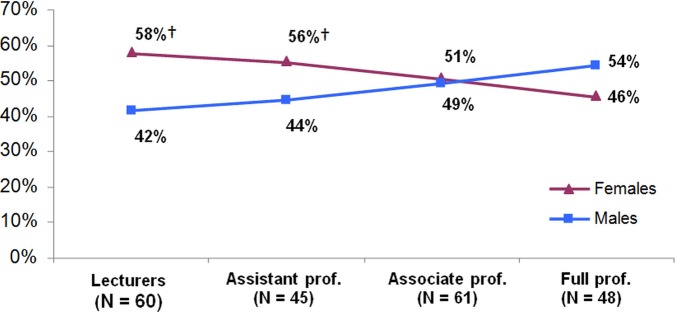
Overall, we included 1274 professionals. The majority of respondents (68%) stated that discrimination is present in medical science. A quarter of them reported personal experience with discrimination, mainly associated with gender and geographic region. Specialists from South-Western Europe experienced events at a much higher rate (37%) than other European regions. The proportion of women among full professor was on average 46% in CM and 26% in ID. Participation in high-level decision-making committees was significantly (>10 percentage points) different by gender and geographic origin. Yearly gross salary among CM/ID professionals was significantly different among European countries and by gender, within the same country. More than one-third of respondents (38%) stated that international societies in CM/ID have an imbalance as for committee member distribution and speakers at international conferences.

CONCLUSIONS

A quarter of CM/ID specialists experienced career and research discrimination in European hospitals and universities, mainly related to gender and geographic origin. Implementing proactive policies to tackle discrimination and improve representativeness and balance in career among CM/ID professionals in Europe is urgently needed.

摘要

目的

2009 年,在一项欧洲调查中,约四分之一的欧洲人报告称在工作场所遭遇过歧视或骚扰。欧洲临床微生物学和传染病学会(ESCMID)平等委员会设计了一份问卷调查,以调查从事临床微生物学(CM)和传染病(ID)领域活动的医院和大学中的医疗专业人员在国籍、性别和族裔方面的歧视形式。

设计

该调查由 61 个问题组成,分为五个领域(社会人口统计学、专业普查和环境、领导和通用),在 ESCMID 网站上匿名进行了近 3 个月。

受试者

欧洲 CM/ID 专家。

结果

总体而言,我们纳入了 1274 名专业人员。大多数受访者(68%)表示,医学领域存在歧视。其中四分之一的人报告了个人歧视经历,主要与性别和地理位置有关。来自西南欧的专家经历歧视事件的比例(37%)远高于其他欧洲地区。CM 中的全职教授中女性比例平均为 46%,ID 中为 26%。参与高层决策委员会的女性比例因性别和原籍国而异,差异超过 10 个百分点。CM/ID 专业人员的年薪在欧洲国家之间以及在同一国家的性别之间存在显著差异。超过三分之一的受访者(38%)表示,CM/ID 国际学会在委员会成员分布和国际会议演讲者方面存在不平衡。

结论

四分之一的 CM/ID 专家在欧洲医院和大学中经历了职业和研究歧视,主要与性别和原籍国有关。在欧洲,迫切需要实施积极主动的政策来解决歧视问题,并改善 CM/ID 专业人员的职业代表性和平衡。
https://cdn.ncbi.nlm.nih.gov/pmc/blobs/5088/3533068/7550103f5f17/bmjopen2012001993F06.jpg
https://cdn.ncbi.nlm.nih.gov/pmc/blobs/5088/3533068/81f33d55ef79/bmjopen2012001993F01.jpg
https://cdn.ncbi.nlm.nih.gov/pmc/blobs/5088/3533068/424f8a208bcc/bmjopen2012001993F02.jpg
https://cdn.ncbi.nlm.nih.gov/pmc/blobs/5088/3533068/581a41e86761/bmjopen2012001993F03.jpg
https://cdn.ncbi.nlm.nih.gov/pmc/blobs/5088/3533068/ae9d5ce4f5ef/bmjopen2012001993F04.jpg
https://cdn.ncbi.nlm.nih.gov/pmc/blobs/5088/3533068/d82ea9e75204/bmjopen2012001993F05.jpg
https://cdn.ncbi.nlm.nih.gov/pmc/blobs/5088/3533068/7550103f5f17/bmjopen2012001993F06.jpg
https://cdn.ncbi.nlm.nih.gov/pmc/blobs/5088/3533068/81f33d55ef79/bmjopen2012001993F01.jpg
https://cdn.ncbi.nlm.nih.gov/pmc/blobs/5088/3533068/424f8a208bcc/bmjopen2012001993F02.jpg
https://cdn.ncbi.nlm.nih.gov/pmc/blobs/5088/3533068/581a41e86761/bmjopen2012001993F03.jpg
https://cdn.ncbi.nlm.nih.gov/pmc/blobs/5088/3533068/ae9d5ce4f5ef/bmjopen2012001993F04.jpg
https://cdn.ncbi.nlm.nih.gov/pmc/blobs/5088/3533068/d82ea9e75204/bmjopen2012001993F05.jpg
https://cdn.ncbi.nlm.nih.gov/pmc/blobs/5088/3533068/7550103f5f17/bmjopen2012001993F06.jpg

相似文献

1
Science without meritocracy. Discrimination among European specialists in infectious diseases and clinical microbiology: a questionnaire survey.无择优机制的科学。传染病和临床微生物学领域的欧洲专家之间的歧视:问卷调查。
BMJ Open. 2012 Nov 27;2(6). doi: 10.1136/bmjopen-2012-001993. Print 2012.
2
Personal life and working conditions of trainees and young specialists in clinical microbiology and infectious diseases in Europe: a questionnaire survey.欧洲临床微生物学与传染病领域实习生及青年专家的个人生活与工作条件:一项问卷调查
Eur J Clin Microbiol Infect Dis. 2017 Jul;36(7):1287-1295. doi: 10.1007/s10096-017-2937-4. Epub 2017 Feb 24.
3
Inequality dynamics in the workplace among microbiologists and infectious disease specialists: a qualitative study in five European countries.工作场所中微生物学家和传染病专家的不平等现象:五个欧洲国家的定性研究。
Clin Microbiol Infect. 2017 May;23(5):332.e1-332.e9. doi: 10.1016/j.cmi.2016.09.015. Epub 2016 Sep 28.
4
Staffing for infectious diseases, clinical microbiology and infection control in hospitals in 2015: results of an ESCMID member survey.2015 年医院传染病、临床微生物学和感染控制人员配置:ESCMID 成员调查结果。
Clin Microbiol Infect. 2016 Sep;22(9):812.e9-812.e17. doi: 10.1016/j.cmi.2016.06.014. Epub 2016 Jun 29.
5
Training and assessment of medical specialists in clinical microbiology and infectious diseases in Europe.欧洲临床微生物学和传染病医学专家的培训与评估。
Clin Microbiol Infect. 2021 Nov;27(11):1581-1588. doi: 10.1016/j.cmi.2021.07.009. Epub 2021 Jul 11.
6
Scientific misconduct in infectious diseases-European Society of Clinical Microbiology and Infectious Diseases survey.传染病领域的科研不端行为——欧洲临床微生物学和传染病学会调查。
Clin Microbiol Infect. 2024 Nov;30(11):1474.e1-1474.e3. doi: 10.1016/j.cmi.2024.07.015. Epub 2024 Jul 25.
7
A large survey among European trainees in clinical microbiology and infectious disease on training systems and training adequacy: identifying the gaps and suggesting improvements.一项针对欧洲临床微生物学和传染病领域实习生的关于培训体系与培训充分性的大型调查:找出差距并提出改进建议。
Eur J Clin Microbiol Infect Dis. 2017 Feb;36(2):233-242. doi: 10.1007/s10096-016-2791-9. Epub 2016 Oct 4.
8
Current mentorship practices in the training of the next generation of clinical microbiology and infectious disease specialists: an international cross-sectional survey.当前培养下一代临床微生物学和传染病专家的指导实践:一项国际横断面调查。
Eur J Clin Microbiol Infect Dis. 2019 Apr;38(4):659-665. doi: 10.1007/s10096-019-03509-y. Epub 2019 Feb 19.
9
Joint ESCMID, FEMS, IDSA, ISID and SSI position paper on the fair handling of career breaks among physicians and scientists when assessing eligibility for early-career awards.欧洲临床微生物与感染性疾病学会(ESCMID)、欧洲微生物学会联合会(FEMS)、美国感染病学会(IDSA)、国际传染病学会(ISID)和手术部位感染学会(SSI)关于在评估早期职业奖资格时公平对待医生和科学家职业中断情况的立场文件。
Clin Microbiol Infect. 2021 Feb 18. doi: 10.1016/j.cmi.2021.01.029.
10
Gender-related challenges facing oncologists: the results of the ESMO Women for Oncology Committee survey.肿瘤学家面临的性别相关挑战:欧洲肿瘤内科学会肿瘤学女性委员会调查结果
ESMO Open. 2018 Sep 21;3(6):e000422. doi: 10.1136/esmoopen-2018-000422. eCollection 2018.

引用本文的文献

1
How do we measure gender discrimination? Proposing a construct of gender discrimination through a systematic scoping review.我们如何衡量性别歧视?通过系统的范围综述提出性别歧视的构建。
Int J Equity Health. 2022 Jan 3;21(1):1. doi: 10.1186/s12939-021-01581-5.
2
Future developments in training.培训的未来发展。
Clin Microbiol Infect. 2021 Nov;27(11):1595-1600. doi: 10.1016/j.cmi.2021.06.032. Epub 2021 Jun 28.
3
Analysis of the challenges in implementing guidelines to prevent the spread of multidrug-resistant gram-negatives in Europe.

本文引用的文献

1
[Women physicians and health research].[女性医生与健康研究]
Med Clin (Barc). 2012 Apr 7;138(8):343-8. doi: 10.1016/j.medcli.2011.03.026. Epub 2011 May 17.
2
The state of diversity in the health professions a century after Flexner.《百年后富莱克斯纳时代的医疗专业多样性状况》
Acad Med. 2010 Feb;85(2):246-53. doi: 10.1097/ACM.0b013e3181c88145.
3
Does medicine still show an unresolved discrimination against women? Experience in two European university hospitals.医学是否仍存在对女性未解决的歧视?两所欧洲大学医院的经验。
分析在欧洲实施指南以防止耐多药革兰氏阴性菌传播所面临的挑战。
BMJ Open. 2019 May 19;9(5):e027683. doi: 10.1136/bmjopen-2018-027683.
4
Meritocracy? Ask yourself.精英统治?问问你自己。
J Intensive Care Soc. 2017 Nov;18(4):276-278. doi: 10.1177/1751143717714679. Epub 2017 Oct 26.
5
Personal life and working conditions of trainees and young specialists in clinical microbiology and infectious diseases in Europe: a questionnaire survey.欧洲临床微生物学与传染病领域实习生及青年专家的个人生活与工作条件:一项问卷调查
Eur J Clin Microbiol Infect Dis. 2017 Jul;36(7):1287-1295. doi: 10.1007/s10096-017-2937-4. Epub 2017 Feb 24.
6
Markers of achievement for assessing and monitoring gender equity in translational research organisations: a rationale and study protocol.评估和监测转化研究组织中性别平等的成就指标:原理与研究方案
BMJ Open. 2016 Jan 7;6(1):e009022. doi: 10.1136/bmjopen-2015-009022.
J Med Ethics. 2009 Feb;35(2):104-6. doi: 10.1136/jme.2008.024240.
4
[Gender analysis among articles published in Enfermedades Infecciosas y Microbiología Clínica (2001-2005)].[《传染病与临床微生物学》(2001 - 2005年)发表文章的性别分析]
Enferm Infecc Microbiol Clin. 2007 Dec;25(10):619-26. doi: 10.1157/13112937.
5
The underrepresentation of women in science: differential commitment or the queen bee syndrome?科学界女性代表人数不足:是不同的投入还是蜂王综合征?
Br J Soc Psychol. 2004 Sep;43(Pt 3):315-38. doi: 10.1348/0144666042037999.