Bioelectromagnetics Laboratory, School of Public Health, Zhejiang University School of Medicine, Hangzhou, China.
PLoS One. 2012;7(11):e48354. doi: 10.1371/journal.pone.0048354. Epub 2012 Nov 26.
To estimate the relationship between exposure to extremely low-frequency electromagnetic fields (ELF-EMF) and the risk of amyotrophic lateral sclerosis (ALS) by a meta-analysis.
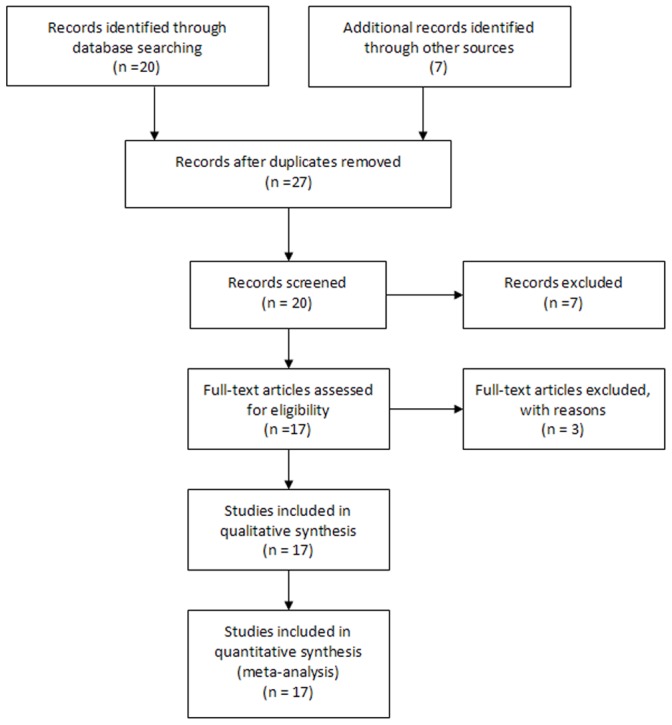
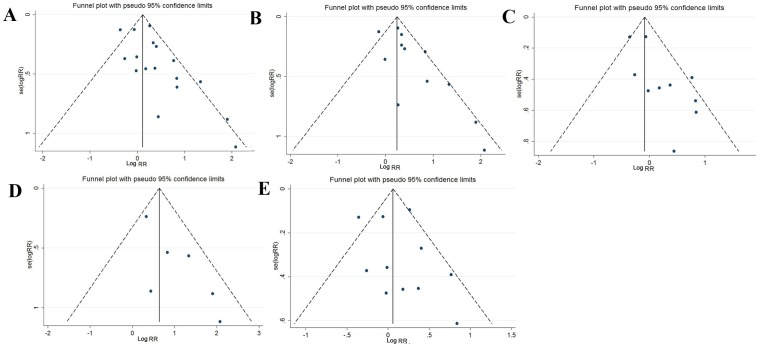
Through searching PubMed databases (or manual searching) up to April 2012 using the following keywords: "occupational exposure", "electromagnetic fields" and "amyotrophic lateral sclerosis" or "motor neuron disease", seventeen studies were identified as eligible for this meta-analysis. The associations between ELF-EMF exposure and the ALS risk were estimated based on study design (case-control or cohort study), and ELF-EMF exposure level assessment (job title or job-exposure matrix). The heterogeneity across the studies was tested, as was publication bias.
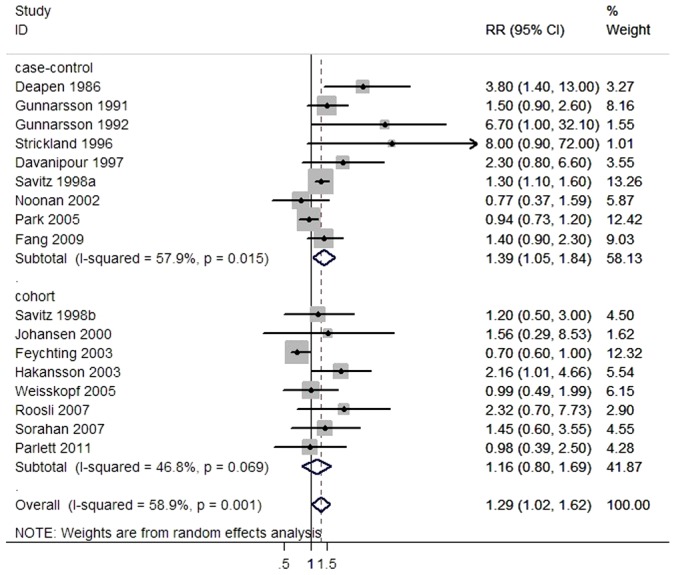
Occupational exposure to ELF-EMF was significantly associated with increased risk of ALS in pooled studies (RR = 1.29, 95%CI = 1.02-1.62), and case-control studies (OR = 1.39, 95%CI = 1.05-1.84), but not cohort studies (RR = 1.16, 95% CI = 0.80-1.69). In sub-analyses, similar significant associations were found when the exposure level was defined by the job title, but not the job-exposure matrix. In addition, significant associations between occupational exposure to ELF-EMF and increased risk of ALS were found in studies of subjects who were clinically diagnosed but not those based on the death certificate. Moderate heterogeneity was observed in all analyses.
Our data suggest a slight but significant ALS risk increase among those with job titles related to relatively high levels of ELF-EMF exposure. Since the magnitude of estimated RR was relatively small, we cannot deny the possibility of potential biases at work. Electrical shocks or other unidentified variables associated with electrical occupations, rather than magnetic-field exposure, may be responsible for the observed associations with ALS.
通过荟萃分析评估极低频电磁场(ELF-EMF)暴露与肌萎缩侧索硬化症(ALS)风险之间的关系。
通过检索 PubMed 数据库(或手动检索),使用以下关键词:“职业暴露”、“电磁场”和“肌萎缩侧索硬化症”或“运动神经元病”,截至 2012 年 4 月共确定了 17 项符合条件的研究进行荟萃分析。根据研究设计(病例对照或队列研究)和 ELF-EMF 暴露水平评估(职业头衔或职业暴露矩阵),估计 ELF-EMF 暴露与 ALS 风险之间的关联。测试了研究之间的异质性和发表偏倚。
职业性 ELF-EMF 暴露与汇总研究(RR=1.29,95%CI=1.02-1.62)和病例对照研究(OR=1.39,95%CI=1.05-1.84)中 ALS 风险增加显著相关,但与队列研究(RR=1.16,95%CI=0.80-1.69)不相关。在亚分析中,当暴露水平通过职业头衔而不是职业暴露矩阵定义时,也发现了类似的显著关联。此外,在基于临床诊断而非死亡证明的 ALS 患者研究中,职业性 ELF-EMF 暴露与 ALS 风险增加之间存在显著关联。所有分析均存在中度异质性。
我们的数据表明,与相对高水平的 ELF-EMF 暴露相关的职业头衔的人群中,ALS 风险略有增加但具有统计学意义。由于估计的 RR 值相对较小,我们不能否认潜在偏倚的可能性。与磁场暴露相比,与电气职业相关的电击或其他未识别变量可能是导致与 ALS 观察到关联的原因。