Department of Pharmaceutics, Center for Cancer Prevention Research, Ernest Mario School of Pharmacy, Rutgers, the State University of New Jersey, 160 Frelinghuysen Road, Piscataway, NJ, 08854, USA.
Cell Biosci. 2012 Nov 28;2(1):40. doi: 10.1186/2045-3701-2-40.
NF-E2-related factor 2 (NRF2) regulates a battery of antioxidative and phase II drug metabolizing/detoxifying genes through binding to the antioxidant response elements (ARE). NRF2-ARE signaling plays a central role in protecting cells from a wide spectrum of reactive toxic species including reactive oxygen/nitrogen species (RONS). 4-hydroxylnonenal (4-HNE) is a major end product from lipid peroxidation of omega-6 polyunsaturated fatty acids (PUFA) induced by oxidative stress, and it is highly reactive to nucleophilic sites in DNA and proteins, causing cytotoxicity and genotoxicity. In this study, we examined the role of NRF2 in regulating the 4-HNE induced gene expression of antioxidant and detoxifying enzymes.
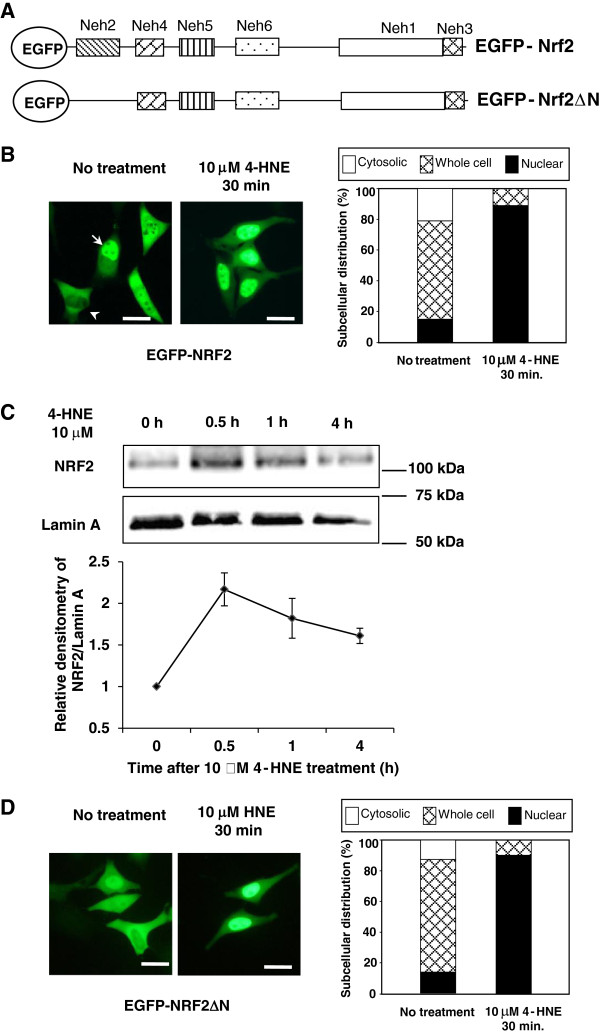
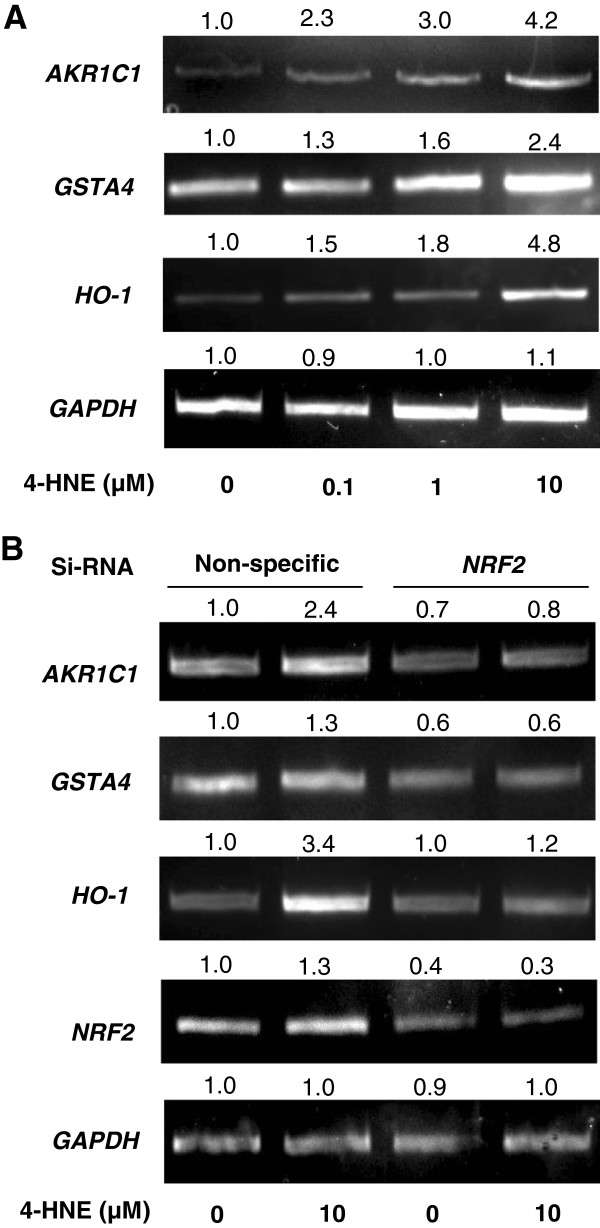
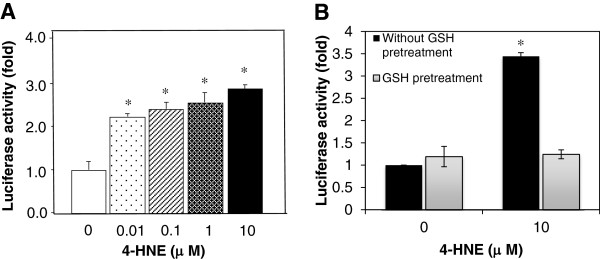
When HeLa cells were treated with 4-HNE, NRF2 rapidly transloated into the nucleus, as determined by the distribution of NRF2 tagged with the enhanced green fluorescent protein (EGFP) and increased NRF2 protein in the nuclear fraction. Transcriptional activity of ARE-luciferase was significantly induced by 0.01-10 μM of 4-HNE in a dose-dependent manner, and the induction could be blocked by pretreatment with glutathione (GSH). 4-HNE induced transcriptional expression of glutathione S-transferase (GST) A4, aldoketone reductase (AKR) 1C1 and heme oxygenase-1 (HO-1), and the induction was attenuated by knocking down NRF2 using small interfering RNA.
NRF2 is critical in mediating 4-HNE induced expression of antioxidant and detoxifying genes. This may account for one of the major cellular defense mechanisms against reactive metabolites of lipids peroxidation induced by oxidative stress and protect cells from cytotoxicity.
NF-E2 相关因子 2(NRF2)通过与抗氧化反应元件(ARE)结合,调节一系列抗氧化和 II 相药物代谢/解毒基因。NRF2-ARE 信号通路在保护细胞免受广泛的反应性毒性物质(包括活性氧/氮物种(RONS))方面发挥着核心作用。4-羟基壬烯醛(4-HNE)是氧化应激诱导的ω-6 多不饱和脂肪酸(PUFA)脂质过氧化的主要终产物,它高度反应性与 DNA 和蛋白质中的亲核位点结合,导致细胞毒性和遗传毒性。在这项研究中,我们研究了 NRF2 在调节 4-HNE 诱导的抗氧化和解毒酶基因表达中的作用。
当 HeLa 细胞用 4-HNE 处理时,NRF2 通过与增强型绿色荧光蛋白(EGFP)标记的 NRF2 的分布和核部分中 NRF2 蛋白的增加来确定迅速向核内易位。ARE-荧光素酶的转录活性被 0.01-10 μM 的 4-HNE 以剂量依赖的方式显著诱导,并且该诱导可以通过谷胱甘肽(GSH)预处理来阻断。4-HNE 诱导谷胱甘肽 S-转移酶(GST)A4、醛酮还原酶(AKR)1C1 和血红素加氧酶-1(HO-1)的转录表达,并且使用小干扰 RNA 敲低 NRF2 可减弱诱导。
NRF2 是介导 4-HNE 诱导的抗氧化和解毒基因表达的关键因素。这可能是细胞对氧化应激诱导的脂质过氧化反应性代谢物的主要防御机制之一,可保护细胞免受细胞毒性。