Division of Dermatology, Department of Medicine, Albert Einstein College of Medicine, Bronx, New York, USA.
J Invest Dermatol. 2013 May;133(5):1231-9. doi: 10.1038/jid.2012.399. Epub 2012 Nov 29.
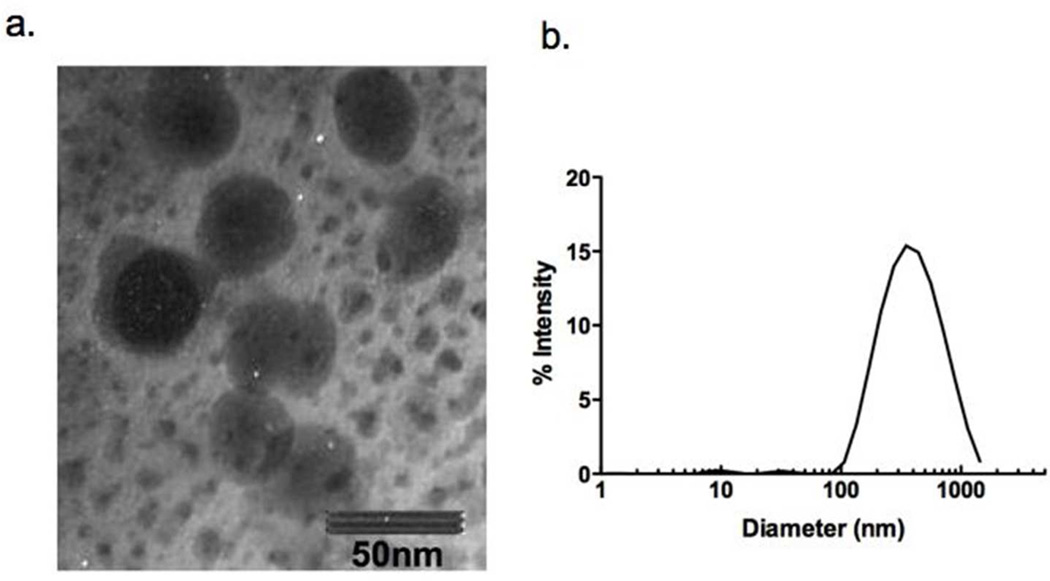
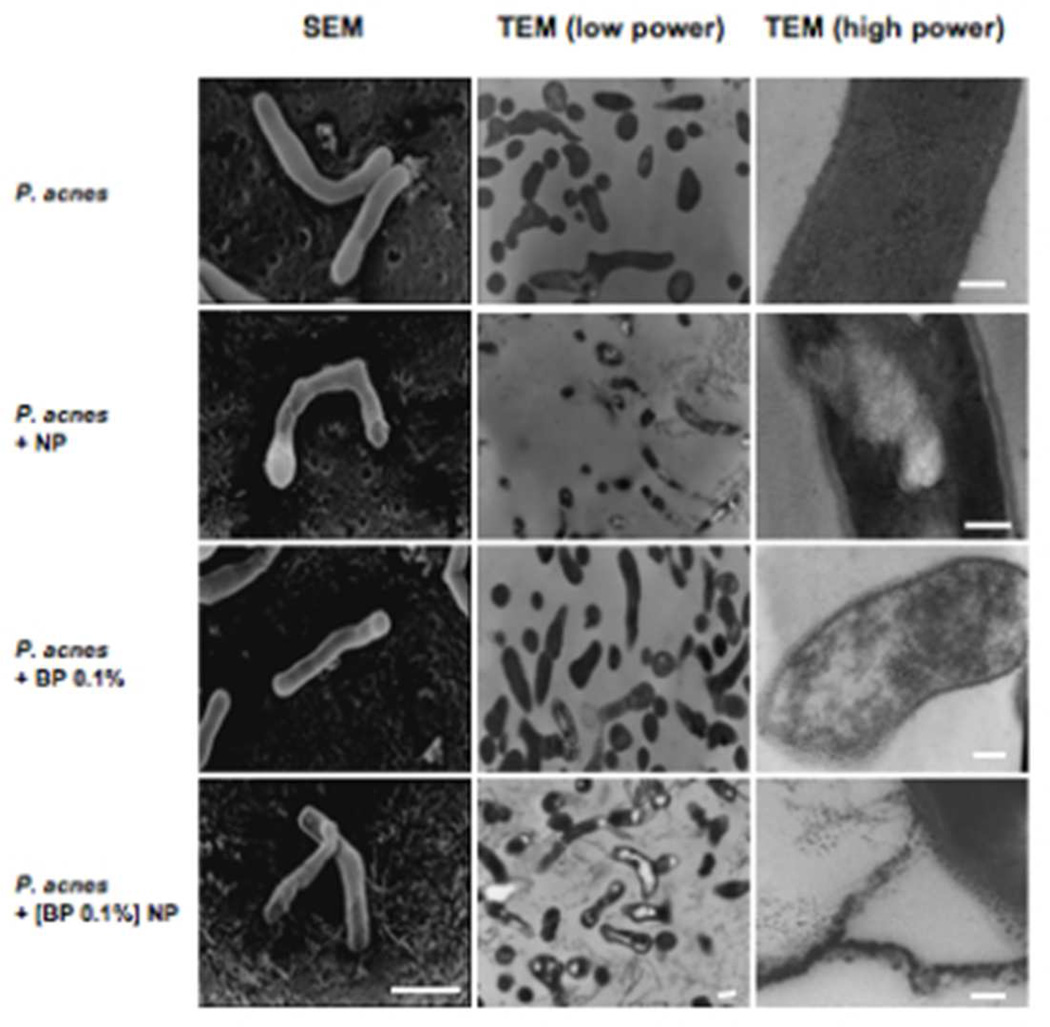
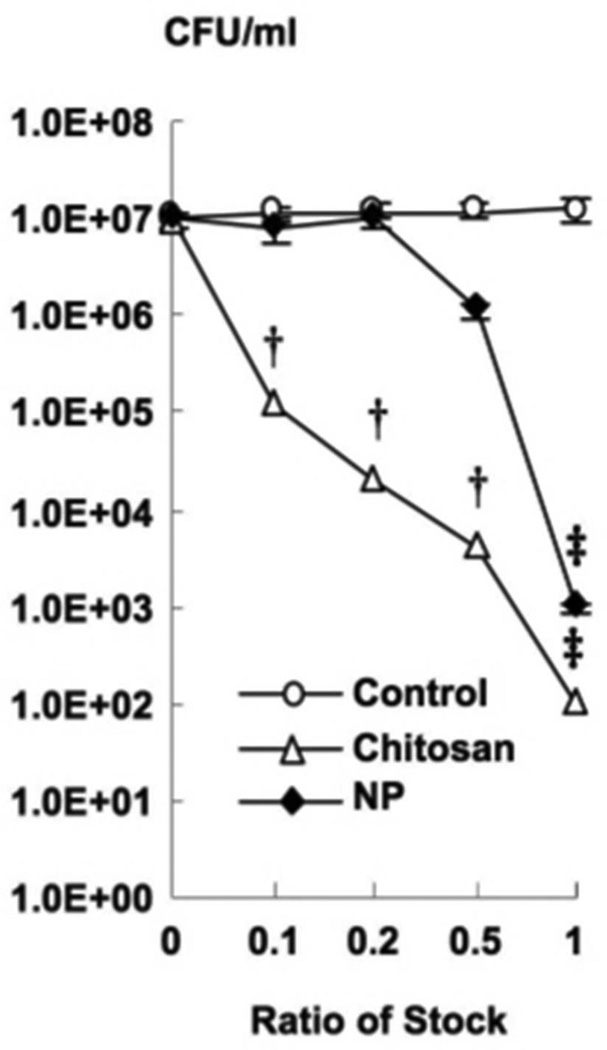
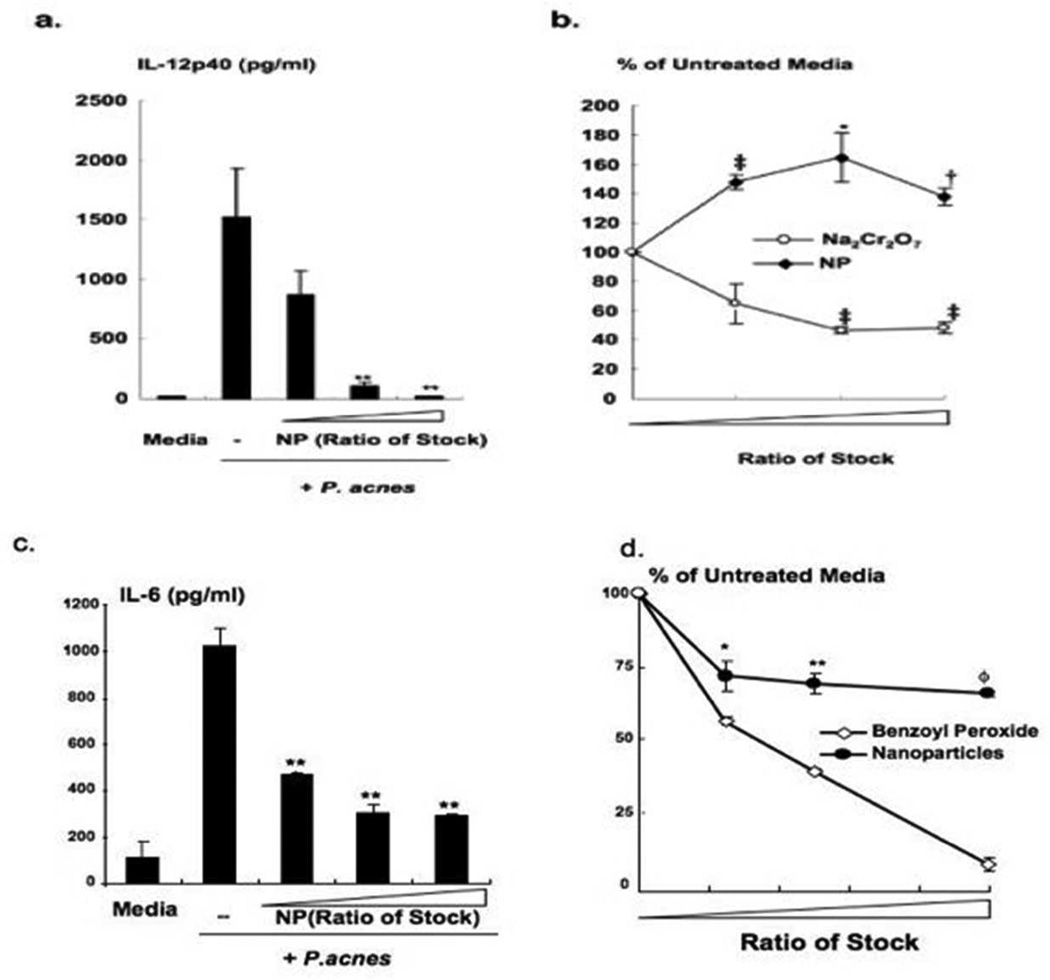
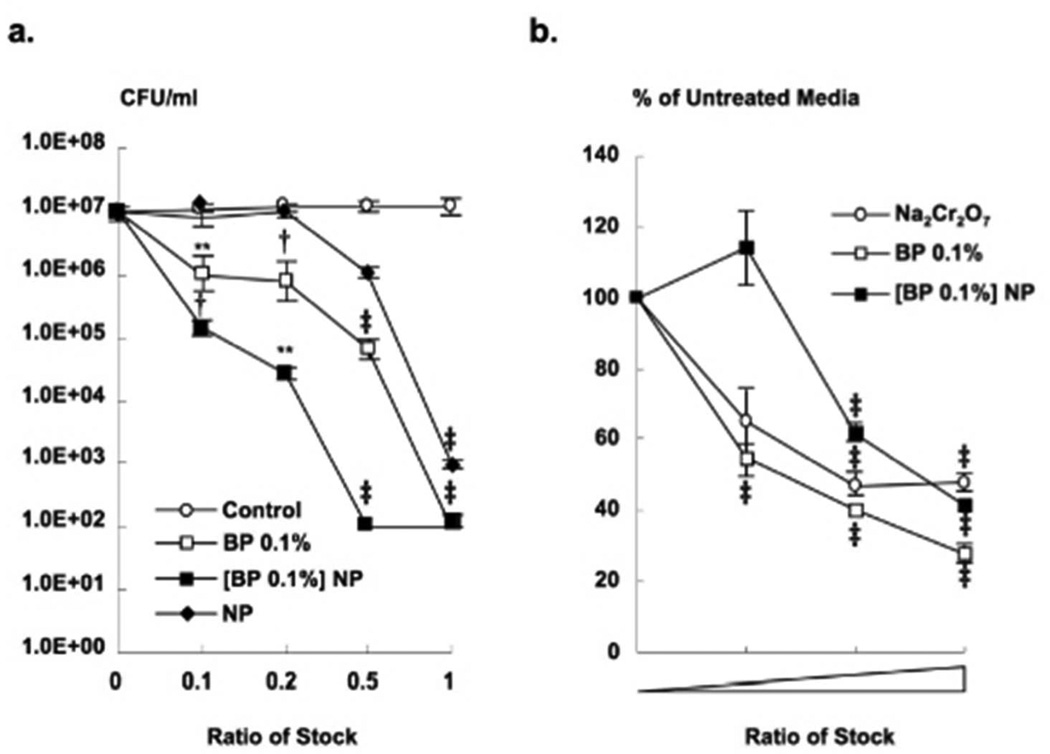
Advances in nanotechnology have demonstrated potential application of nanoparticles (NPs) for effective and targeted drug delivery. Here we investigated the antimicrobial and immunological properties and the feasibility of using NPs to deliver antimicrobial agents to treat a cutaneous pathogen. NPs synthesized with chitosan and alginate demonstrated a direct antimicrobial activity in vitro against Propionibacterium acnes, the bacterium linked to the pathogenesis of acne. By electron microscopy (EM) imaging, chitosan-alginate NPs were found to induce the disruption of the P. acnes cell membrane, providing a mechanism for the bactericidal effect. The chitosan-alginate NPs also exhibited anti-inflammatory properties as they inhibited P. acnes-induced inflammatory cytokine production in human monocytes and keratinocytes. Furthermore, benzoyl peroxide (BP), a commonly used antiacne drug, was effectively encapsulated in the chitosan-alginate NPs and demonstrated superior antimicrobial activity against P. acnes compared with BP alone while demonstrating less toxicity to eukaryotic cells. Together, these data suggest the potential utility of topical delivery of chitosan-alginate NP-encapsulated drug therapy for the treatment of dermatologic conditions with infectious and inflammatory components.
纳米技术的进步已经证明了纳米粒子(NPs)在有效和靶向药物输送方面的潜在应用。在这里,我们研究了 NPs 的抗菌和免疫特性,以及使用 NPs 将抗菌剂递送到治疗皮肤病原体的可行性。用壳聚糖和海藻酸钠合成的 NPs 在体外对痤疮丙酸杆菌具有直接的抗菌活性,痤疮丙酸杆菌与痤疮的发病机制有关。通过电子显微镜(EM)成像,发现壳聚糖-海藻酸钠 NPs 能够诱导 P. acnes 细胞膜的破坏,为杀菌作用提供了一种机制。壳聚糖-海藻酸钠 NPs 还表现出抗炎特性,因为它们抑制了人单核细胞和角质形成细胞中 P. acnes 诱导的炎性细胞因子的产生。此外,过氧化苯甲酰(BP),一种常用的抗痤疮药物,被有效地包裹在壳聚糖-海藻酸钠 NPs 中,与单独使用 BP 相比,对 P. acnes 具有更好的抗菌活性,同时对真核细胞的毒性更小。综上所述,这些数据表明,局部递送壳聚糖-海藻酸钠 NP 包封药物治疗具有感染和炎症成分的皮肤病的潜力。