Navrongo Health Research Centre, Ghana Health Service, Navrongo, Ghana.
Glob Health Action. 2012 Nov 23;5:14-22. doi: 10.3402/gha.v5i0.19073.
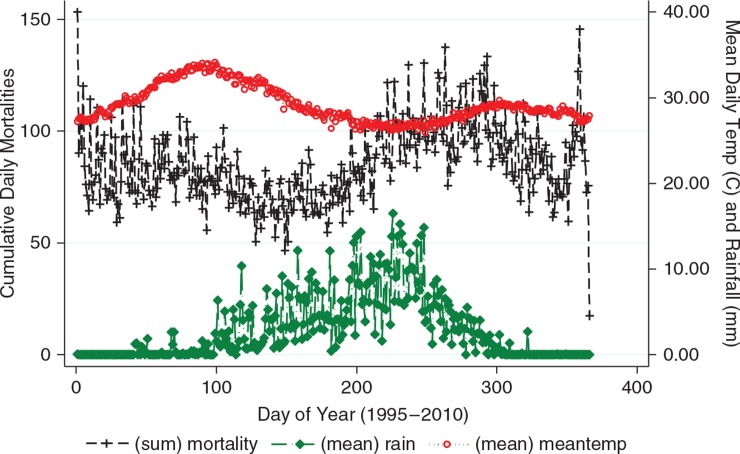
Climate and weather variability can have significant health consequences of increased morbidity and mortality. However, today the impact of climate and weather variability, and consequentially, of climate change on population health in sub-Saharan Africa is not well understood. In this study, we assessed the association of daily temperature and precipitation with daily mortality by age and sex groups in Northern Ghana.
We analysed daily mortality and weather data from 1995 to 2010. We adopted a time-series Poisson regression approach to examine the short-term association of daily mean temperature and daily mean precipitation with daily mortality. We included time factors and daily lagged weather predictors and considered autocorrelation.
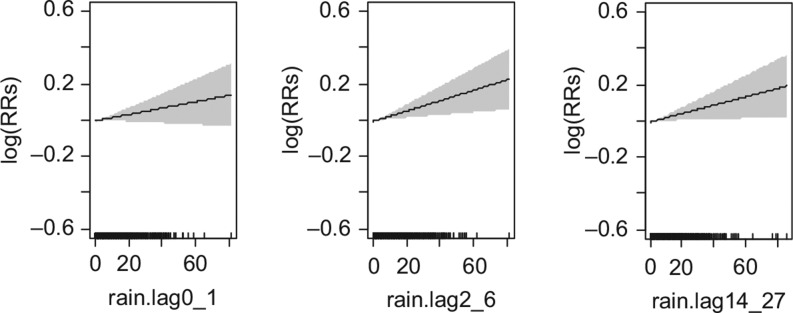
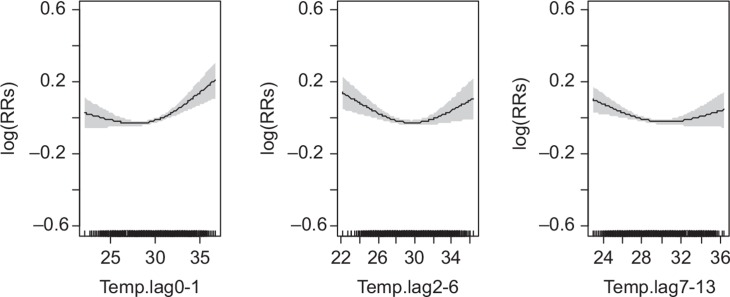
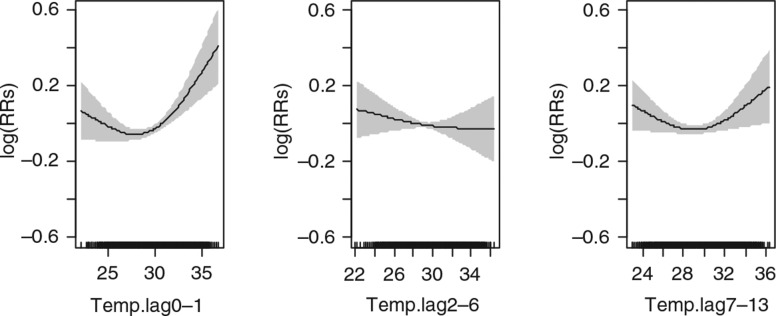
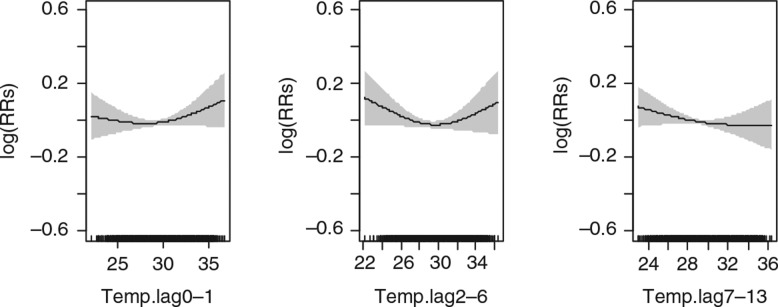
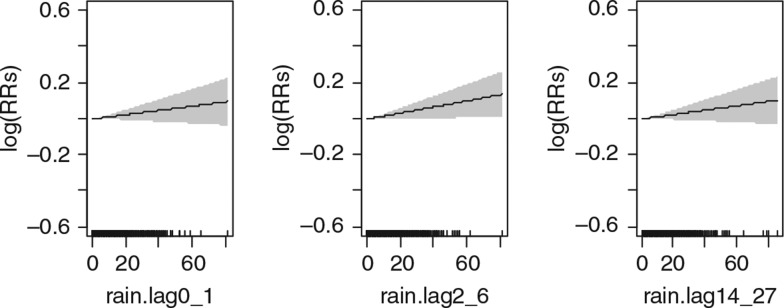
For all populations, a statistically significant association of mean daily temperature with mortality at lag days 0-1 was observed below and above the 25th (27.48°C) and 75th (30.68°C) percentiles (0.19%; 95% confidence interval CI: 0.05%, 0.21%) and (1.14%; 95% CI: 0.12%, 1.54%), respectively. We also observed a statistically significant association of mean daily temperature above 75th percentile at lag days 2-6 and lag days 7-13 (0.32%; 95% CI: 0.16%, 0.25%) and 0.31% [95% CI: 0.14%, 0.26%]), respectively. A 10 mm increase in precipitation was associated with a 1.71% (95% CI: 0.10%, 3.34.9%) increase in mortality for all ages and sex groups at lag days 2-6. Similar results were also observed at lag days 2-6 and 14-27 for males, 2.92% (95% CI: 0.80%, 5.09%) and 2.35% (95% CI: 0.28%, 4.45%).
Short-term weather variability is strongly associated with mortality in Northern Ghana. The associations appear to differ among different age and sex groups. The elderly and young children were found to be more susceptible to short-term temperature-related mortality. The association of precipitation with mortality is more pronounced at the short-term for all age and sex groups and in the medium short-term among males. Reducing exposure to extreme temperature, particularly among the elderly and young children, should reduce the number of daily deaths attributable to weather-related mortality.
气候和天气变化会导致发病率和死亡率增加,从而对健康产生重大影响。然而,目前人们对撒哈拉以南非洲的气候和天气变化以及气候变化对人口健康的影响知之甚少。本研究评估了加纳北部每日温度和降水与年龄和性别组每日死亡率之间的关联。
我们分析了 1995 年至 2010 年的每日死亡率和天气数据。我们采用时间序列泊松回归方法,研究了每日平均温度和每日平均降水与每日死亡率的短期关联。我们纳入了时间因素和每日滞后天气预测因子,并考虑了自相关。
对于所有人群,在低于和高于第 25 百分位(27.48°C)和第 75 百分位(30.68°C)的温度时,观察到每日平均温度与死亡率之间存在统计学显著关联(0.19%;95%置信区间 CI:0.05%,0.21%)和(1.14%;95% CI:0.12%,1.54%)。我们还观察到,在第 2-6 天和第 7-13 天的日平均温度高于第 75 百分位时,死亡率也存在统计学显著关联(0.32%;95% CI:0.16%,0.25%)和 0.31%[95% CI:0.14%,0.26%])。在第 2-6 天,降水每增加 10 毫米,所有年龄和性别组的死亡率增加 1.71%(95% CI:0.10%,3.34%)。在男性中,类似的结果也出现在第 2-6 天和第 14-27 天,死亡率分别增加 2.92%(95% CI:0.80%,5.09%)和 2.35%(95% CI:0.28%,4.45%)。
加纳北部短期天气变化与死亡率密切相关。这些关联似乎因不同的年龄和性别组而有所不同。老年人和幼儿更容易受到短期温度相关死亡率的影响。降水与死亡率的关联在所有年龄和性别组中在短期更为明显,而在男性中在中期更为明显。减少暴露于极端温度,特别是老年人和幼儿,应能减少因天气相关死亡而导致的每日死亡人数。