Tetteh John, Takramah Wisdom Kwami, Ayanore Martin Amogre, Adoliba Ayanore Augustine, Bisung Elijah, Alamu Josiah
Department of Epidemiology and Biostatistics, School of Public Health, University of Health and Allied Sciences, Hohoe, Ghana.
Centre for Health Policy Advocacy Innovation & Research in Africa (CHPAIR-Africa), Accra, Ghana.
J Trop Med. 2018 Oct 9;2018:4863607. doi: 10.1155/2018/4863607. eCollection 2018.
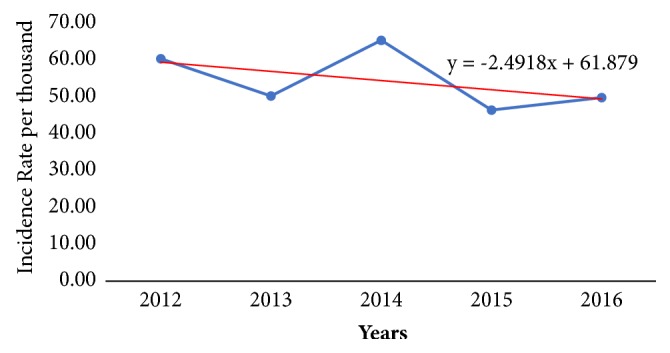
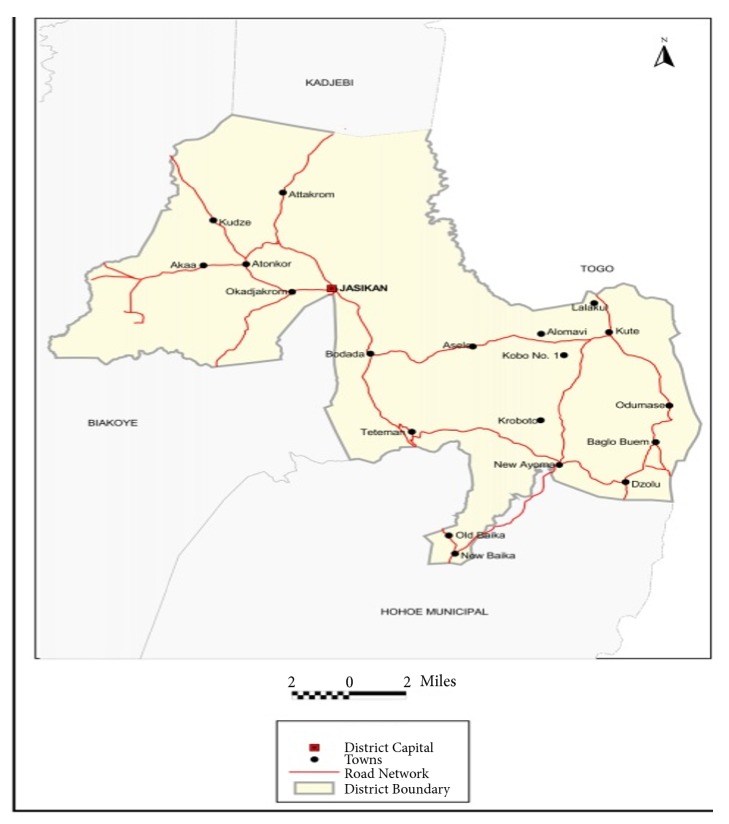
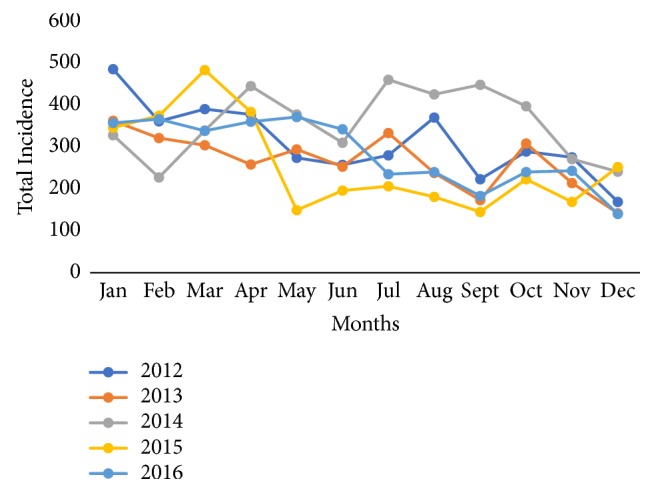
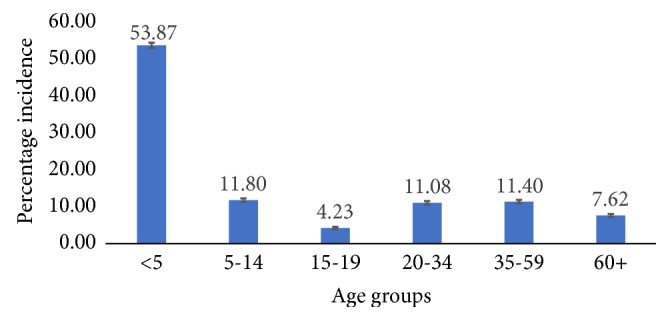
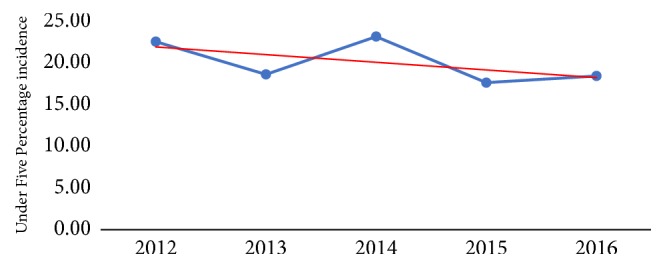
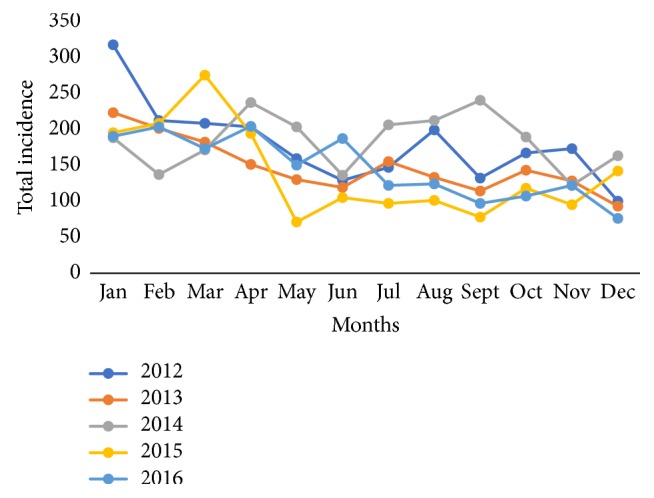
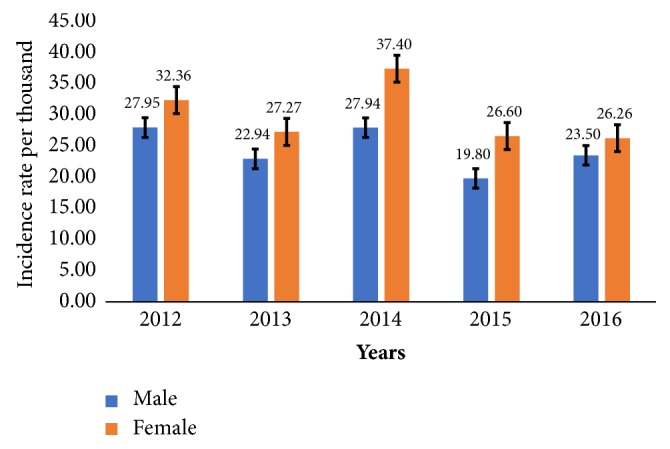
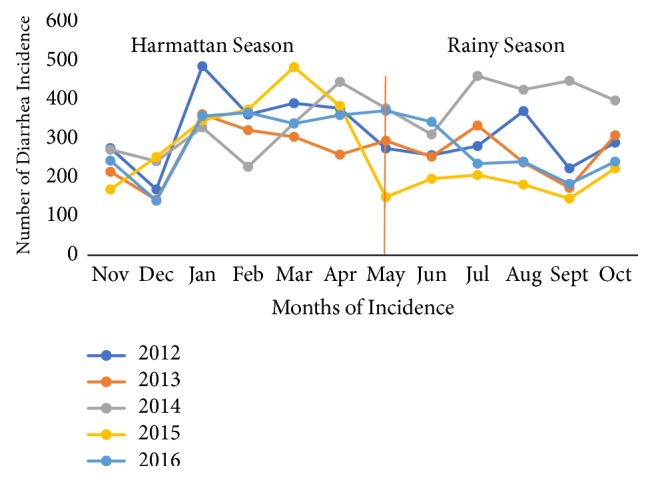
About 22% of childhood deaths in developing countries are attributable to diarrhea. In poor resource settings, diarrhea morbidities are correlated with poverty and socio-contextual factors. Diarrhea rates in Ghana are reported to be high, with cases estimated at 113,786 among children under-five years in 2011. This study analyzed the trends of diarrhea morbidity outcomes in the Jasikan District of Ghana. A retrospective analysis of records on diarrhea data for a five years' period (January 2012 to December 2016) was undertaken. There was a total of 17740 diarrhea case reports extracted from District Health Information Management System (DHIMS) II database in an Excel format which was then exported to Stata version 14 for data cleaning, verification, and analysis. Excel version 2016 was used to plot the actual observed cases by years to assess trends and seasonality. There was a period incidence rate of 272.02 per 1000 persons with a decreasing annual growth rate of 1.85%. Declines for diarrhea generally occurred from November to December and increased from January upwards, evidence that most cases of diarrhea in this study were reported in the harmattan season. High incidence of diarrhea was found to be common among under-five children and among females. Decreasing trend of diarrhea incidence which was identified in this research within the five years' period understudied shows that, by the year 2020, there will be a sharp decline in the incidence rate of diarrhea reported cases in Jasikan District, given improvements in the external environmental conditions in the district, all things being equal.
发展中国家约22%的儿童死亡可归因于腹泻。在资源匮乏地区,腹泻发病率与贫困及社会环境因素相关。据报道,加纳的腹泻发病率很高,2011年估计五岁以下儿童中有113,786例病例。本研究分析了加纳贾西坎区腹泻发病结果的趋势。对五年期间(2012年1月至2016年12月)的腹泻数据记录进行了回顾性分析。从地区卫生信息管理系统(DHIMS)II数据库中以Excel格式提取了总共17740份腹泻病例报告,然后将其导出到Stata 14版本进行数据清理、验证和分析。使用Excel 2016按年份绘制实际观察到的病例,以评估趋势和季节性。每1000人的期间发病率为272.02,年增长率下降1.85%。腹泻病例数的下降一般发生在11月至12月,从1月起上升,这表明本研究中大多数腹泻病例是在哈马丹季节报告的。发现五岁以下儿童和女性中腹泻发病率较高。在本研究的五年研究期内确定的腹泻发病率下降趋势表明,在该地区外部环境条件得到改善的情况下,到2020年,贾西坎区报告的腹泻病例发病率将大幅下降,其他条件相同。