Ludwig Center for Cancer Genetics and Therapeutics, The Sidney Kimmel Comprehensive Cancer Center at Johns Hopkins, Baltimore, Maryland, USA.
Nat Genet. 2013 Jan;45(1):12-7. doi: 10.1038/ng.2493. Epub 2012 Dec 2.
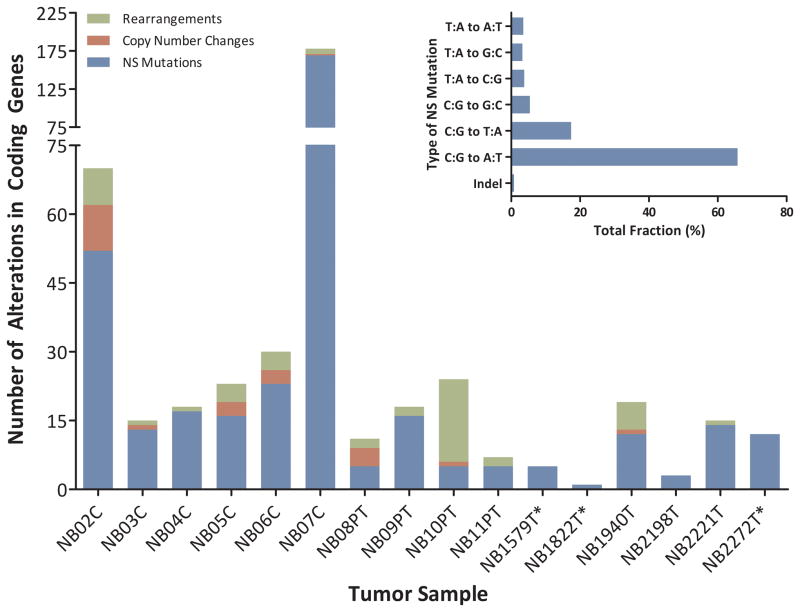
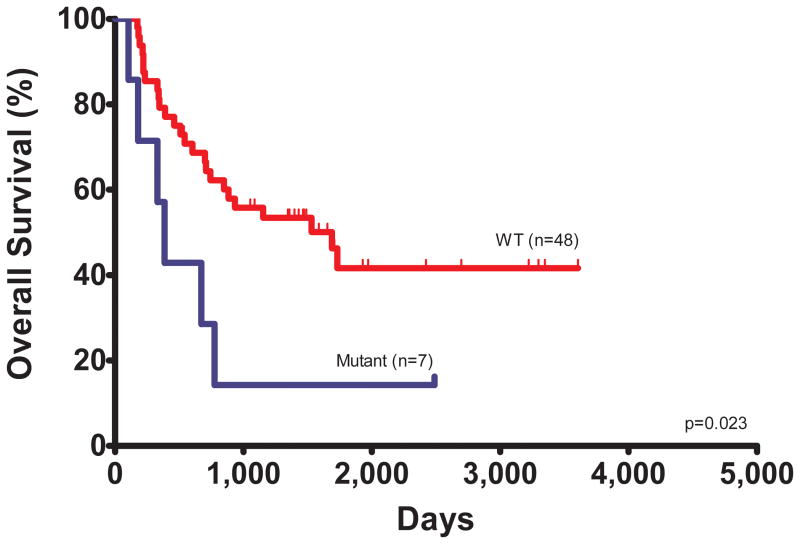
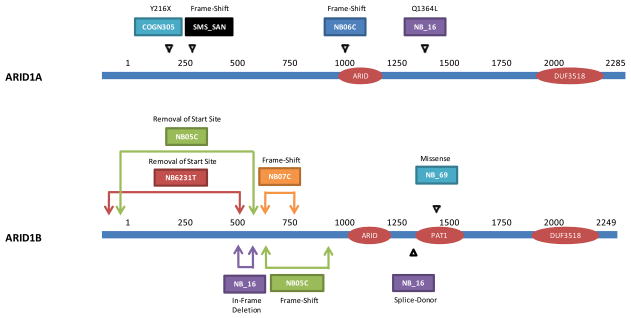
Neuroblastomas are tumors of peripheral sympathetic neurons and are the most common solid tumor in children. To determine the genetic basis for neuroblastoma, we performed whole-genome sequencing (6 cases), exome sequencing (16 cases), genome-wide rearrangement analyses (32 cases) and targeted analyses of specific genomic loci (40 cases) using massively parallel sequencing. On average, each tumor had 19 somatic alterations in coding genes (range of 3-70). Among genes not previously known to be involved in neuroblastoma, chromosomal deletions and sequence alterations of the chromatin-remodeling genes ARID1A and ARID1B were identified in 8 of 71 tumors (11%) and were associated with early treatment failure and decreased survival. Using tumor-specific structural alterations, we developed an approach to identify rearranged DNA fragments in sera, providing personalized biomarkers for minimal residual disease detection and monitoring. These results highlight the dysregulation of chromatin remodeling in pediatric tumorigenesis and provide new approaches for the management of patients with neuroblastoma.
神经母细胞瘤是外周交感神经元的肿瘤,是儿童最常见的实体肿瘤。为了确定神经母细胞瘤的遗传基础,我们使用大规模平行测序对全基因组测序(6 例)、外显子组测序(16 例)、全基因组重排分析(32 例)和特定基因组位点的靶向分析(40 例)进行了研究。平均而言,每个肿瘤在编码基因中有 19 个体细胞改变(范围为 3-70)。在以前未知参与神经母细胞瘤的基因中,在 71 个肿瘤中的 8 个(11%)中发现了染色质重塑基因 ARID1A 和 ARID1B 的染色体缺失和序列改变,与早期治疗失败和生存率降低有关。利用肿瘤特异性的结构改变,我们开发了一种在血清中识别重排 DNA 片段的方法,为微小残留病的检测和监测提供了个性化的生物标志物。这些结果强调了染色质重塑在儿科肿瘤发生中的失调,并为神经母细胞瘤患者的治疗提供了新的方法。