Laboratory for Regenerative Medicine and Pharmacobiology, Institute for Bioengineering, School of Life Sciences and School of Engineering, Ecole Polytechnique Fédérale de Lausanne, Lausanne, Switzerland.
PLoS One. 2012;7(11):e49874. doi: 10.1371/journal.pone.0049874. Epub 2012 Nov 27.
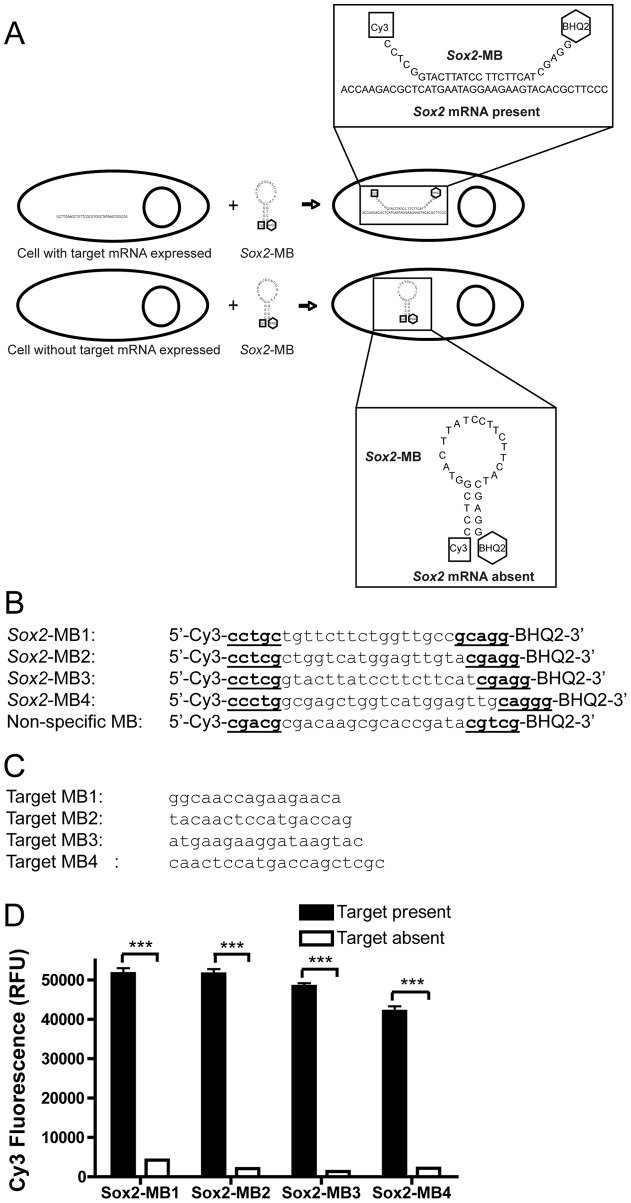
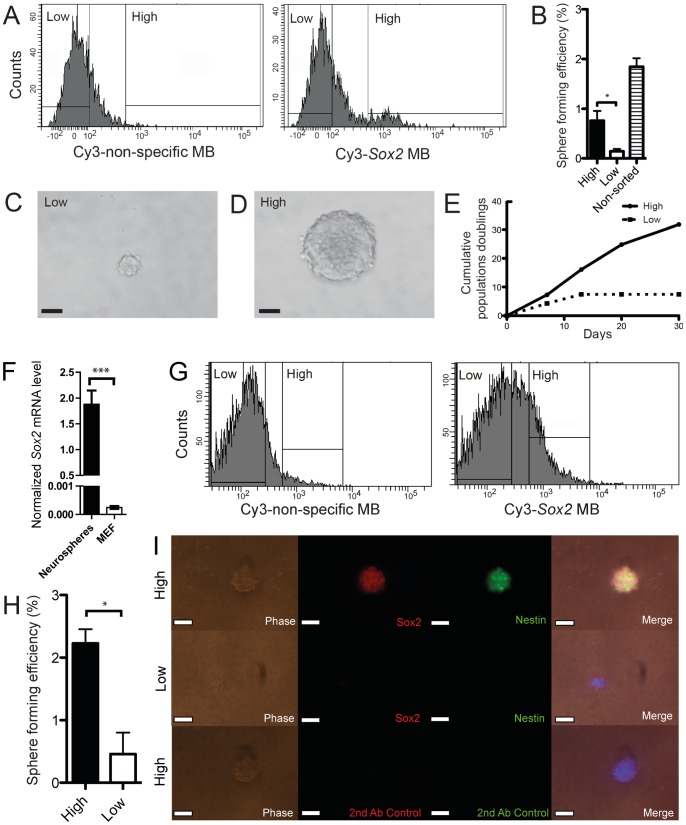
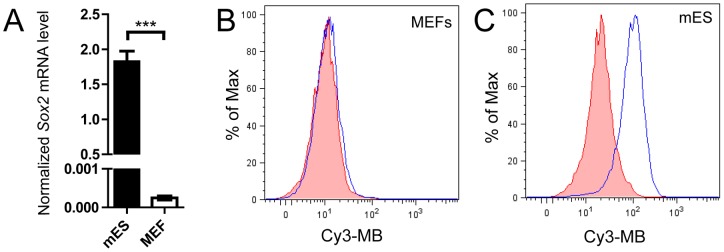
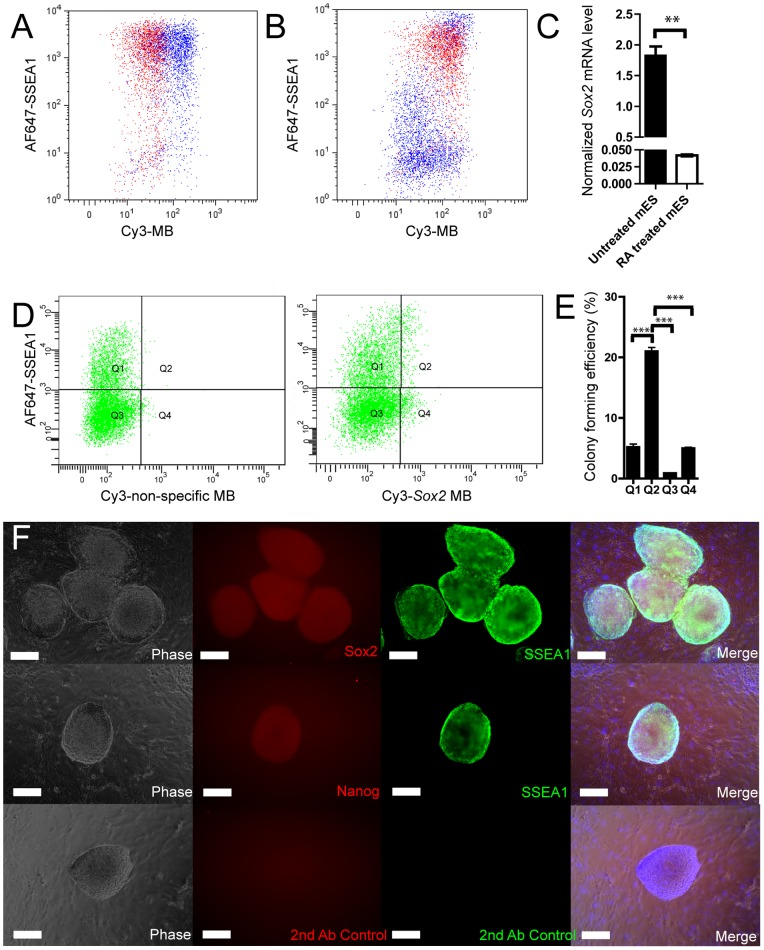
While cell sorting usually relies on cell-surface protein markers, molecular beacons (MBs) offer the potential to sort cells based on the presence of any expressed mRNA and in principle could be extremely useful to sort rare cell populations from primary isolates. We show here how stem cells can be purified from mixed cell populations by sorting based on MBs. Specifically, we designed molecular beacons targeting Sox2, a well-known stem cell marker for murine embryonic (mES) and neural stem cells (NSC). One of our designed molecular beacons displayed an increase in fluorescence compared to a nonspecific molecular beacon both in vitro and in vivo when tested in mES and NSCs. We sorted Sox2-MB(+)SSEA1(+) cells from a mixed population of 4-day retinoic acid-treated mES cells and effectively isolated live undifferentiated stem cells. Additionally, Sox2-MB(+) cells isolated from primary mouse brains were sorted and generated neurospheres with higher efficiency than Sox2-MB(-) cells. These results demonstrate the utility of MBs for stem cell sorting in an mRNA-specific manner.
虽然细胞分选通常依赖于细胞表面蛋白标记物,但分子信标 (MB) 提供了根据任何表达的 mRNA 存在来分选细胞的潜力,并且原则上可以非常有用,可从原代分离物中分选稀有细胞群。我们在这里展示了如何通过基于 MB 的分选从混合细胞群中纯化干细胞。具体来说,我们设计了针对 Sox2 的分子信标,Sox2 是鼠胚胎 (mES) 和神经干细胞 (NSC) 的已知干细胞标记物。我们设计的分子信标之一在体外和体内测试时与非特异性分子信标相比,在 mES 和 NSCs 中显示出荧光增加。我们从经过 4 天维甲酸处理的混合 mES 细胞群中对 Sox2-MB(+)SSEA1(+)细胞进行分选,并有效地分离了活的未分化干细胞。此外,从原代小鼠大脑中分离的 Sox2-MB(+)细胞进行分选,并比 Sox2-MB(-)细胞生成神经球的效率更高。这些结果证明了 MB 用于以 mRNA 特异性方式进行干细胞分选的实用性。