Division of Hematology and Oncology, New York Medical College and Westchester Medical Center, Valhalla, NY 10595, USA.
Exp Hematol Oncol. 2012 Apr 23;1(1):10. doi: 10.1186/2162-3619-1-10.
Liposomal formulations of anthracyclines appear to have favorable toxicity profile when compared with conventional anthracyclines in elderly, high risk cardiac patients and patients with prior use of anthracyclines. Randomized controlled trials have evaluated the efficacy and safety profile of liposomal formulations with conventional anthracyclines. Our aim is to evaluate the adverse effects and quantify the relative safety profile of the liposomal and conventional anthracyclines through meta-analysis of the published randomized trials.
We conducted a broad search strategy of major electronic databases. We performed a meta- analysis of adverse effects on randomized controlled trials comparing liposomal formulation and conventional anthracyclines on different tumors. The primary outcome was the adverse effects including congestive heart failure (CHF), hematological toxicity, palmar-plantar erythrodysthesias (PPE), alopecia, nausea and vomiting. The odds ratios of the adverse effects were calculated separately and the overall odds ratio of the pooled data was calculated.
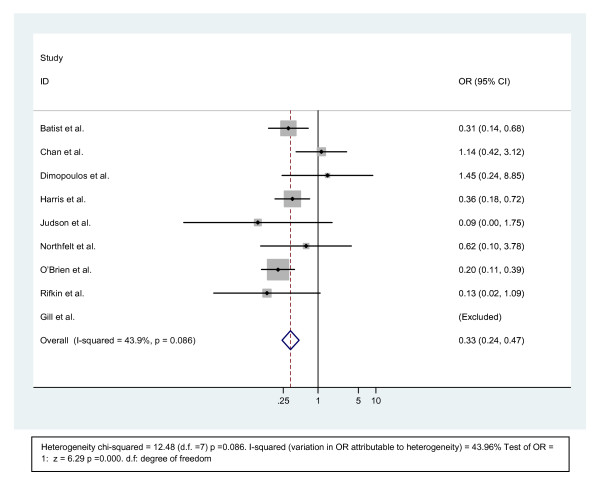
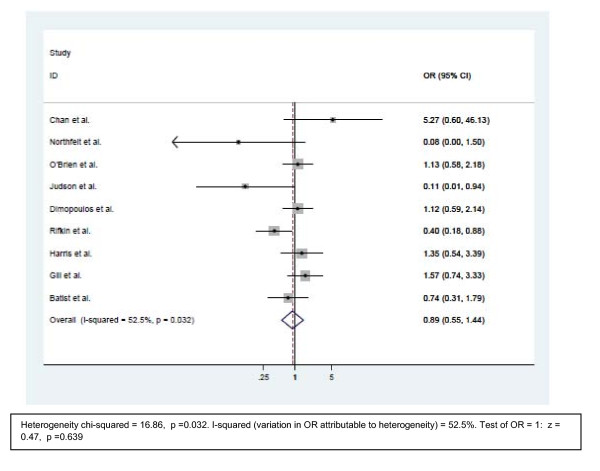
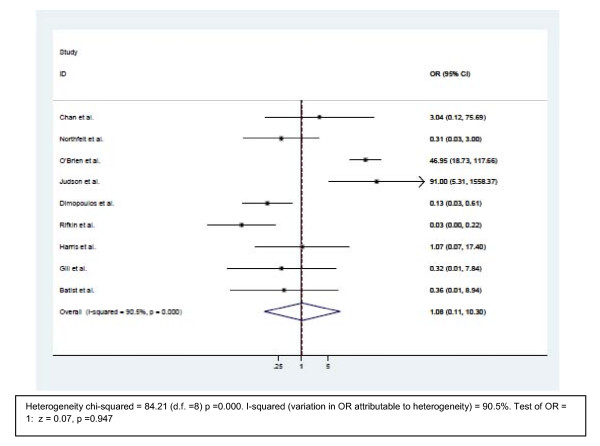
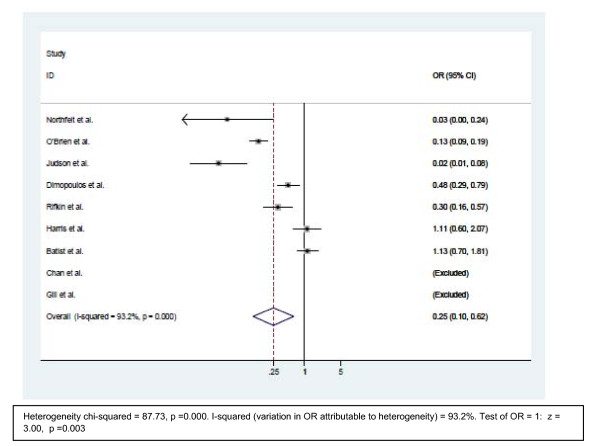
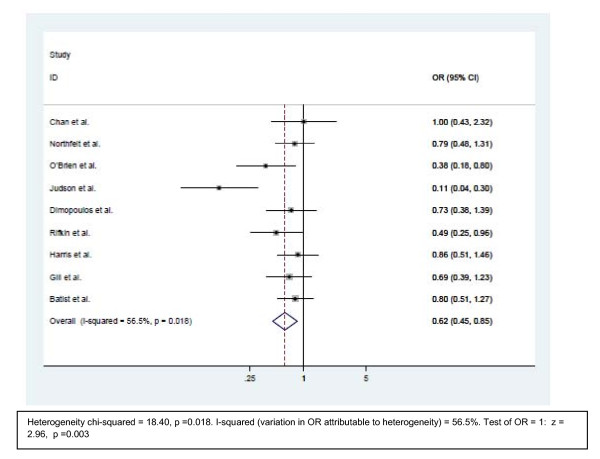
We identified nine randomized controlled trials comparing liposomal formulations and conventional anthracyclines. The study included 2220 patients, of which1112 patients were treated with liposomal formulations and 1108 were treated with conventional anthracyclines. We found that the liposomal formulations have low incidence of CHF(OR 0.34, 95% CI, 0.24-0.47), alopecia (OR 0.0.25, 95% CI, 0.0.10-0.62), neutropenia (OR 0.62, 95% CI, 0.45- 0.85),(OR 0.89, 95% CI, 0.71-1.125), and thrombocytopenia (OR 0.87, 95% CI, 0.61-1.25). The incidence of PPE was similar in both arms (OR 1.08, 95% CI, 0.11- 10.30).
Liposomal doxorubicin and pegylated liposomal doxorubicin demonstrated favorable toxicity profiles with better cardiac safety and less myelosuppression, alopecia, nausea and vomiting compared with the conventional anthracyclines. The better therapeutic index of liposomal anthracyclines without compromising the efficacy makes it a favorable choice over conventional anthracyclines in elderly patients, patients with risk factors for cardiac disease and patients with prior use of anthracyclines.
与传统蒽环类药物相比,脂质体制剂在老年、高危心脏患者和既往使用蒽环类药物的患者中具有良好的毒性特征。随机对照试验已经评估了脂质体制剂与传统蒽环类药物联合使用的疗效和安全性。我们的目的是通过对已发表的随机试验进行荟萃分析,评估脂质体和传统蒽环类药物的不良影响,并量化其相对安全性。
我们进行了广泛的电子数据库搜索策略。我们对比较脂质体制剂与不同肿瘤中传统蒽环类药物的随机对照试验的不良影响进行了荟萃分析。主要结局是充血性心力衰竭(CHF)、血液学毒性、手掌-足底红细胞发育不良(PPE)、脱发、恶心和呕吐等不良影响。分别计算不良影响的优势比,并计算汇总数据的总体优势比。
我们确定了九项比较脂质体制剂和传统蒽环类药物的随机对照试验。该研究纳入了 2220 名患者,其中 1112 名患者接受了脂质体制剂治疗,1108 名患者接受了传统蒽环类药物治疗。我们发现,脂质体制剂 CHF 的发生率较低(OR 0.34,95%CI,0.24-0.47)、脱发(OR 0.0.25,95%CI,0.0.10-0.62)、中性粒细胞减少症(OR 0.62,95%CI,0.45-0.85)、(OR 0.89,95%CI,0.71-1.125)和血小板减少症(OR 0.87,95%CI,0.61-1.25)。两组 PPE 的发生率相似(OR 1.08,95%CI,0.11-10.30)。
与传统蒽环类药物相比,多柔比星脂质体和聚乙二醇化脂质体多柔比星具有良好的毒性特征,心脏安全性更高,骨髓抑制、脱发、恶心和呕吐发生率更低。脂质体蒽环类药物的治疗指数更好,而不影响疗效,使其成为老年患者、有心脏疾病危险因素患者和既往使用蒽环类药物患者的理想选择。