Division of Microbiology, University of Salzburg, Billrothstrasse 11, Salzburg, A-5020, Austria.
Cell Commun Signal. 2012 Dec 4;10(1):38. doi: 10.1186/1478-811X-10-38.
It has been widely established that the conversion of the cellular prion protein (PrPC) into its abnormal isoform (PrPSc) is responsible for the development of transmissible spongiform encephalopathies (TSEs). However, the knowledge of the detailed molecular mechanisms and direct functional consequences within the cell is rare. In this study, we aimed at the identification of deregulated proteins which might be involved in prion pathogenesis.
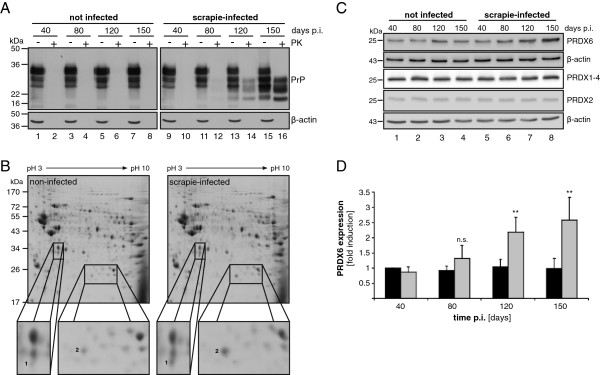
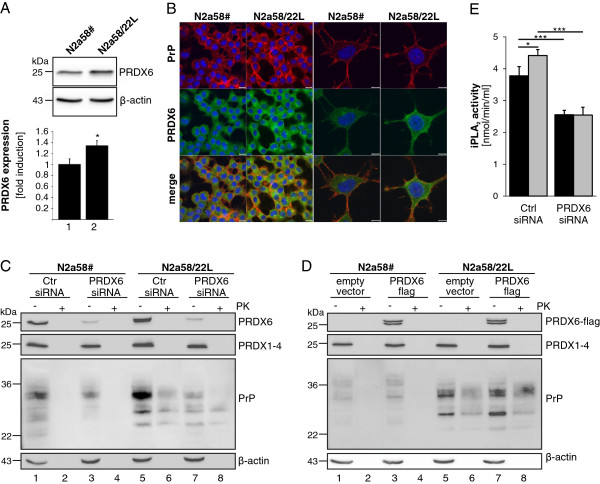
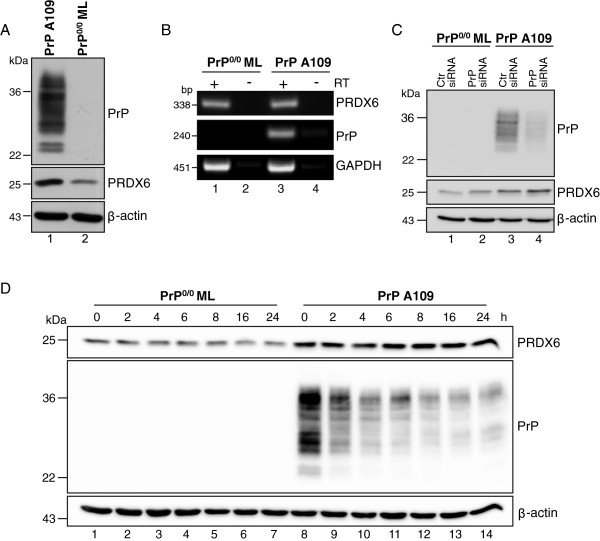
Apolipoprotein E and peroxiredoxin 6 (PRDX6) were identified as upregulated proteins in brains of scrapie-infected mice and cultured neuronal cell lines. Downregulation of PrP gene expression using specific siRNA did not result in a decrease of PRDX6 amounts. Interestingly, selective siRNA targeting PRDX6 or overexpression of PRDX6 controlled PrPC and PrPSc protein amounts in neuronal cells.
Besides its possible function as a novel marker protein in the diagnosis of TSEs, PDRX6 represents an attractive target molecule in putative pharmacological intervention strategies in the future.
众所周知,细胞朊病毒蛋白(PrPC)转化为其异常异构体(PrPSc)是导致传染性海绵状脑病(TSEs)的原因。然而,细胞内详细的分子机制和直接功能后果的知识却很少。在这项研究中,我们旨在鉴定可能参与朊病毒发病机制的失调蛋白。
载脂蛋白 E 和过氧化物酶 6(PRDX6)被鉴定为感染瘙痒病的小鼠和培养的神经元细胞系脑中上调的蛋白。使用特异性 siRNA 下调 PrP 基因表达不会导致 PRDX6 含量降低。有趣的是,针对 PRDX6 的选择性 siRNA 或 PRDX6 的过表达可控制神经元细胞中 PrPC 和 PrPSc 蛋白的含量。
除了作为 TSE 诊断的新型标记蛋白的可能功能外,PRDX6 还代表了未来潜在药物干预策略中有吸引力的靶标分子。