Kaihami Gilberto Hideo, Almeida José Roberto Fogaça de, Santos Suelen Silvana dos, Netto Luis Eduardo Soares, Almeida Sandro Rogério de, Baldini Regina Lúcia
Departamento de Bioquímica, Instituto de Química, Universidade de São Paulo, São Paulo, Brazil.
Departamento de Análises Clínicas, Faculdade de Ciências Farmacêuticas, Universidade de São Paulo, São Paulo, Brazil.
PLoS Pathog. 2014 Oct 16;10(10):e1004442. doi: 10.1371/journal.ppat.1004442. eCollection 2014 Oct.
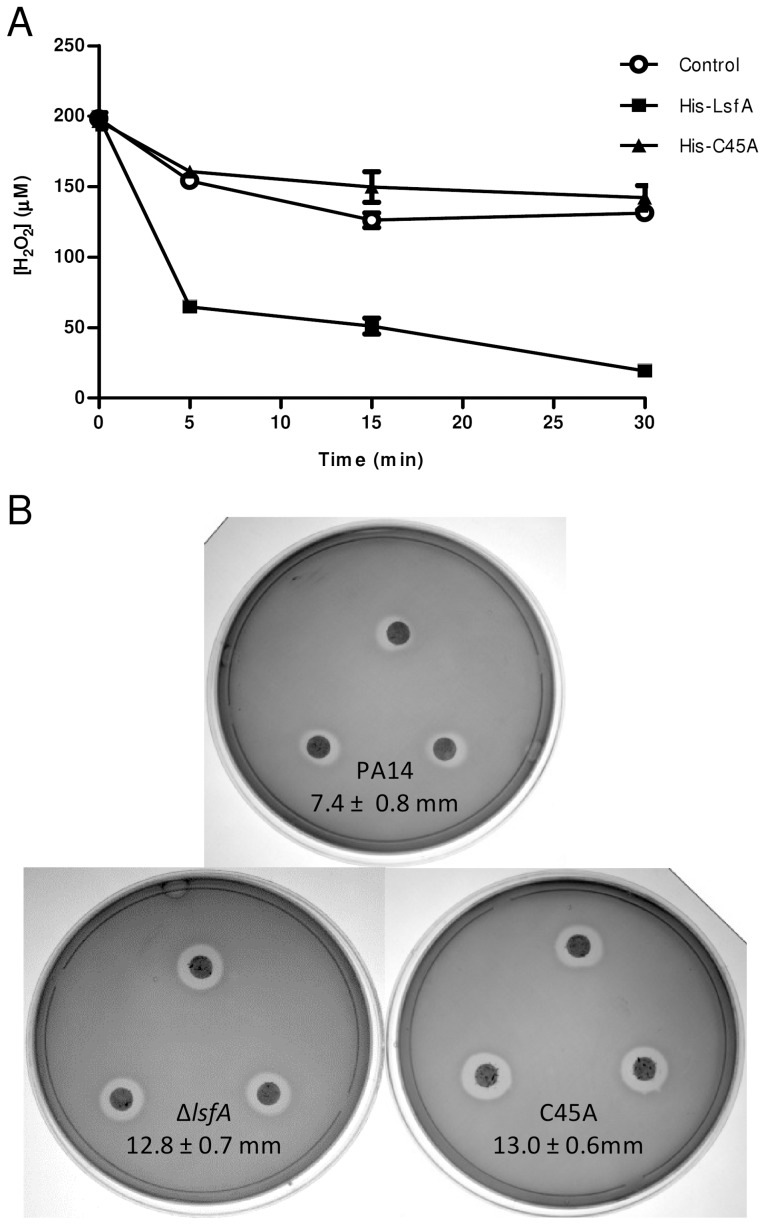
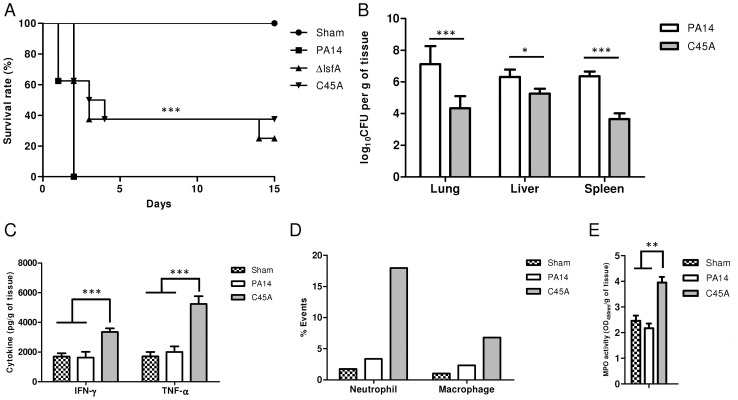
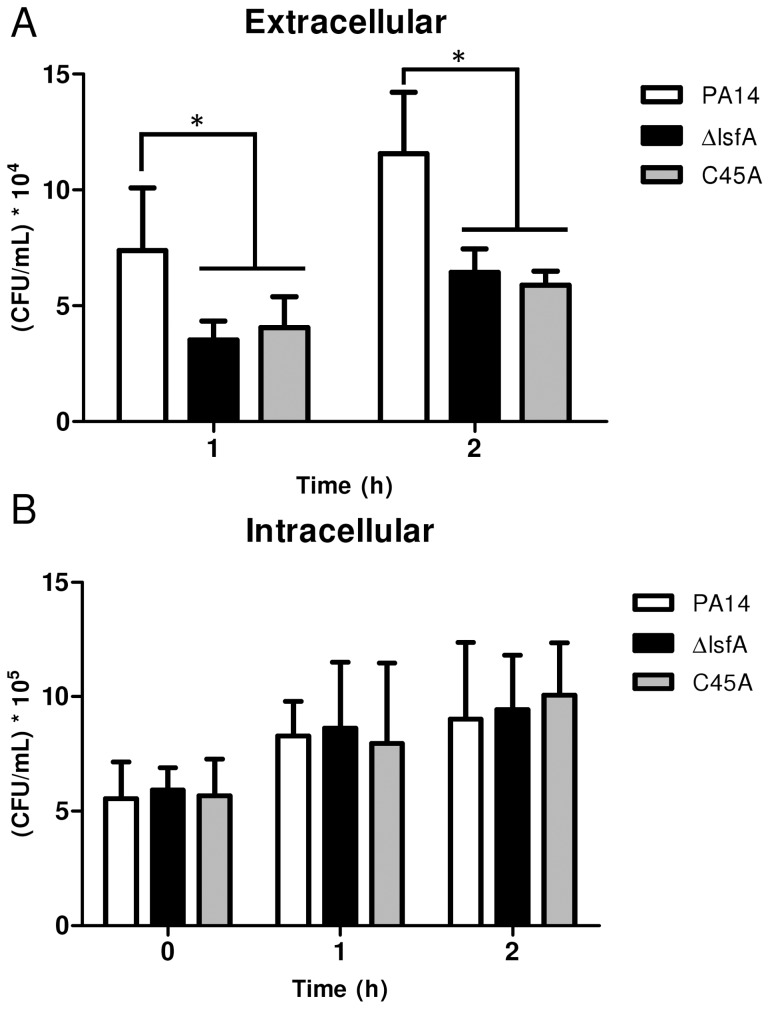
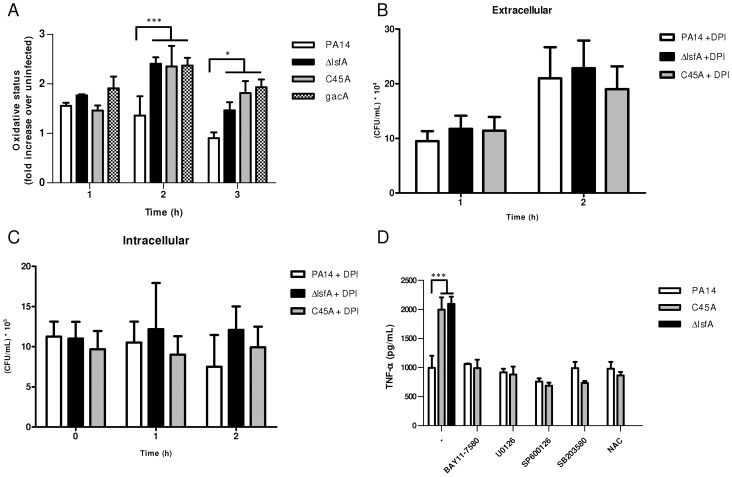
The killing of bacterial pathogens by macrophages occurs via the oxidative burst and bacteria have evolved to overcome this challenge and survive, using several virulence and defense strategies, including antioxidant mechanisms. We show here that the 1-Cys peroxiredoxin LsfA from the opportunistic pathogen Pseudomonas aeruginosa is endowed with thiol-dependent peroxidase activity that protects the bacteria from H(2)O(2) and that this protein is implicated in pathogenicity. LsfA belongs to the poorly studied Prx6 subfamily of peroxiredoxins. The function of these peroxiredoxins has not been characterized in bacteria, and their contribution to host-pathogen interactions remains unknown. Infection of macrophages with the lsfA mutant strains resulted in higher levels of the cytokine TNF-α production due to the activation of the NF-kB and MAPK pathways, that are partially inhibited by the wild-type P. aeruginosa strain. A redox fluorescent probe was more oxidized in the lsfA mutant-infected macrophages than it was in the macrophages infected with the wild-type strain, suggesting that the oxidative burst was overstimulated in the absence of LsfA. Although no differences in the phagocytosis rates were observed when macrophages were infected with wild-type and mutant bacteria in a gentamicin exclusion assay, a higher number of wild-type bacterial cells was found in the supernatant. This difference was not observed when macrophages were pre-treated with a NADPH oxidase inhibitor, confirming the role of LsfA in the bacterial resistance to ROS generated via NADPH oxidase. In an acute pneumonia model, mice infected with the mutant strains presented higher cytokine release in the lungs and increased activated neutrophil recruitment, with reduced bacterial burden and improved survival rates compared to mice infected with the wild-type bacteria. LsfA is the first bacterial 1-Cys Prx shown to modulate host immune responses and its characterization will allow a better understanding of the role of redox signaling in host-pathogen interactions.
巨噬细胞对细菌病原体的杀伤通过氧化爆发实现,而细菌已经进化出多种毒力和防御策略来克服这一挑战并存活下来,其中包括抗氧化机制。我们在此表明,机会致病菌铜绿假单胞菌的1-半胱氨酸过氧化物酶LsfA具有硫醇依赖性过氧化物酶活性,可保护细菌免受H₂O₂的侵害,并且该蛋白与致病性有关。LsfA属于研究较少的过氧化物酶Prx6亚家族。这些过氧化物酶在细菌中的功能尚未得到表征,它们对宿主-病原体相互作用的贡献仍然未知。用lsfA突变株感染巨噬细胞会导致细胞因子TNF-α产生水平升高,这是由于NF-κB和MAPK途径的激活所致,而野生型铜绿假单胞菌菌株可部分抑制这些途径。与野生型菌株感染的巨噬细胞相比,氧化还原荧光探针在lsfA突变株感染的巨噬细胞中被氧化的程度更高,这表明在缺乏LsfA的情况下氧化爆发受到过度刺激。尽管在庆大霉素排除试验中,当巨噬细胞感染野生型和突变型细菌时未观察到吞噬率的差异,但在上清液中发现野生型细菌细胞的数量更多。当巨噬细胞用NADPH氧化酶抑制剂预处理时未观察到这种差异,这证实了LsfA在细菌对通过NADPH氧化酶产生的ROS的抗性中的作用。在急性肺炎模型中,与感染野生型细菌的小鼠相比,感染突变株的小鼠肺部细胞因子释放更高,活化中性粒细胞募集增加,细菌负荷降低,存活率提高。LsfA是首个被证明可调节宿主免疫反应的细菌1-半胱氨酸Prx,对其特性的表征将有助于更好地理解氧化还原信号在宿主-病原体相互作用中的作用。